Human-probability test defeats political donation deductions where banking records mask accommodation-entry fund layering rather than genuine contribu...
Electronic evidence and search statements in tax assessments require authenticity review and corroboration, while procedural manuals lack statutory fo...
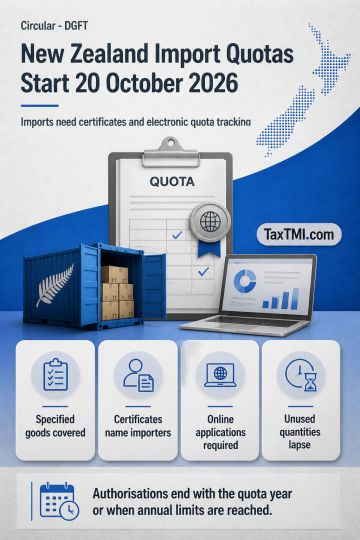
Tariff rate quota authorisations govern preferential imports of specified New Zealand goods through export certification and electronic customs debiti...
Electronic Continuity Bond Registration replaces manual container permissions, with quarterly reporting and re-export monitoring for duty-free contain...
Page of 4935
Press 'Enter' after typing page number.
321 to 340 of 98695 Results
❮
❯
❯❯
0 / 200
Expand Note
Add to Folder
No Folders have been created
+
Are you sure you want to delete "My most important" ?
Section 115BBE applies only after income is validly classified...
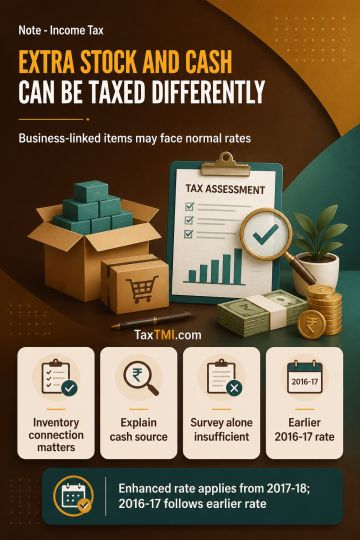
Survey surrender characterisation determines whether mixed excess stock and business-linked cash face normal taxation or special deemed-income taxation.
Contents
Summary
Note
Bookmark
Share
✓ Copied successfully !
Print
Print Options
For full text, please login
Login to TaxTMI
Verification Pending
The Email Id has not been verified. Click on the link we have sent on
Section 115BBE applies only after income is validly classified under the specified deeming provisions; a survey surrender alone is insufficient. Excess stock inseparable from regular inventory and credibly linked to unrecorded business receipts may be assessed as business income under Section 28 at normal rates. Excess cash may receive the same treatment where its business source is satisfactorily explained; otherwise, the statutory conditions for deemed income must be met. Classification requires a holistic assessment of statements and contemporaneous evidence. The substituted enhanced rate applies prospectively from financial year 2017-18, while financial year 2016-17 is governed by the earlier rate.
Section 115BBE applies only after income is validly classified under the specified deeming provisions; a survey surrender alone is insufficient. Excess stock inseparable from regular inventory and credibly linked to unrecorded business receipts may be assessed as business income under Section 28 at normal rates. Excess cash may receive the same treatment where its business source is satisfactorily explained; otherwise, the statutory conditions for deemed income must be met. Classification requires a holistic assessment of statements and contemporaneous evidence. The substituted enhanced rate applies prospectively from financial year 2017-18, while financial year 2016-17 is governed by the earlier rate.
Note: It is a system-generated summary and is for quick reference only.
 TaxTMI
 TaxTMI

 of 4935