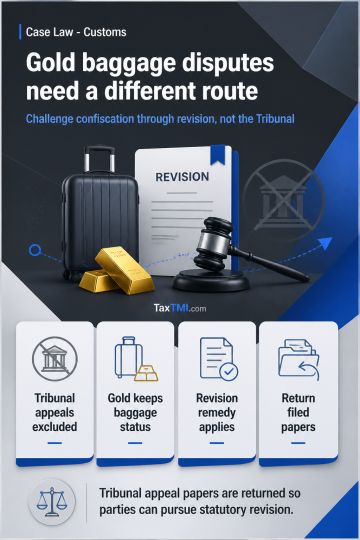
Appellate jurisdiction over baggage imports is excluded, requiring confiscation challenges involving passenger-carried gold to proceed by statutory re...
Page of 4891
Press 'Enter' after typing page number.
61 to 80 of 97820 Results
❮
❯
❯❯
0 / 200
Expand Note
Add to Folder
No Folders have been created
+
Are you sure you want to delete "My most important" ?
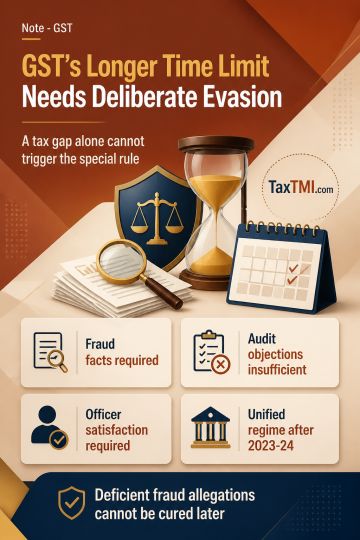
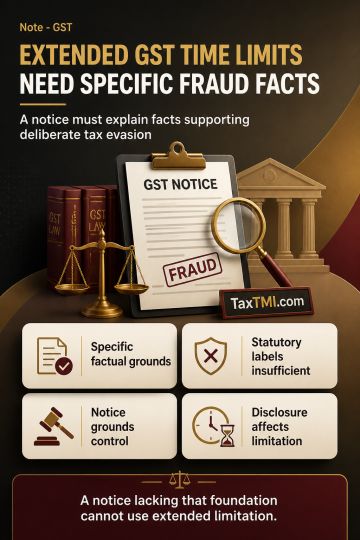
Section 74 of the CGST Act permits the extended limitation route only where a show cause notice states factual grounds showing that tax short-payment, erroneous refund, or wrongful input tax credit arose by reason of fraud, wilful misstatement, or suppression intended to evade tax. Bare statutory labels, audit objections, later affidavits, or new grounds in an order cannot cure a notice lacking that jurisdictional foundation. Section 75(7) confines confirmation to grounds specified in the notice, while Section 75(2) may deem a validly founded Section 74 notice to be under Section 73 if aggravated conduct is not established. Deliberate conduct, causal nexus, and taxpayer disclosure are central to extended limitation.
Section 74 of the CGST Act permits the extended limitation route only where a show cause notice states factual grounds showing that tax short-payment, erroneous refund, or wrongful input tax credit arose by reason of fraud, wilful misstatement, or suppression intended to evade tax. Bare statutory labels, audit objections, later affidavits, or new grounds in an order cannot cure a notice lacking that jurisdictional foundation. Section 75(7) confines confirmation to grounds specified in the notice, while Section 75(2) may deem a validly founded Section 74 notice to be under Section 73 if aggravated conduct is not established. Deliberate conduct, causal nexus, and taxpayer disclosure are central to extended limitation.
Note: It is a system-generated summary and is for quick reference only.
 TaxTMI
  TaxTMI
 of 4891