Software development comparables and overdue receivables require functional analysis, scale-based filtering and invoice-wise scrutiny for transfer pri...
KYC onboarding and record portability are streamlined through centralised client information, verified addresses and simplified intermediary requireme...
GST refund limitation covers reverse-charge payments claimed as deposits, while portal communications can rely on electronically verifiable references...
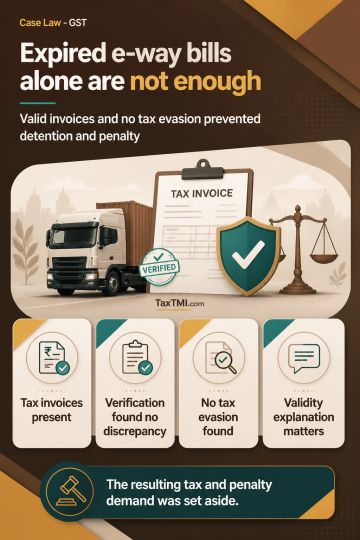
Expiry of an e-way bill, without more, does not justify detention, integrated tax, or penalty under section 129 where the consignment is accompanied by tax invoices and supporting documents, physical verification reveals no discrepancy, and no tax evasion is found. Board instructions distinguish minor procedural lapses from substantive breaches. The explanation for failure to extend e-way bill validity requires consideration, and intention to evade tax remains relevant. On these facts, invoking section 129 solely for expired e-way bills was unjustified, and the resulting tax and penalty demand was set aside.
Expiry of an e-way bill, without more, does not justify detention, integrated tax, or penalty under section 129 where the consignment is accompanied by tax invoices and supporting documents, physical verification reveals no discrepancy, and no tax evasion is found. Board instructions distinguish minor procedural lapses from substantive breaches. The explanation for failure to extend e-way bill validity requires consideration, and intention to evade tax remains relevant. On these facts, invoking section 129 solely for expired e-way bills was unjustified, and the resulting tax and penalty demand was set aside.
Note: It is a system-generated summary and is for quick reference only.
 TaxTMI