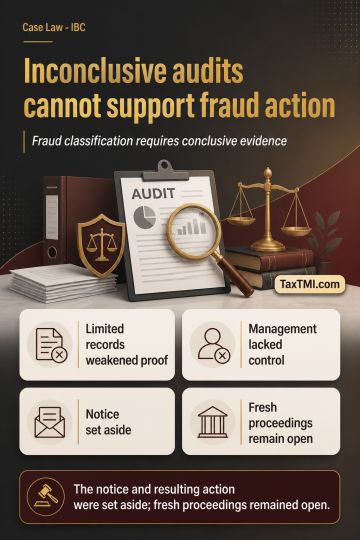
Fraud classification show-cause notices founded on inconclusive forensic audit material cannot sustain action, permitting fresh proceedings on conclus...
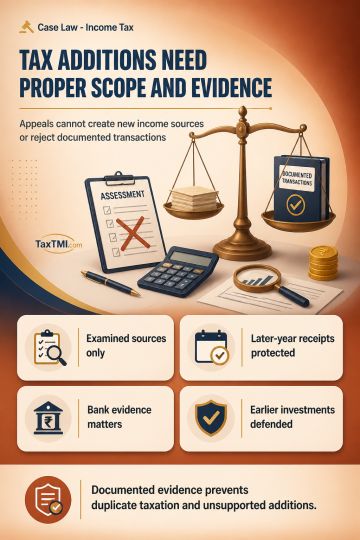
Appellate enhancement limits protect against new income sources, while documented credits and prior-year investments resist unexplained-income additio...
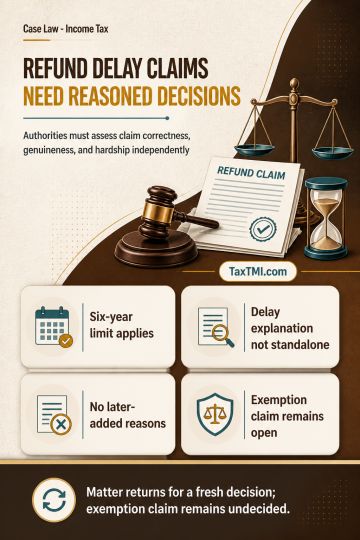
Section 119(2)(b) permits condonation of delay in a revised return seeking refund to prevent genuine hardship, subject to the prescribed six-year limit. The competent authority must independently determine whether the refund claim is correct and genuine and whether genuine hardship exists; this power cannot be exercised routinely. A rejection cannot rest on irrelevant considerations or an unreasoned denial of hardship, and recorded reasons cannot be supplemented in court. The sufficient-cause standard for delayed appeals under the Limitation Act does not impose a stand-alone requirement to explain delay under section 119(2)(b). The refusal to condone was quashed and remitted for a fresh reasoned decision, leaving the exemption claim open.
Section 119(2)(b) permits condonation of delay in a revised return seeking refund to prevent genuine hardship, subject to the prescribed six-year limit. The competent authority must independently determine whether the refund claim is correct and genuine and whether genuine hardship exists; this power cannot be exercised routinely. A rejection cannot rest on irrelevant considerations or an unreasoned denial of hardship, and recorded reasons cannot be supplemented in court. The sufficient-cause standard for delayed appeals under the Limitation Act does not impose a stand-alone requirement to explain delay under section 119(2)(b). The refusal to condone was quashed and remitted for a fresh reasoned decision, leaving the exemption claim open.
Note: It is a system-generated summary and is for quick reference only.
 TaxTMI
  TaxTMI
 of 4878