Coercive recovery during GST searches is restrained pending scrutiny, preserving normal business operations and requiring adherence to investigation g...
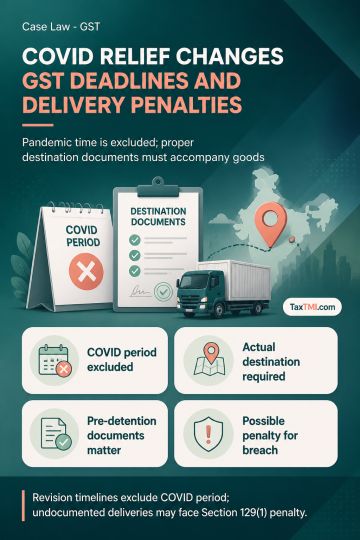
COVID-19 limitation exclusion and destination-specific e-way bills govern revisional timelines and penalties for undocumented third-party plywood deli...
Questions arising from miscellaneous application orders cannot challenge unaltered Tribunal findings, leaving the original order separately challengea...
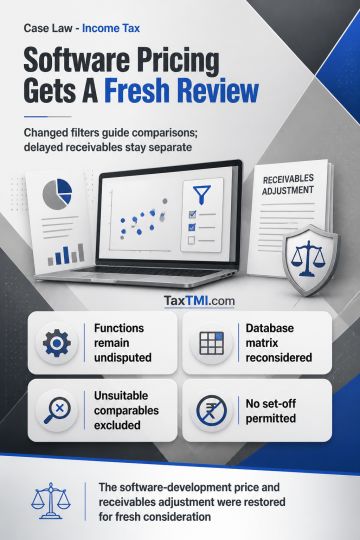
Transfer-pricing comparability filters require fresh arm's-length analysis, while delayed receivables need separate reconsideration with working-capit...
Page of 4879
Press 'Enter' after typing page number.
421 to 440 of 97567 Results
❮
❯
❯❯
0 / 200
Expand Note
Add to Folder
No Folders have been created
+
Are you sure you want to delete "My most important" ?
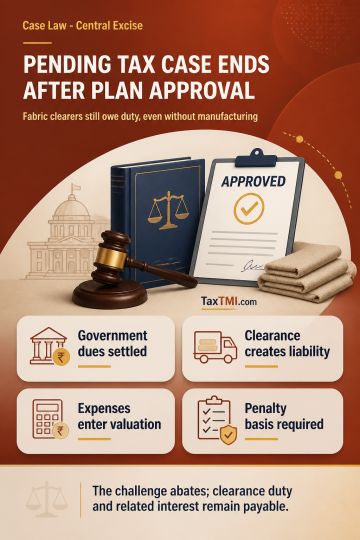
Approval of a resolution plan settling confirmed government dues causes the corporate debtor's pending excise appeal to abate. Excise duty remains payable by persons who clear processed fabrics, even where they are not manufacturers, because liability attaches on clearance; however, the transferee's specific penalty concerning stock was not sustained. Pre-clearance grading, cartage, brokerage and stock-interest expenses form part of assessable value where goods enter wholesale trade only on sale to independent buyers, sustaining the related duty and interest. Penalty for intent to evade duty requires findings of prescribed conduct and cannot rest solely on inadmissible valuation deductions. Penalties relating to confiscable goods likewise require their statutory basis; general penalties may instead apply to proven participation in duty evasion.
Approval of a resolution plan settling confirmed government dues causes the corporate debtor's pending excise appeal to abate. Excise duty remains payable by persons who clear processed fabrics, even where they are not manufacturers, because liability attaches on clearance; however, the transferee's specific penalty concerning stock was not sustained. Pre-clearance grading, cartage, brokerage and stock-interest expenses form part of assessable value where goods enter wholesale trade only on sale to independent buyers, sustaining the related duty and interest. Penalty for intent to evade duty requires findings of prescribed conduct and cannot rest solely on inadmissible valuation deductions. Penalties relating to confiscable goods likewise require their statutory basis; general penalties may instead apply to proven participation in duty evasion.
Note: It is a system-generated summary and is for quick reference only.
 TaxTMI
  TaxTMI
 of 4879