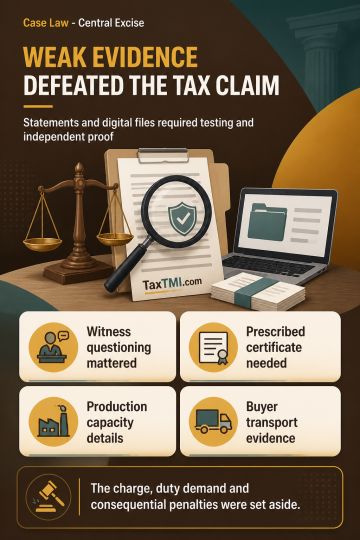
Inaccurate-particulars penalties fail where transfer-pricing documentation shows good faith and due diligence, and underlying capital-gains additions ...
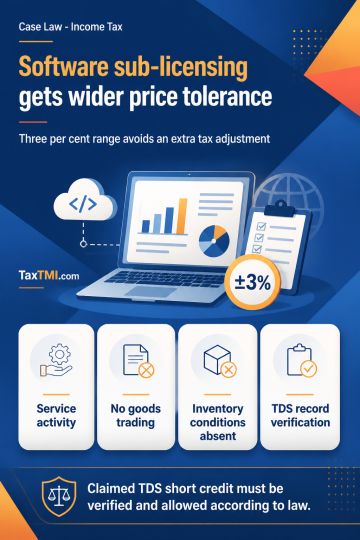
Transfer-pricing tolerance for software sub-licensing falls within the services range, eliminating the adjustment and requiring TDS-credit verificatio...
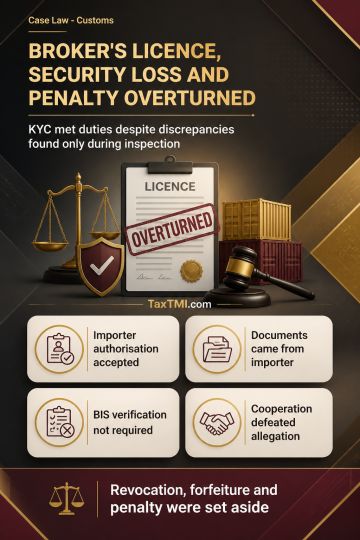
Customs Broker due diligence requires prescribed KYC, not detecting misdeclarations discoverable only through physical examination, defeating licence ...
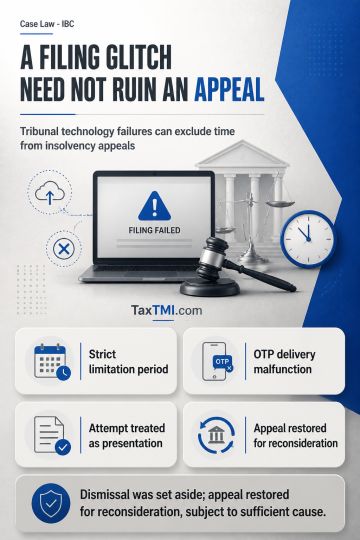
E-filing system failure permits exclusion of affected time in insolvency appeals, preventing tribunal technology defects from defeating timely filings...
Risk-based selective physical boarding of vessels at Paradeep,...
Risk-based selective vessel boarding requires accurate declarations and preserves master and agent liability where physical inspections are not selected.
Contents
Summary
Note
Bookmark
Share
✓ Copied successfully !
Print
Print Options
For full text, please login
Login to TaxTMI
Verification Pending
The Email Id has not been verified. Click on the link we have sent on
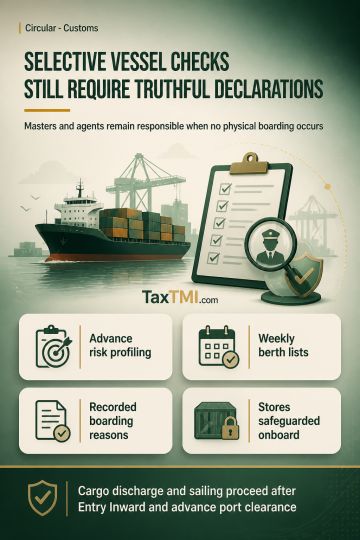
Risk-based selective physical boarding of vessels at Paradeep, Dhamra and Gopalpur ports will be based on advance profiling of compliance history, voyage details, ports of call, itinerary, cargo, and declarations concerning crew effects, stores and satellite devices. Port operators must provide weekly berth lists, while the Boarding Section must assess risk and report physical boardings with recorded justifications. Where physical boarding is not selected, the master and shipping agent remain responsible for accurate, complete and truthful electronic declarations and compliance with customs requirements for onboard stores. Masters must safeguard declared stores and prevent unlawful unloading or consumption, while agents must promptly report logistical, itinerary and documentation changes. Cargo discharge and sailing operations proceed upon Entry Inward and advance port clearance.
Risk-based selective physical boarding of vessels at Paradeep, Dhamra and Gopalpur ports will be based on advance profiling of compliance history, voyage details, ports of call, itinerary, cargo, and declarations concerning crew effects, stores and satellite devices. Port operators must provide weekly berth lists, while the Boarding Section must assess risk and report physical boardings with recorded justifications. Where physical boarding is not selected, the master and shipping agent remain responsible for accurate, complete and truthful electronic declarations and compliance with customs requirements for onboard stores. Masters must safeguard declared stores and prevent unlawful unloading or consumption, while agents must promptly report logistical, itinerary and documentation changes. Cargo discharge and sailing operations proceed upon Entry Inward and advance port clearance.
Note: It is a system-generated summary and is for quick reference only.
 TaxTMI
  TaxTMI
 of 4881