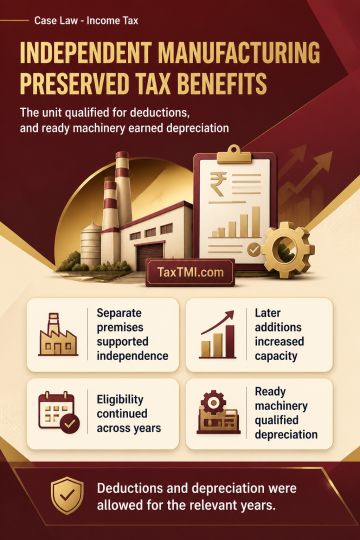
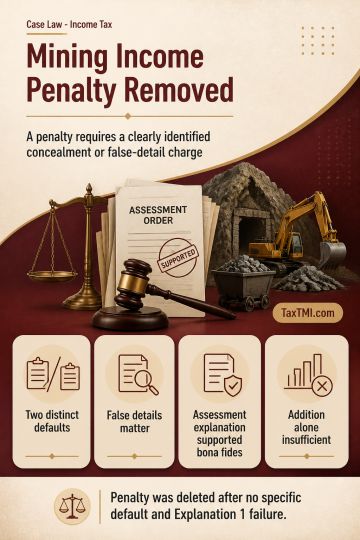
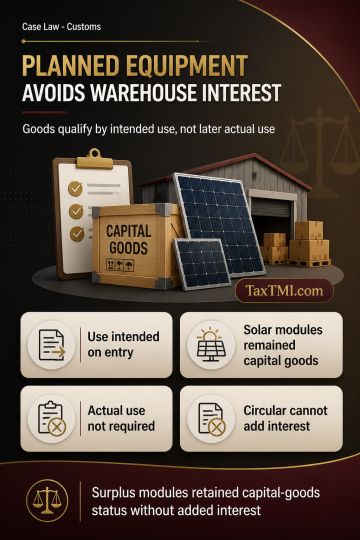
Independent manufacturing undertaking eligibility preserves Section 80IA/80IB deductions, while machinery kept ready for use qualifies for depreciatio...
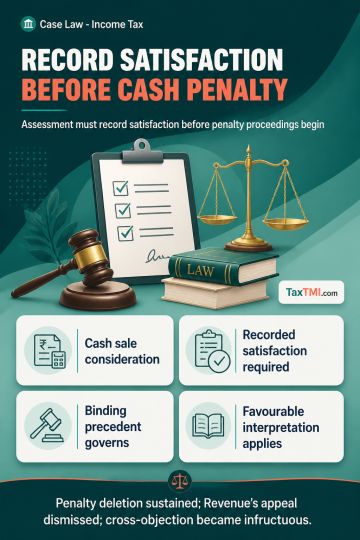
Assessing Officer Satisfaction Requirement Bars Penalty for Cash Receipt in Immovable-Property Sale Cases Where Initiation Lacks Recorded Satisfaction...
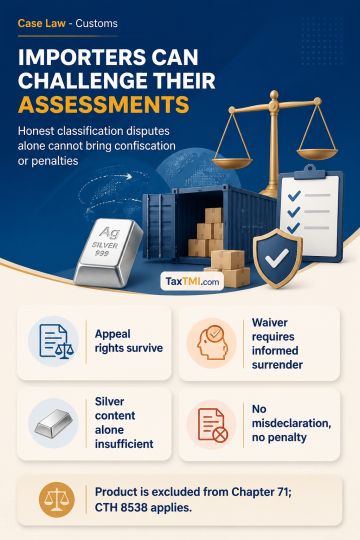
Self-assessed import entries remain appealable, while bona fide classification disputes without misdeclaration cannot justify confiscation or penaltie...
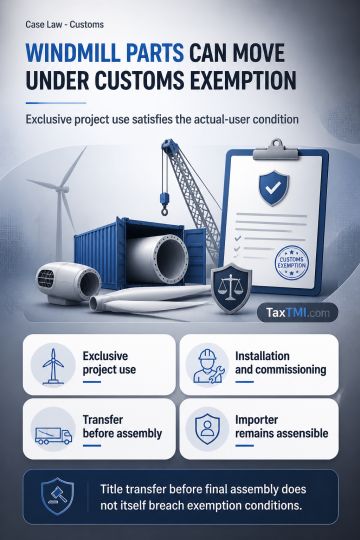
Actual-user customs exemption conditions permit turnkey project transfers when imported windmill components are exclusively used for installation and ...
Customs offence disqualification excludes civil contraventions, preventing refusal of a private bonded warehouse licence based solely on monetary pena...
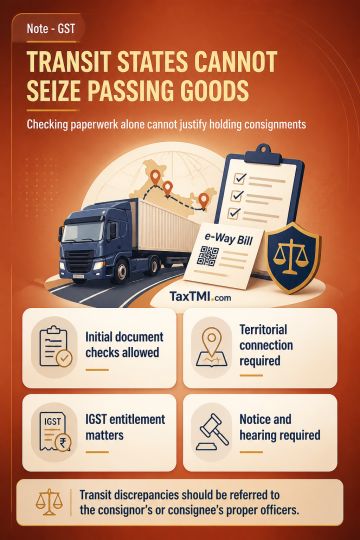
State GST officers may conduct initial document verification of inter-State consignments but cannot detain, seize or confiscate goods merely passing through their State. Cross-empowerment under CGST and IGST laws requires both administrative allocation of the taxpayer to the State and assignment of the relevant proper-officer function; it is not unrestricted authority. Coercive action under Sections 129 and 130 additionally requires territorial and fiscal nexus, including the State's entitlement to IGST apportionment under Section 17. For consignments originating and destined outside the intercepting State, discrepancies should be referred to the consignor's or consignee's proper officers. Confiscation requires statutory grounds, material supporting intent to evade tax where applicable, and notice and hearing; transit checks cannot become valuation assessments.
State GST officers may conduct initial document verification of inter-State consignments but cannot detain, seize or confiscate goods merely passing through their State. Cross-empowerment under CGST and IGST laws requires both administrative allocation of the taxpayer to the State and assignment of the relevant proper-officer function; it is not unrestricted authority. Coercive action under Sections 129 and 130 additionally requires territorial and fiscal nexus, including the State's entitlement to IGST apportionment under Section 17. For consignments originating and destined outside the intercepting State, discrepancies should be referred to the consignor's or consignee's proper officers. Confiscation requires statutory grounds, material supporting intent to evade tax where applicable, and notice and hearing; transit checks cannot become valuation assessments.
Note: It is a system-generated summary and is for quick reference only.
 TaxTMI
  TaxTMI
 of 4881