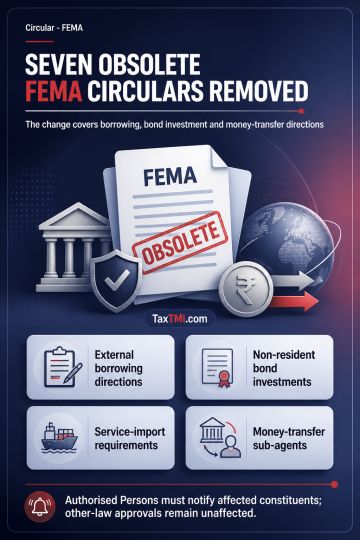
Withdrawal of obsolete FEMA circulars streamlines rules on external commercial borrowings, non-resident bond investments, and money transfer sub-agent...
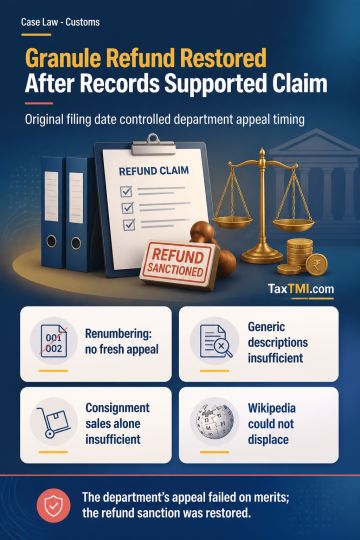
Departmental appeal limitation after call-book recall preserves original filing, while documented correlation supports SAD refund on imported granules...
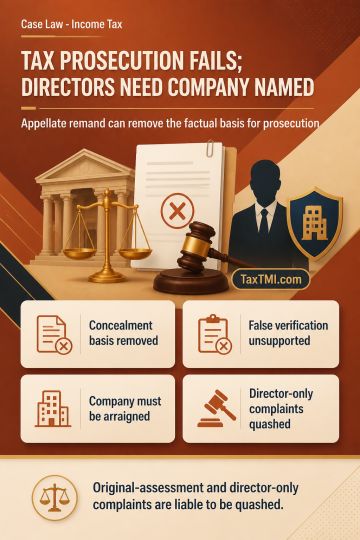
Income-tax prosecution fails when appellate remand removes its factual foundation; directors require company arraignment for vicarious criminal liabil...
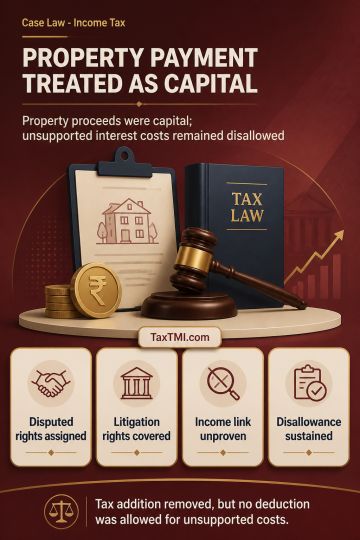
Capital character of assignment consideration prevents taxation as residuary income, while unsupported interest-related expenditure remains non-deduct...
Page of 4888
Press 'Enter' after typing page number.
1021 to 1040 of 97755 Results
❮
❯
❯❯
0 / 200
Expand Note
Add to Folder
No Folders have been created
+
Are you sure you want to delete "My most important" ?
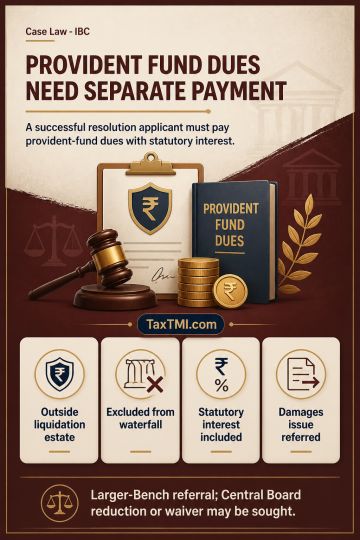
Provident-fund and gratuity dues are excluded from the liquidation estate and cannot be distributed through the insolvency waterfall; a successful resolution applicant must discharge those dues, including statutory interest on arrears. Statutory interest compensates delayed contributions, whereas damages for delay are penal in nature. The expression "may recover" in Section 14B raises whether the authorised officer may decline to impose damages in extenuating circumstances, despite no requirement of mens rea or actus reus; that issue stands referred to a larger Bench. A successful resolution applicant may seek Central Board reduction or waiver of damages, treating resolution-plan implementation as comparable to rehabilitation.
Provident-fund and gratuity dues are excluded from the liquidation estate and cannot be distributed through the insolvency waterfall; a successful resolution applicant must discharge those dues, including statutory interest on arrears. Statutory interest compensates delayed contributions, whereas damages for delay are penal in nature. The expression "may recover" in Section 14B raises whether the authorised officer may decline to impose damages in extenuating circumstances, despite no requirement of mens rea or actus reus; that issue stands referred to a larger Bench. A successful resolution applicant may seek Central Board reduction or waiver of damages, treating resolution-plan implementation as comparable to rehabilitation.
Note: It is a system-generated summary and is for quick reference only.
 TaxTMI
  TaxTMI
 of 4888