Final benami adjudication bars contradictory tax-evasion prosecution where settlement findings confirm full disclosure and cooperation without conceal...
Faceless assessment and registration procedures are updated through electronic communication, revised recovery rules, extended deadlines, and replacem...
Risk-based selective vessel boarding requires accurate declarations and preserves master and agent liability where physical inspections are not select...
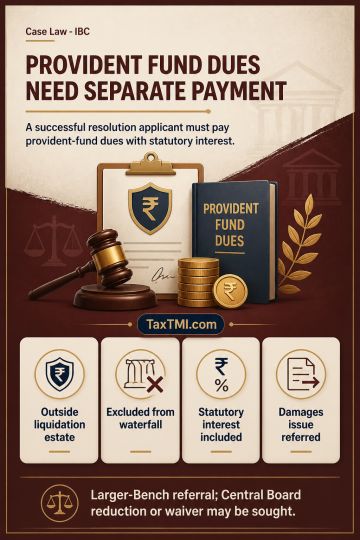
Provident-fund and gratuity dues are excluded from the liquidation estate and cannot be distributed through the insolvency waterfall; a successful resolution applicant must discharge those dues, including statutory interest on arrears. Statutory interest compensates delayed contributions, whereas damages for delay are penal in nature. The expression "may recover" in Section 14B raises whether the authorised officer may decline to impose damages in extenuating circumstances, despite no requirement of mens rea or actus reus; that issue stands referred to a larger Bench. A successful resolution applicant may seek Central Board reduction or waiver of damages, treating resolution-plan implementation as comparable to rehabilitation.
Provident-fund and gratuity dues are excluded from the liquidation estate and cannot be distributed through the insolvency waterfall; a successful resolution applicant must discharge those dues, including statutory interest on arrears. Statutory interest compensates delayed contributions, whereas damages for delay are penal in nature. The expression "may recover" in Section 14B raises whether the authorised officer may decline to impose damages in extenuating circumstances, despite no requirement of mens rea or actus reus; that issue stands referred to a larger Bench. A successful resolution applicant may seek Central Board reduction or waiver of damages, treating resolution-plan implementation as comparable to rehabilitation.
Note: It is a system-generated summary and is for quick reference only.
 TaxTMI
  TaxTMI
 of 4881