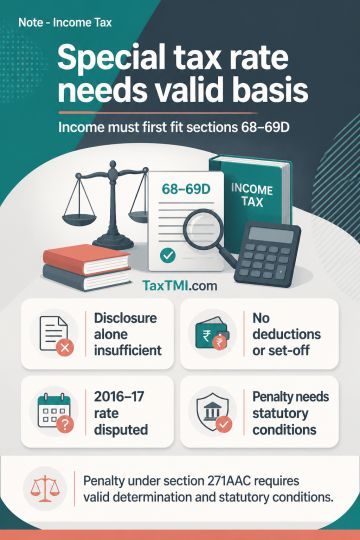
Section 115BBE classification requires a valid deeming-provision basis before special taxation, while the enhanced rate's temporal application remains...
Coercive recovery during GST searches is restrained pending scrutiny, preserving normal business operations and requiring adherence to investigation g...
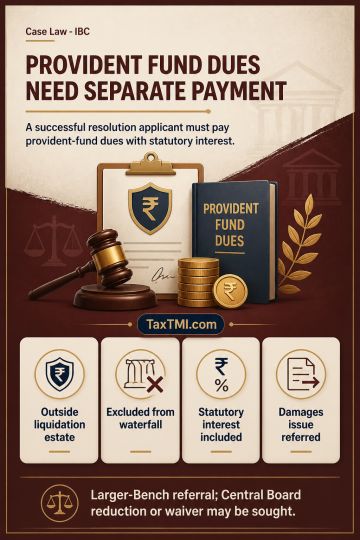
Provident-fund and gratuity dues are excluded from the liquidation estate and cannot be distributed through the insolvency waterfall; a successful resolution applicant must discharge those dues, including statutory interest on arrears. Statutory interest compensates delayed contributions, whereas damages for delay are penal in nature. The expression "may recover" in Section 14B raises whether the authorised officer may decline to impose damages in extenuating circumstances, despite no requirement of mens rea or actus reus; that issue stands referred to a larger Bench. A successful resolution applicant may seek Central Board reduction or waiver of damages, treating resolution-plan implementation as comparable to rehabilitation.
Provident-fund and gratuity dues are excluded from the liquidation estate and cannot be distributed through the insolvency waterfall; a successful resolution applicant must discharge those dues, including statutory interest on arrears. Statutory interest compensates delayed contributions, whereas damages for delay are penal in nature. The expression "may recover" in Section 14B raises whether the authorised officer may decline to impose damages in extenuating circumstances, despite no requirement of mens rea or actus reus; that issue stands referred to a larger Bench. A successful resolution applicant may seek Central Board reduction or waiver of damages, treating resolution-plan implementation as comparable to rehabilitation.
Note: It is a system-generated summary and is for quick reference only.
 TaxTMI
  TaxTMI
 of 4881