Business expenditure and depreciation rules allow operational outgoings while limiting disallowances for personal elements and unsupported third-party...
Compromise-and-arrangement extensions may accommodate debt assignment where creditor commercial judgment supports value maximisation and avoids proced...
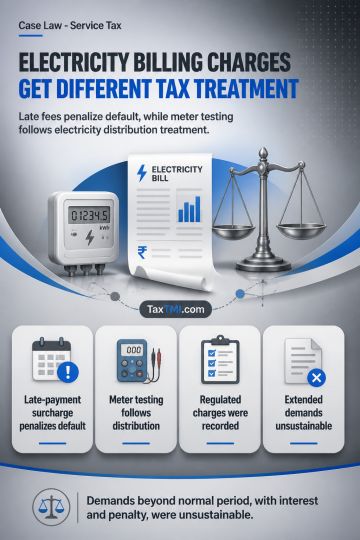
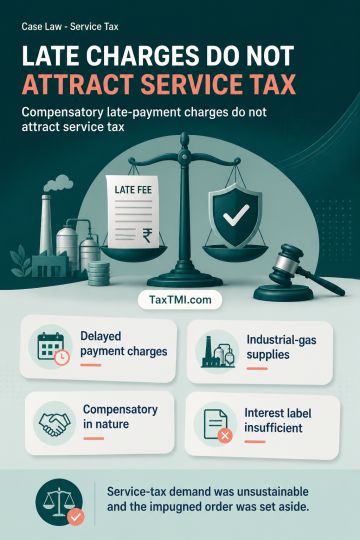
Delayed-payment surcharge is not taxable tolerance consideration where it penalises default, while meter testing follows electricity distribution trea...
Sufficient cause for delayed revenue income-tax appeals requires bona fides, due diligence and a credible explanation; otherwise limitation bars appea...
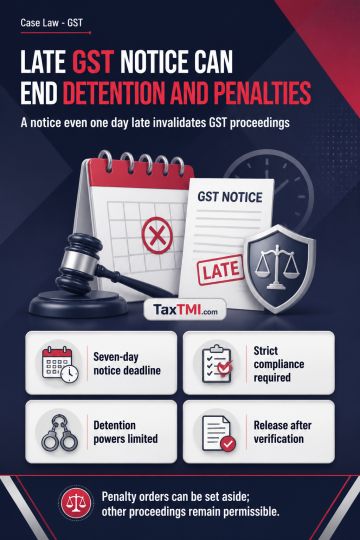
Section 129(3)'s seven-day deadline for issuing notice after detention of goods and conveyance under GST is mandatory. The timeline limits coercive detention and seizure powers, protects against arbitrary or prolonged detention, and requires strict compliance because the provision uses "shall" and affects taxpayer rights. A delay of even one day in issuing the notice vitiates the resulting detention and penalty proceedings. Penalty orders issued or affirmed despite breach of this timeline are liable to be set aside, without preventing other proceedings permissible under the Act. Deposited penalty may be released following due verification.
Section 129(3)'s seven-day deadline for issuing notice after detention of goods and conveyance under GST is mandatory. The timeline limits coercive detention and seizure powers, protects against arbitrary or prolonged detention, and requires strict compliance because the provision uses "shall" and affects taxpayer rights. A delay of even one day in issuing the notice vitiates the resulting detention and penalty proceedings. Penalty orders issued or affirmed despite breach of this timeline are liable to be set aside, without preventing other proceedings permissible under the Act. Deposited penalty may be released following due verification.
Note: It is a system-generated summary and is for quick reference only.
 TaxTMI
  TaxTMI
 of 4884