Credit-note turnover adjustments preserve inverted-duty refunds, while ministerial re-computation does not constitute an impermissible appellate reman...
Revisional jurisdiction over export quota premium deductions requires both error and Revenue prejudice; a permissible assessment view cannot be displa...
Page of 4881
Press 'Enter' after typing page number.
501 to 520 of 97618 Results
❮
❯
❯❯
0 / 200
Expand Note
Add to Folder
No Folders have been created
+
Are you sure you want to delete "My most important" ?
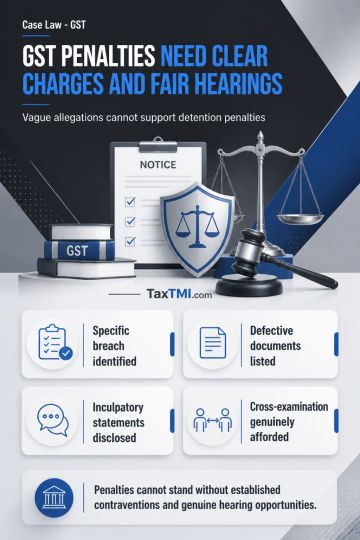
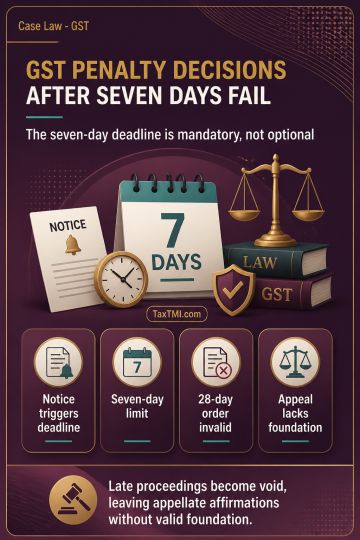
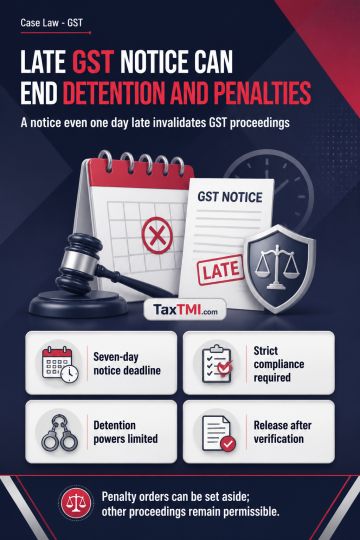
Section 129(3)'s seven-day deadline for issuing notice after detention of goods and conveyance under GST is mandatory. The timeline limits coercive detention and seizure powers, protects against arbitrary or prolonged detention, and requires strict compliance because the provision uses "shall" and affects taxpayer rights. A delay of even one day in issuing the notice vitiates the resulting detention and penalty proceedings. Penalty orders issued or affirmed despite breach of this timeline are liable to be set aside, without preventing other proceedings permissible under the Act. Deposited penalty may be released following due verification.
Section 129(3)'s seven-day deadline for issuing notice after detention of goods and conveyance under GST is mandatory. The timeline limits coercive detention and seizure powers, protects against arbitrary or prolonged detention, and requires strict compliance because the provision uses "shall" and affects taxpayer rights. A delay of even one day in issuing the notice vitiates the resulting detention and penalty proceedings. Penalty orders issued or affirmed despite breach of this timeline are liable to be set aside, without preventing other proceedings permissible under the Act. Deposited penalty may be released following due verification.
Note: It is a system-generated summary and is for quick reference only.
 TaxTMI
  TaxTMI
 of 4881