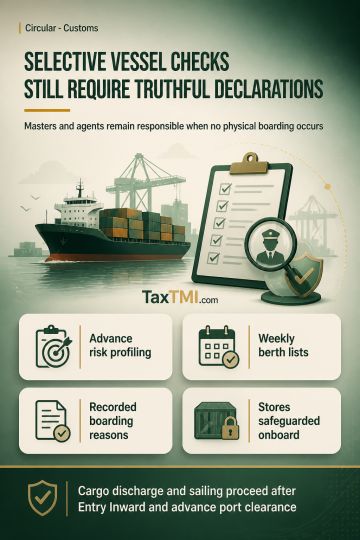
Risk-based selective vessel boarding requires accurate declarations and preserves master and agent liability where physical inspections are not select...
Customs Broker due diligence requires prescribed KYC, not detecting misdeclarations discoverable only through physical examination, defeating licence ...
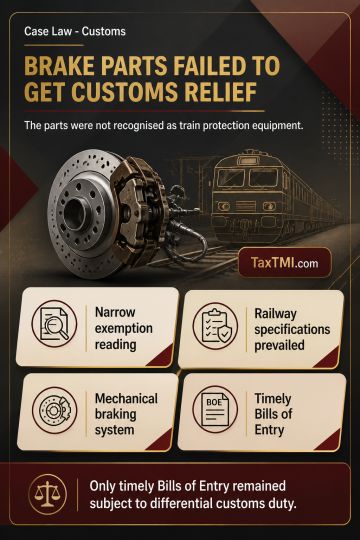
Strict construction of customs exemptions denied concession for brake components, while limitation restricted differential duty to timely Bills of Ent...
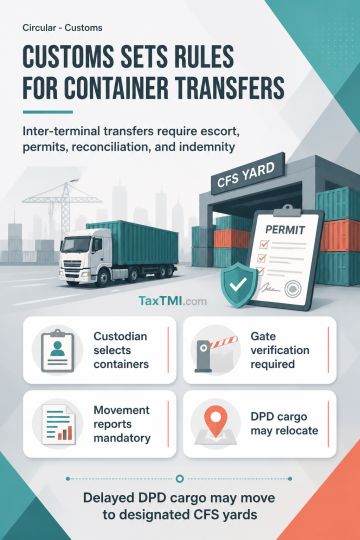
Inter-terminal container movement requires customs escort, permit reconciliation, and indemnity, while delayed DPD cargo may move to designated CFS ya...
Page of 75
Press 'Enter' after typing page number.
1 to 20 of 1491 Results
❮
❯
❯❯
0 / 200
Expand Note
Add to Folder
No Folders have been created
+
Are you sure you want to delete "My most important" ?
Strict interpretation of the customs exemption required Disc...
Strict construction of customs exemptions denied concession for brake components, while limitation restricted differential duty to timely Bills of Entry.
Contents
Summary
Note
Bookmark
Share
✓ Copied successfully !
Print
Print Options
For full text, please login
Login to TaxTMI
Verification Pending
The Email Id has not been verified. Click on the link we have sent on
Strict interpretation of the customs exemption required Disc Brake Units and Pole Wheels to fall clearly within the recognised railway-engineering meaning of a Train Protection and Warning System (TPWS). As components of a mechanical or pneumatic axle-mounted braking system, rather than signal-based TPWS equipment, they did not qualify for concessional duty. Official railway specifications prevailed over contrary technical opinions. Differential customs duty could be demanded only for Bills of Entry within the normal limitation period invoked under section 28(1); extending the demand beyond that period under section 28(4) exceeded the show cause notice. The exemption claim failed, while the demand was restricted accordingly.
Strict interpretation of the customs exemption required Disc Brake Units and Pole Wheels to fall clearly within the recognised railway-engineering meaning of a Train Protection and Warning System (TPWS). As components of a mechanical or pneumatic axle-mounted braking system, rather than signal-based TPWS equipment, they did not qualify for concessional duty. Official railway specifications prevailed over contrary technical opinions. Differential customs duty could be demanded only for Bills of Entry within the normal limitation period invoked under section 28(1); extending the demand beyond that period under section 28(4) exceeded the show cause notice. The exemption claim failed, while the demand was restricted accordingly.
Note: It is a system-generated summary and is for quick reference only.
 TaxTMI
  TaxTMI