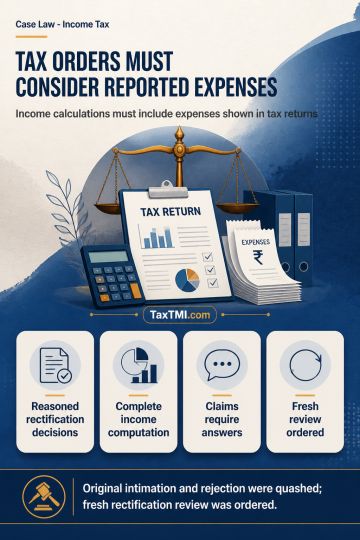
Reasoned rectification orders require consideration of expenditure disclosed in income-tax returns, preventing revision based on incomplete income com...
Modified returns after business reorganisations cannot trigger fresh scrutiny once the original assessment was complete, invalidating related transfer...
Third-party loose sheets require reliable nexus before supporting unexplained expenditure additions; presumptions do not establish payer identity or o...
TNMM comparability using audited accounts and working-capital adjustments can eliminate unwarranted transfer-pricing additions where verified margins ...
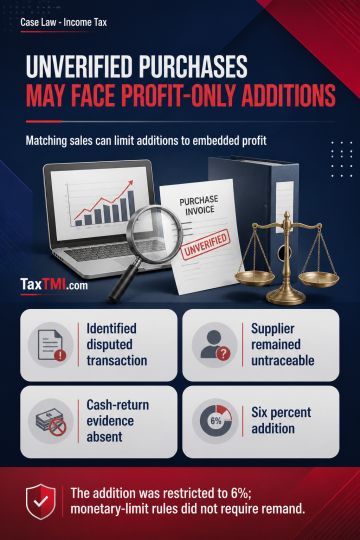
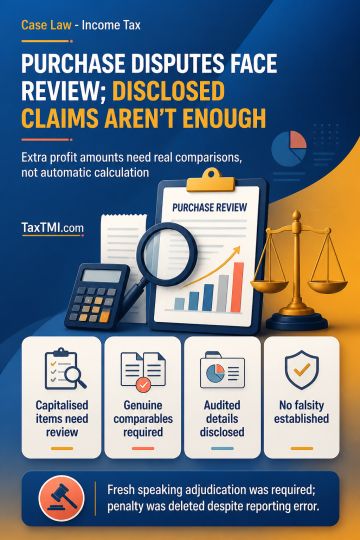
Gross-profit additions on disputed purchases require reasoned appellate determination; disclosed claims alone do not support inaccurate-particulars pe...
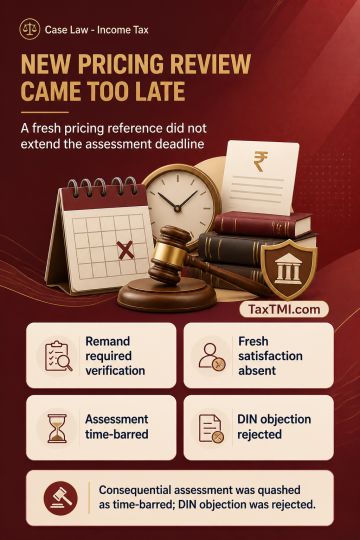
Limitation after transfer-pricing remand: fresh TPO reference did not extend the assessment deadline, rendering the consequential assessment time-barr...
Interim judicial restraint on tax deduction prevents default, while supporting reasonable cause and penalty deletion for foreign-leg LFC reimbursement...
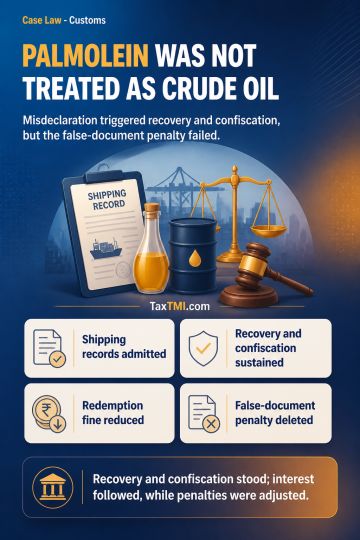
Palmolein classification defeated the crude-oil concession; material misdeclaration sustained recovery and confiscation, while separate false-document...
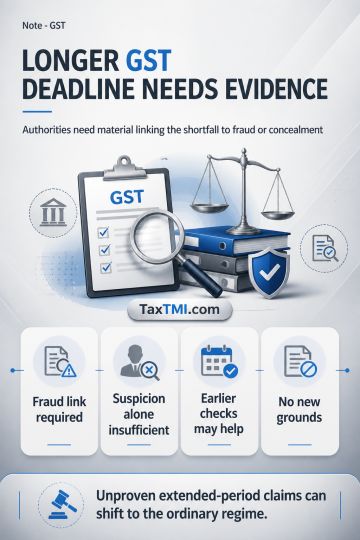
Section 74 CGST extended limitation applies only where available material permits a rational prima facie view that tax shortfall, erroneous refund or wrongful input tax credit arose by reason of fraud, wilful misstatement or suppression of facts to evade tax. Conclusive proof is not required at notice stage, but suspicion or a bare allegation is insufficient. Prior scrutiny, audit, inspection or pre-notice communications may supply the factual basis for a DRC-01 notice if they gave the taxpayer meaningful notice. Section 75 prevents confirmation on new grounds and permits treatment under the ordinary regime where the extended-period allegations are ultimately not established.
Section 74 CGST extended limitation applies only where available material permits a rational prima facie view that tax shortfall, erroneous refund or wrongful input tax credit arose by reason of fraud, wilful misstatement or suppression of facts to evade tax. Conclusive proof is not required at notice stage, but suspicion or a bare allegation is insufficient. Prior scrutiny, audit, inspection or pre-notice communications may supply the factual basis for a DRC-01 notice if they gave the taxpayer meaningful notice. Section 75 prevents confirmation on new grounds and permits treatment under the ordinary regime where the extended-period allegations are ultimately not established.
Note: It is a system-generated summary and is for quick reference only.
 TaxTMI
  TaxTMI
 of 4897