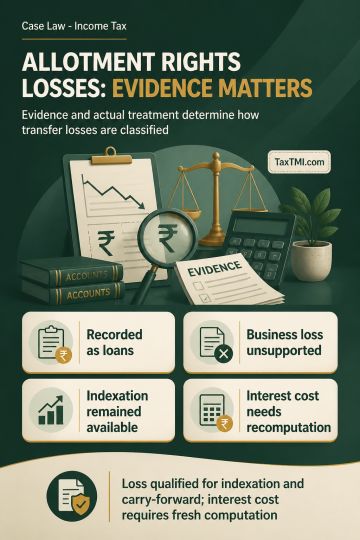
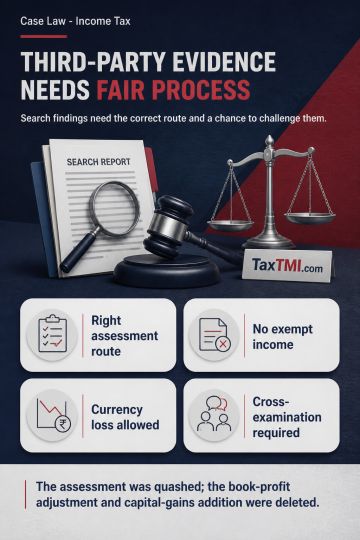
Capital character of assignment consideration prevents taxation as residuary income, while unsupported interest-related expenditure remains non-deduct...
Make-available condition shields regional support-service receipts from Indian taxation where no independent capability or permanent establishment exi...
Transfer-pricing treatment of corporate guarantees and convertible loans followed prior-year consistency, with taxable foreign dividends excluded from...
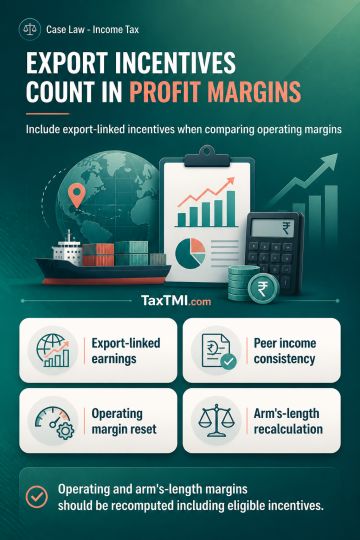
Transfer-pricing benchmarking confines adjustments to associated-enterprise transactions and integrates delayed receivables through TNMM working-capit...
Medical relief status protects government-contracted mobile healthcare from commercial classification, while provisional registration cancellation req...
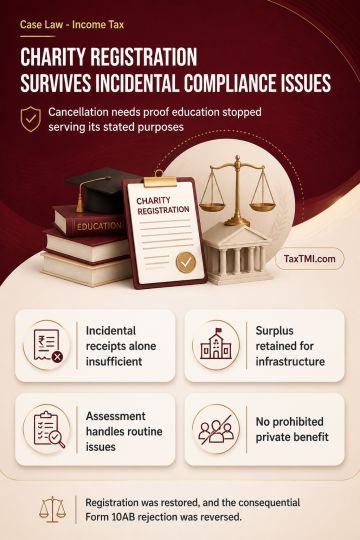
Charitable registration cancellation requires proof that educational activities abandoned their objects; incidental receipts and retained surplus are ...
Prospective customs notification amendments cannot bar provisional release consideration for earlier imports when bills of lading predate their commen...
Departmental exoneration does not by itself require discharge, acquittal, or termination of a criminal prosecution because departmental and criminal proceedings are independent, proceed on different evidence, and apply different standards of proof. The High Court therefore upheld refusal to discharge Customs officials accused of facilitating gold smuggling. At the discharge stage, the court must determine whether the prosecution material discloses the alleged offences or creates a strong suspicion warranting trial; mere suspicion is insufficient. As the material prima facie met that threshold, evidentiary evaluation, including alleged illegal gratification, was left for trial. The revision petitions were dismissed and trial was to proceed expeditiously.
Departmental exoneration does not by itself require discharge, acquittal, or termination of a criminal prosecution because departmental and criminal proceedings are independent, proceed on different evidence, and apply different standards of proof. The High Court therefore upheld refusal to discharge Customs officials accused of facilitating gold smuggling. At the discharge stage, the court must determine whether the prosecution material discloses the alleged offences or creates a strong suspicion warranting trial; mere suspicion is insufficient. As the material prima facie met that threshold, evidentiary evaluation, including alleged illegal gratification, was left for trial. The revision petitions were dismissed and trial was to proceed expeditiously.
Note: It is a system-generated summary and is for quick reference only.
 TaxTMI
  TaxTMI
 of 4881