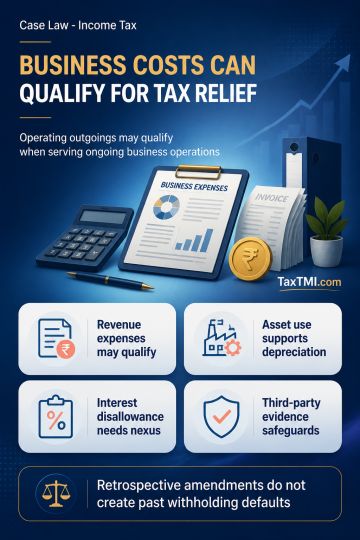
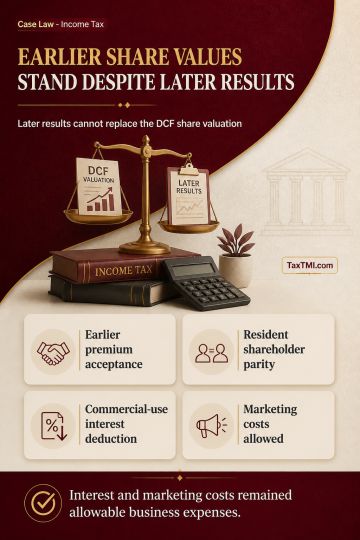
Business expenditure and depreciation rules allow operational outgoings while limiting disallowances for personal elements and unsupported third-party...
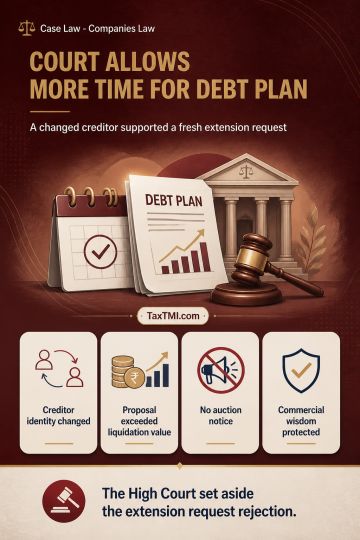
Compromise-and-arrangement extensions may accommodate debt assignment where creditor commercial judgment supports value maximisation and avoids proced...
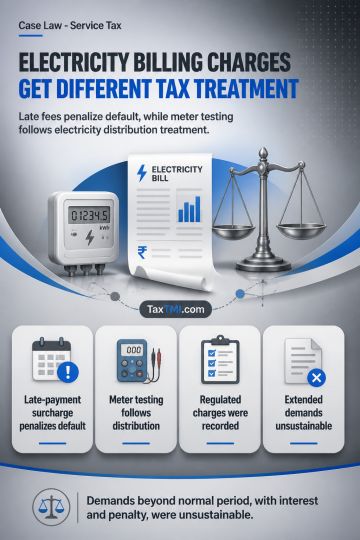
Delayed-payment surcharge is not taxable tolerance consideration where it penalises default, while meter testing follows electricity distribution trea...
Sufficient cause for delayed revenue income-tax appeals requires bona fides, due diligence and a credible explanation; otherwise limitation bars appea...
Inverted-duty-structure refunds remain available for unchanged-rate apparel supplies despite trader status and require tax-period-specific computation...
Page of 4881
Press 'Enter' after typing page number.
781 to 800 of 97618 Results
❮
❯
❯❯
0 / 200
Expand Note
Add to Folder
No Folders have been created
+
Are you sure you want to delete "My most important" ?
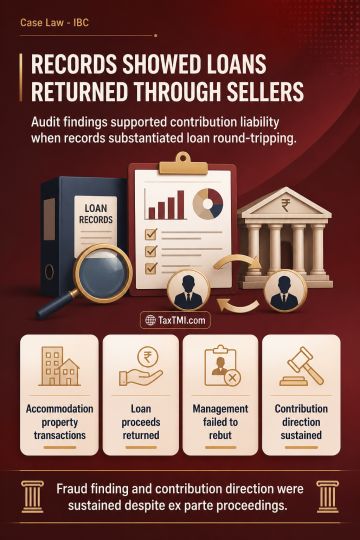
Forensic audit reports are not conclusive proof of fraud, but may support insolvency contribution liability when reliable documentary evidence substantiates their findings. Sale deeds, bank records, sub-registrar records and title-verification material supported findings that property transactions were accommodation arrangements used to raise loans. Loan proceeds substantially returned through sellers to the corporate debtor and related entities, establishing round-tripping intended to defraud creditors. Former management failed to rebut matters within its special knowledge. Ex parte determination remained valid because suspended directors received adequate opportunity to contest the proceedings and did not produce reliable contrary material. The fraudulent-transaction finding and consequential contribution direction were sustained.
Forensic audit reports are not conclusive proof of fraud, but may support insolvency contribution liability when reliable documentary evidence substantiates their findings. Sale deeds, bank records, sub-registrar records and title-verification material supported findings that property transactions were accommodation arrangements used to raise loans. Loan proceeds substantially returned through sellers to the corporate debtor and related entities, establishing round-tripping intended to defraud creditors. Former management failed to rebut matters within its special knowledge. Ex parte determination remained valid because suspended directors received adequate opportunity to contest the proceedings and did not produce reliable contrary material. The fraudulent-transaction finding and consequential contribution direction were sustained.
Note: It is a system-generated summary and is for quick reference only.
 TaxTMI
  TaxTMI
 of 4881