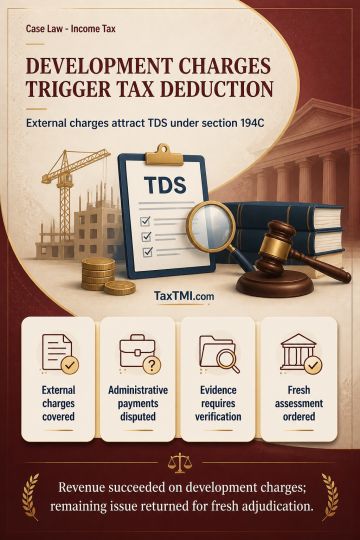
External development charges trigger TDS under section 194C, while disputed administrative payments require factual verification and fresh adjudicatio...
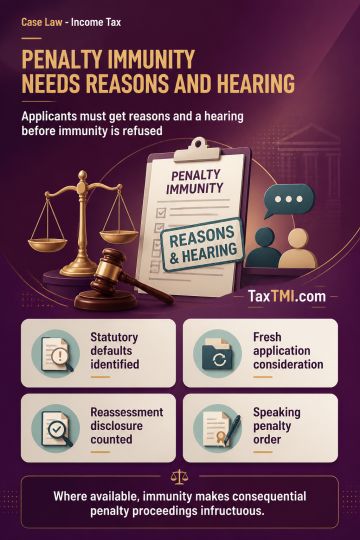
Section 270AA penalty immunity requires identified statutory defaults and a hearing before rejection; reassessment disclosure may constitute under-rep...
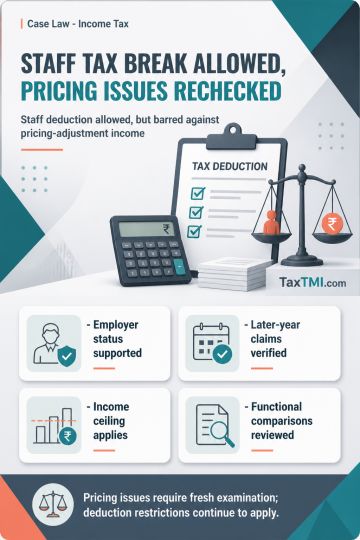
Section 80JJAA employee-cost deduction allowed for deployed staff but barred against transfer-pricing income enhancement, with pricing issues remanded...
Transfer-pricing methodology protects commercially genuine associated-enterprise payments, while pre-2016 secondary adjustments and related notional i...
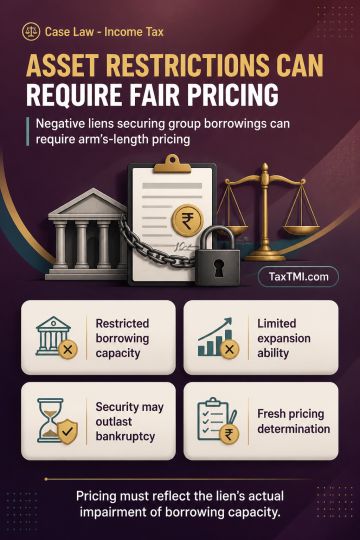
Negative liens over operating assets can constitute international transactions requiring arm's-length pricing reflecting restricted borrowing and expa...
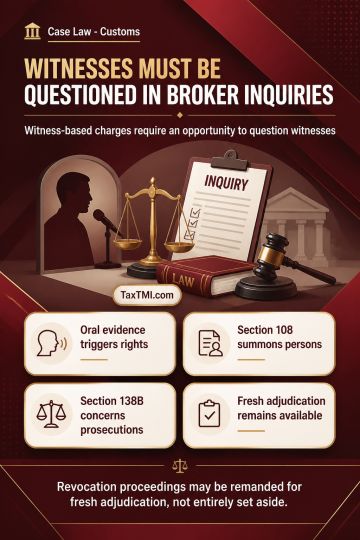
Cross-examination rights in Customs Broker revocation inquiries require witness examination; procedural denial may be cured through fresh adjudication...
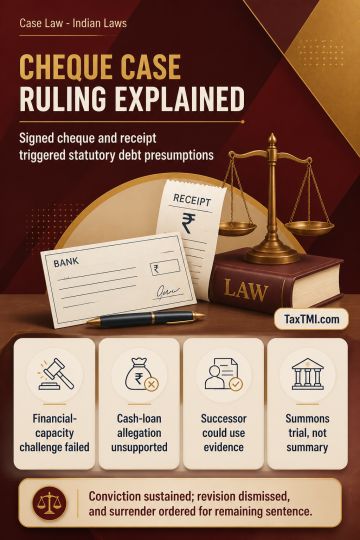
Admission of cheque execution and signatures on the cheque and money receipt triggered the presumptions of consideration and legally enforceable debt under the Negotiable Instruments Act. Questions concerning the complainant's financial capacity and an alleged breach of income-tax rules on cash loans did not rebut those presumptions without cogent and reliable evidence. The cheque-dishonour conviction was therefore sustained. A succeeding Magistrate could decide the matter on evidence recorded by the predecessor because the prosecution proceeded as a summons trial, not a summary trial; the statutory restriction on successor Magistrates was consequently inapplicable. The criminal revision was dismissed, and surrender was directed for the remaining sentence.
Admission of cheque execution and signatures on the cheque and money receipt triggered the presumptions of consideration and legally enforceable debt under the Negotiable Instruments Act. Questions concerning the complainant's financial capacity and an alleged breach of income-tax rules on cash loans did not rebut those presumptions without cogent and reliable evidence. The cheque-dishonour conviction was therefore sustained. A succeeding Magistrate could decide the matter on evidence recorded by the predecessor because the prosecution proceeded as a summons trial, not a summary trial; the statutory restriction on successor Magistrates was consequently inapplicable. The criminal revision was dismissed, and surrender was directed for the remaining sentence.
Note: It is a system-generated summary and is for quick reference only.
 TaxTMI
  TaxTMI
 of 4888