Electronic certificates of origin enable preferential tariffs under the India-New Zealand FTA when format, verification, and filing requirements are m...
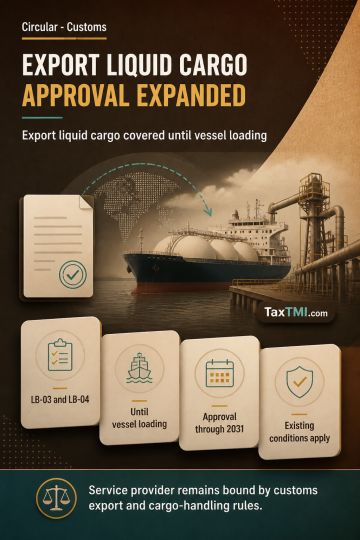
Customs approval for liquid cargo exports extends designated jetty operations while existing boarding station and customs area limits remain unchanged...
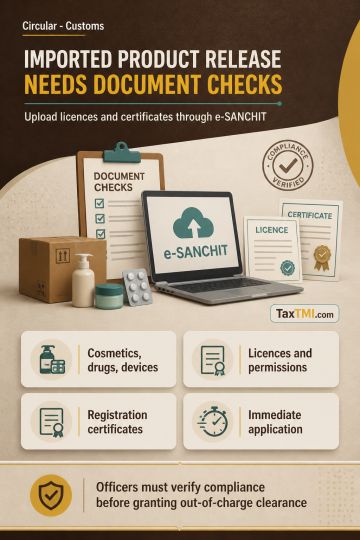
Mandatory compliance document verification now conditions out-of-charge clearance for imported cosmetics, drugs, and medical devices through PGA-facil...
Page of 4921
Press 'Enter' after typing page number.
1 to 20 of 98414 Results
❮
❯
❯❯
0 / 200
Expand Note
Add to Folder
No Folders have been created
+
Are you sure you want to delete "My most important" ?
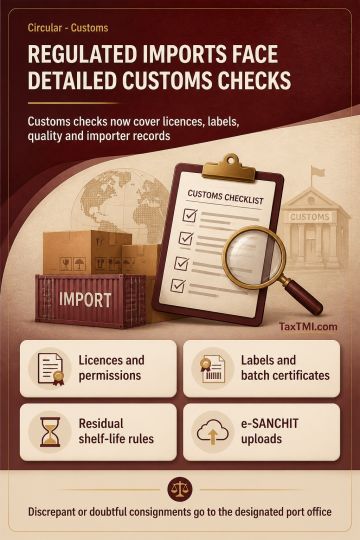
PGA-facilitated Bills of Entry for cosmetics, drugs and medical devices require Customs verification of category-specific licences, permissions, registration certificates, invoices, packing lists, country-of-origin certificates, labels, storage-premises licences and batch quality certificates before out-of-charge. Imported products must correspond with approved registrations or import permissions in name, pack size, quantity and labelling particulars. Drug imports require residual shelf life exceeding 60%; APIs must carry a scannable QR code containing prescribed traceability information. Medical devices with applicable shelf life must meet minimum residual shelf-life requirements based on their total shelf-life period. Importers must provide packaging-condition undertakings, and cosmetics require declarations on hexachlorophene and animal testing. Discrepant or doubtful consignments must be referred to the designated port office, while required records should be uploaded through e-SANCHIT.
PGA-facilitated Bills of Entry for cosmetics, drugs and medical devices require Customs verification of category-specific licences, permissions, registration certificates, invoices, packing lists, country-of-origin certificates, labels, storage-premises licences and batch quality certificates before out-of-charge. Imported products must correspond with approved registrations or import permissions in name, pack size, quantity and labelling particulars. Drug imports require residual shelf life exceeding 60%; APIs must carry a scannable QR code containing prescribed traceability information. Medical devices with applicable shelf life must meet minimum residual shelf-life requirements based on their total shelf-life period. Importers must provide packaging-condition undertakings, and cosmetics require declarations on hexachlorophene and animal testing. Discrepant or doubtful consignments must be referred to the designated port office, while required records should be uploaded through e-SANCHIT.
Note: It is a system-generated summary and is for quick reference only.
 TaxTMI
 TaxTMI