Opportunity to furnish unsecured-loan confirmations is required before reassessment initiation; proceedings require fresh consideration after taxpayer...
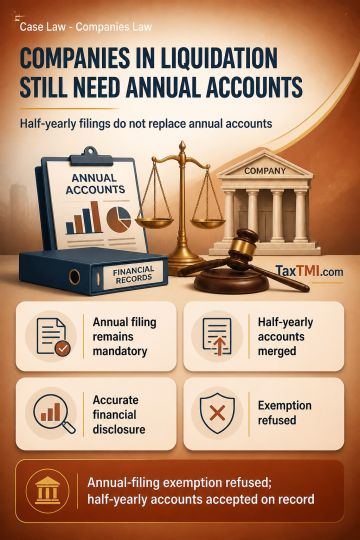
Companies in liquidation must file annual or final accounts even where audited half-yearly accounts for both halves of the financial year have been filed. Half-yearly accounts must be merged into annual accounts because annual reporting is necessary to accurately disclose the companies' financial position. Exemption from filing annual or final accounts for the relevant financial year was therefore refused. The half-yearly accounts were accepted on record, and auditors' fees could be paid from available company funds or, subject to reimbursement, from the Estate and Establishment Fund.
Companies in liquidation must file annual or final accounts even where audited half-yearly accounts for both halves of the financial year have been filed. Half-yearly accounts must be merged into annual accounts because annual reporting is necessary to accurately disclose the companies' financial position. Exemption from filing annual or final accounts for the relevant financial year was therefore refused. The half-yearly accounts were accepted on record, and auditors' fees could be paid from available company funds or, subject to reimbursement, from the Estate and Establishment Fund.
Note: It is a system-generated summary and is for quick reference only.
 TaxTMI
  TaxTMI