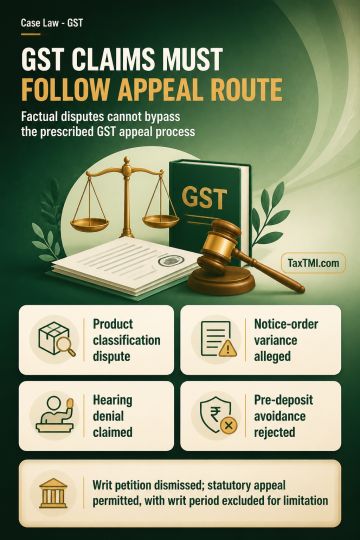
Alternative statutory remedy under GST bars writ challenge where classification, notice variance, and hearing disputes require factual appellate revie...
Duplicate PAN cancellation timeframe requires prior administrative representation before judicial intervention, ensuring a time-bound decision on the ...
Natural justice and pre-CIRP labour awards protect termination compensation, permitting withdrawal of court deposits despite later insolvency resoluti...
Arbitration of SEZ sub-lease monetary claims preserves rent, maintenance, termination, improvements and damages disputes while unused premises are vac...
Scientific research approval grants a research association tax recognition, subject to annual donor reporting, certification, and regulatory complianc...
Page of 4891
Press 'Enter' after typing page number.
141 to 160 of 97820 Results
❮
❯
❯❯
0 / 200
Expand Note
Add to Folder
No Folders have been created
+
Are you sure you want to delete "My most important" ?
Jurisdictional objections in reassessment, including a notice issued in the name of a deceased assessee and alleged procedural non-compliance, must be addressed before merits where they could invalidate the reassessment. Section 250(6) requires the appellate authority to identify each point for determination, record its decision and provide reasons; a general reference to the assessment order does not constitute ground-wise reasoned adjudication. The authority's power to set aside a best-judgment assessment does not remove this obligation. Jurisdictional and legal grounds should be decided through a speaking order before additions are examined on merits, which arise only if the reassessment is valid.
Jurisdictional objections in reassessment, including a notice issued in the name of a deceased assessee and alleged procedural non-compliance, must be addressed before merits where they could invalidate the reassessment. Section 250(6) requires the appellate authority to identify each point for determination, record its decision and provide reasons; a general reference to the assessment order does not constitute ground-wise reasoned adjudication. The authority's power to set aside a best-judgment assessment does not remove this obligation. Jurisdictional and legal grounds should be decided through a speaking order before additions are examined on merits, which arise only if the reassessment is valid.
Note: It is a system-generated summary and is for quick reference only.
 TaxTMI
  TaxTMI
 of 4891