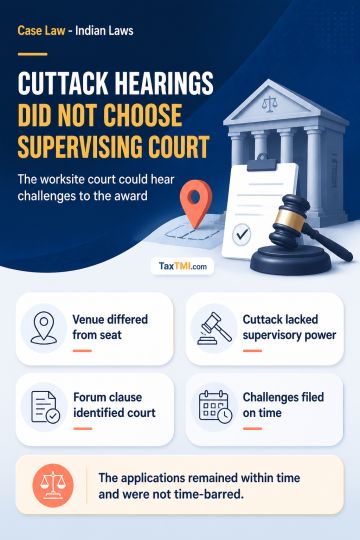
Juridical seat versus arbitral venue determines supervisory court jurisdiction, while timely award challenges remain within the prescribed limitation ...
Condonation of delay in customs appeals requires a bona fide, satisfactory explanation covering the entire period of delay. Although "sufficient cause" receives a liberal, justice-oriented construction, that approach does not excuse gross negligence, lack of diligence or prolonged inaction. Participation through counsel, communication of the adjudication order to counsel, departmental efforts to serve the order, and failure to enquire about the outcome for nearly three years may support refusal of condonation; later receipt of an order copy does not explain earlier inaction. Under the Customs Act, High Court review does not permit reappreciation of such factual findings absent perversity, disregard of material evidence or legal error.
Condonation of delay in customs appeals requires a bona fide, satisfactory explanation covering the entire period of delay. Although "sufficient cause" receives a liberal, justice-oriented construction, that approach does not excuse gross negligence, lack of diligence or prolonged inaction. Participation through counsel, communication of the adjudication order to counsel, departmental efforts to serve the order, and failure to enquire about the outcome for nearly three years may support refusal of condonation; later receipt of an order copy does not explain earlier inaction. Under the Customs Act, High Court review does not permit reappreciation of such factual findings absent perversity, disregard of material evidence or legal error.
Note: It is a system-generated summary and is for quick reference only.
 TaxTMI
  TaxTMI
 of 4886