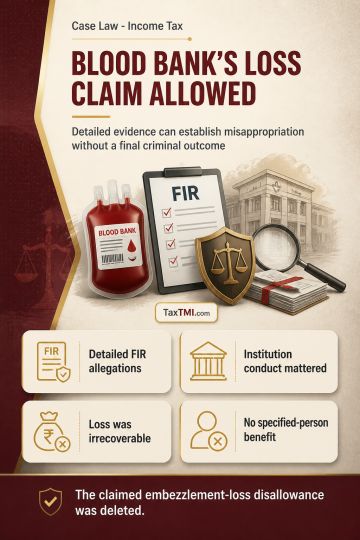
Embezzlement losses in charitable institutions remain allowable when misappropriation is established, irrecoverable, and not a specified-person benefi...
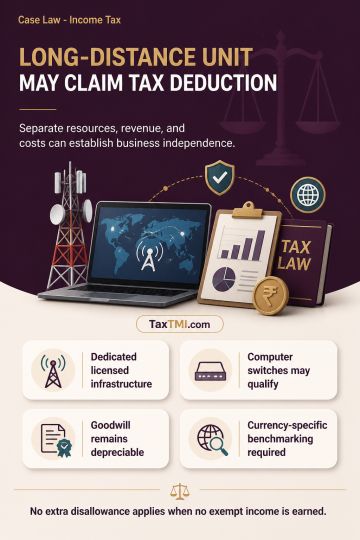
National long-distance undertaking status supports deduction where separately licensed infrastructure, resources, revenue, and expenditure establish c...
Agency reimbursement income follows contractual deposit-liability computation, while pending deposit collections do not constitute deemed-dividend loa...
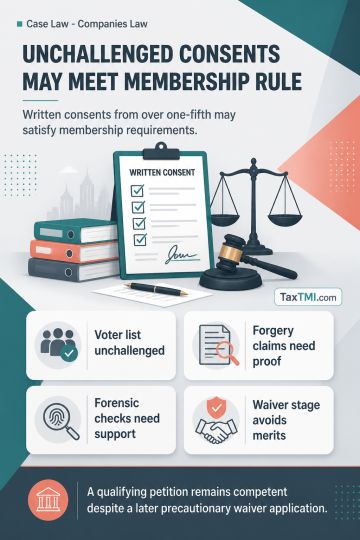
Membership-consent thresholds for oppression petitions are satisfied by unchallenged voter-list consents, while unsupported forgery claims require pro...
Fire-damaged motor cars brought with a vessel for ship-breaking may be classified as scrap where extensive damage has destroyed their identity and utility as motor vehicles, and salvage arrangements restrict disposal to demolition. Such goods are not restricted commercial or passenger vehicles, usable second-hand goods, or prohibited imports; confiscation for import without a licence is therefore not attracted. Unloading requires physical removal of cargo from a vessel; berthing at a notified ship-breaking port is not unloading. Where no unauthorised removal or other statutory contravention is established, neither the scrap cargo nor the vessel carrying it is liable to confiscation, and consequential penalties are unsustainable.
Fire-damaged motor cars brought with a vessel for ship-breaking may be classified as scrap where extensive damage has destroyed their identity and utility as motor vehicles, and salvage arrangements restrict disposal to demolition. Such goods are not restricted commercial or passenger vehicles, usable second-hand goods, or prohibited imports; confiscation for import without a licence is therefore not attracted. Unloading requires physical removal of cargo from a vessel; berthing at a notified ship-breaking port is not unloading. Where no unauthorised removal or other statutory contravention is established, neither the scrap cargo nor the vessel carrying it is liable to confiscation, and consequential penalties are unsustainable.
Note: It is a system-generated summary and is for quick reference only.
 TaxTMI
  TaxTMI
 of 4881