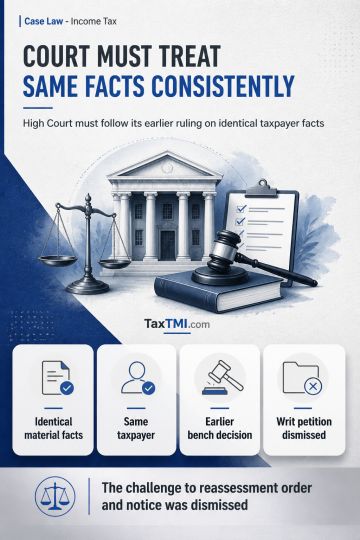
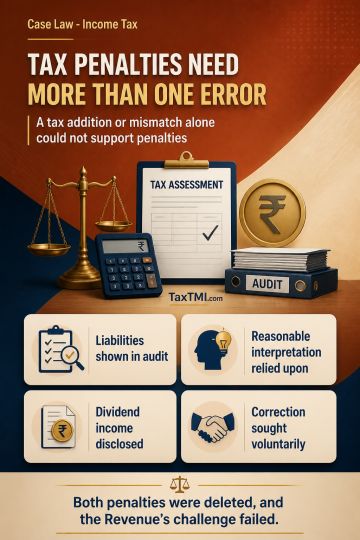
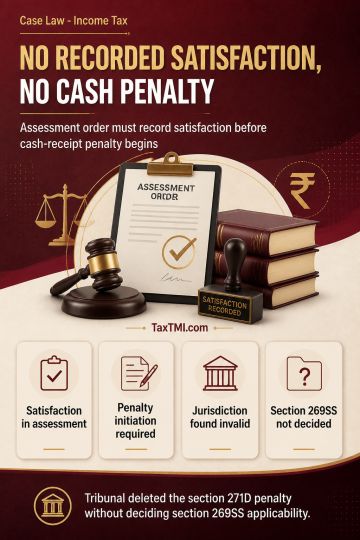
Judicial discipline requires consistent reassessment treatment where identical facts were decided for the same taxpayer in the preceding assessment ye...
Tribunal jurisdiction to convene a requisitioned extraordinary general meeting is not conditional on the requisitioning member first using its statutory power to call the meeting after Board default; those remedies operate independently. However, intervention in corporate internal management remains exceptional and requires a reasonable factual basis showing that convening the meeting through ordinary statutory or articles-based mechanisms is impracticable. Board division or rejection of a requisition alone does not establish impracticability. Where the requisitioning member neither demonstrates difficulty in convening shareholders nor uses the available statutory mechanism, a direction to convene the meeting lacks the required factual basis and should be set aside.
Tribunal jurisdiction to convene a requisitioned extraordinary general meeting is not conditional on the requisitioning member first using its statutory power to call the meeting after Board default; those remedies operate independently. However, intervention in corporate internal management remains exceptional and requires a reasonable factual basis showing that convening the meeting through ordinary statutory or articles-based mechanisms is impracticable. Board division or rejection of a requisition alone does not establish impracticability. Where the requisitioning member neither demonstrates difficulty in convening shareholders nor uses the available statutory mechanism, a direction to convene the meeting lacks the required factual basis and should be set aside.
Note: It is a system-generated summary and is for quick reference only.
 TaxTMI
  TaxTMI
 of 4888