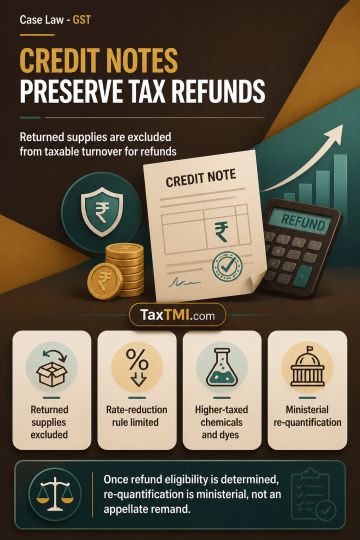
Credit-note turnover adjustments preserve inverted-duty refunds, while ministerial re-computation does not constitute an impermissible appellate reman...
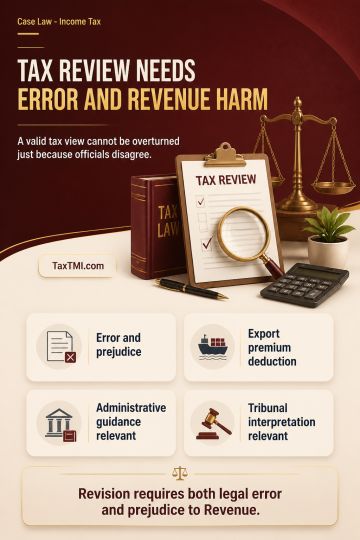
Revisional jurisdiction over export quota premium deductions requires both error and Revenue prejudice; a permissible assessment view cannot be displa...
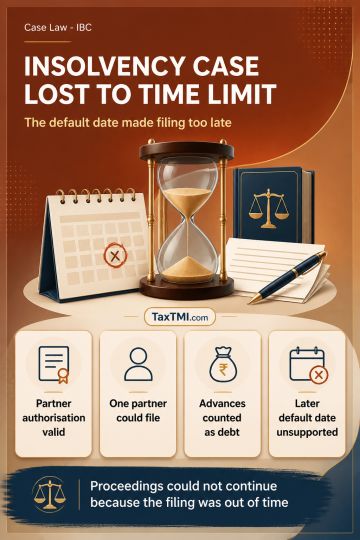
A Section 7 insolvency application was treated as time-barred because the record supported 31 March 2019 as the nearest ascertainable date of default, while a later date asserted by affidavit lacked evidentiary basis. The limitation period had therefore expired before the demand notice and filing, rendering the application not maintainable. The notes also state that a surviving-partner majority could authorise commencement of insolvency proceedings and that one partner could file in the firm's name. Advances recorded as repayable in balance sheets and ledgers constituted financial debt, even without a formal loan agreement or interest payment.
A Section 7 insolvency application was treated as time-barred because the record supported 31 March 2019 as the nearest ascertainable date of default, while a later date asserted by affidavit lacked evidentiary basis. The limitation period had therefore expired before the demand notice and filing, rendering the application not maintainable. The notes also state that a surviving-partner majority could authorise commencement of insolvency proceedings and that one partner could file in the firm's name. Advances recorded as repayable in balance sheets and ledgers constituted financial debt, even without a formal loan agreement or interest payment.
Note: It is a system-generated summary and is for quick reference only.
 TaxTMI
  TaxTMI