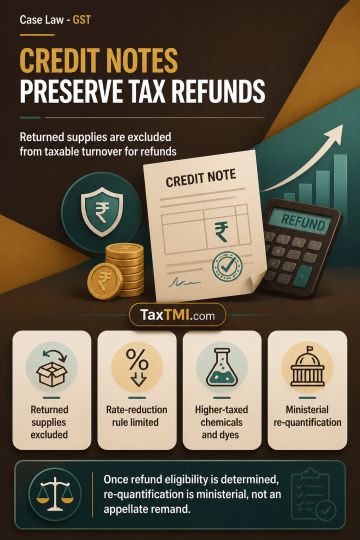
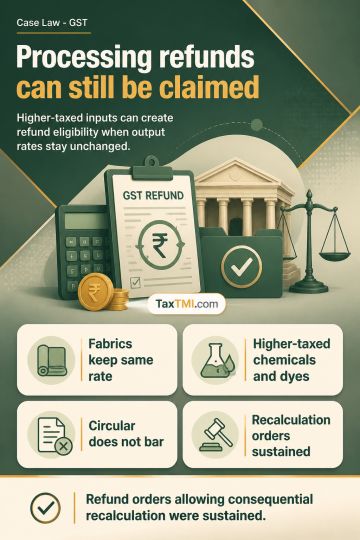
Credit-note turnover adjustments preserve inverted-duty refunds, while ministerial re-computation does not constitute an impermissible appellate reman...
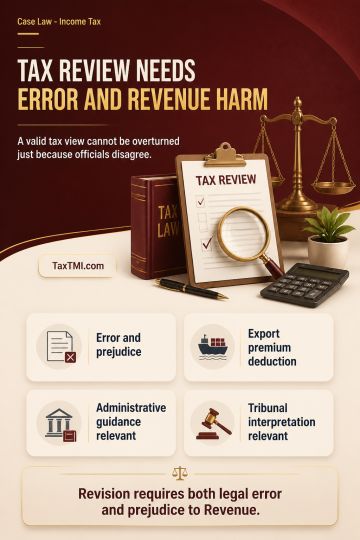
Revisional jurisdiction over export quota premium deductions requires both error and Revenue prejudice; a permissible assessment view cannot be displa...
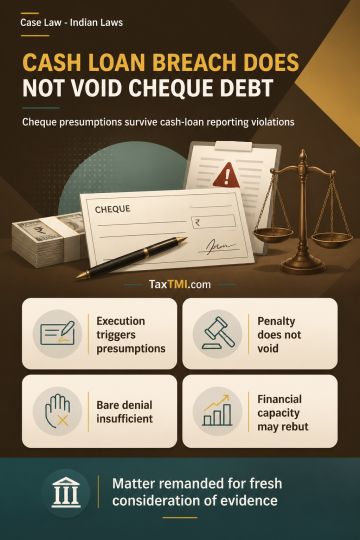
Admission of cheque execution triggers presumptions of consideration and legally enforceable debt under the cheque-dishonour framework. A cash loan exceeding the limit under section 269SS of the Income-tax Act may attract penalty under section 271D, but does not render the underlying transaction illegal, void or unenforceable; it does not itself rebut those presumptions. The presumption in favour of the cheque holder remains rebuttable, but a bare denial is insufficient. The accused must explain the cheque's issuance and possession, while credible evidence that the payee lacked financial capacity to lend may rebut the presumption. The matter was remanded for fresh consideration of the evidence.
Admission of cheque execution triggers presumptions of consideration and legally enforceable debt under the cheque-dishonour framework. A cash loan exceeding the limit under section 269SS of the Income-tax Act may attract penalty under section 271D, but does not render the underlying transaction illegal, void or unenforceable; it does not itself rebut those presumptions. The presumption in favour of the cheque holder remains rebuttable, but a bare denial is insufficient. The accused must explain the cheque's issuance and possession, while credible evidence that the payee lacked financial capacity to lend may rebut the presumption. The matter was remanded for fresh consideration of the evidence.
Note: It is a system-generated summary and is for quick reference only.
 TaxTMI
  TaxTMI