Loading...

⚠ ✕
❮ Top
☎ Help
☰
×

By creating an account you can:

Logo TaxTMI
Call Us / Help / Feedback✕

Contact Us At :

✉ E-mail: [email protected]

✆ To Call / Whatsapp, Check Contact Us

FAQs :

To know Frequently Asked Questions, Check FAQs

Most Asked Video Tutorials :

For more tutorials, Check Video Tutorials

Submit Feedback/Suggestion :

Email :
Please provide your email address so we can follow up on your feedback.
Category :
Description :
Min 15 characters 0/2000
Make Most of Text Search ✕
  1. Checkout this video tutorial: How to search effectively on TaxTMI.
  2. Put words in double quotes for exact word search, eg: "income tax"
  3. Avoid noise words such as : 'and, of, the, a'
  4. Sort by Relevance to get the most relevant document.
  5. Press Enter to add multiple terms/multiple phrases, and then click on Search to Search.
  6. Text Search
  7. The system will try to fetch results that contains ALL your words.
  8. Once you add keywords, you'll see a new 'Search In' filter that makes your results even more precise.
  9. Text Search
╳
Add to...
You have not created any category. Kindly create one to bookmark this item!
✕
Create New Category
Hide
Title :
Description :
❮❮ Hide
❮ Default View
Expand ❯❯
Close ✕
🔎 Filters / Advanced Search ❯
TEXT

Press 'Enter' to add multiple search terms. Rules for Better Search

Search In
Main Text + AI Text ❯
  • Main Text
  • Main Text + AI Text
  • AI Text
Law:
---- All Laws---- ❯
  • ---- All Laws----
  • Benami Property
  • Bill
  • Central Excise
  • Companies Law
  • Customs
  • DGFT
  • FEMA
  • GST
  • GST - States
  • IBC
  • Income Tax
  • Indian Laws
  • Money Laundering
  • SEBI
  • SEZ
  • Service Tax
  • VAT / Sales Tax
Types:
---- All Types ---- ❯
  • ---- All Types ----
  • Act Rules
  • Case Laws
  • Circulars
  • Manuals
  • News
  • Notifications
Sort By: ?
In Sort By 'Default', exact matches for text search are shown at the top, followed by the remaining results in their regular order.
Relevance Default Date
☰   Show Results ❯
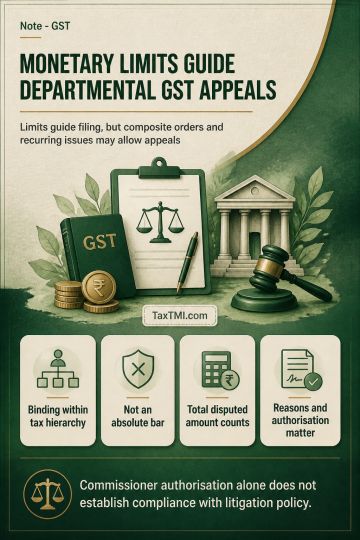
    Monetary Limits for Departmental GST Appeals under Section 120 and Circular No. 207/1/2024-GST
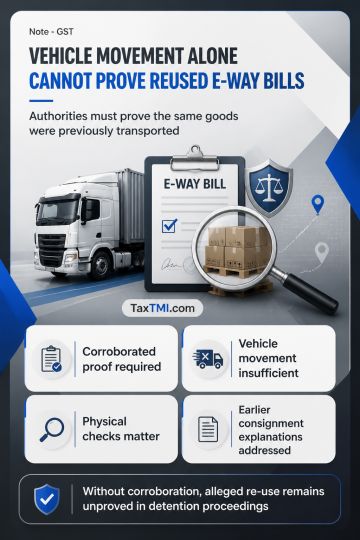
    Alleged Re-use of E-Way Bills under Section 129: Evidentiary Burden in Detention Proceedings
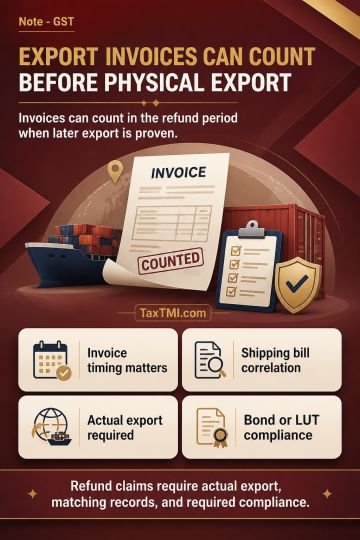
    Turnover of Zero-Rated Supply Under Rule 89(4): Invoice Period and Subsequent Physical Export
    Case Laws Income Tax
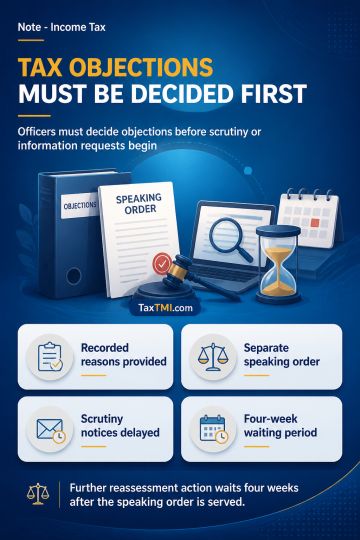
    Reassessment Proceedings: Speaking Disposal of Objections Before Scrutiny Under Sections 143(2) and ...
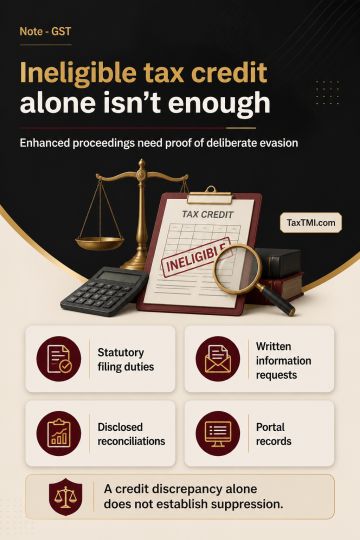
    Suppression of Facts under Explanation 2 to Section 74 of the CGST Act in Cases of Ineligible Input ...
    Case Laws Customs
    Classification of Low-Ethoxylated Non-Ionic Fatty Alcohol Ethoxylates under Headings 3402 and 3824
    Case Laws Customs
    Seizure and Detention of Imported Cars under Sections 110, 110A and 124 of the Customs Act, 1962
    Case Laws Companies Law
    Lifting the Corporate Veil Where Promoter Shareholding Is Allegedly Dissipated Despite Judicial Assu...
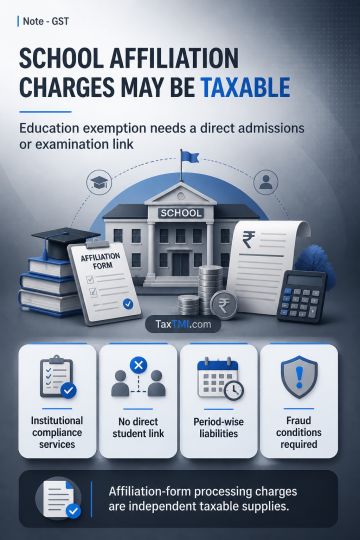
    Consolidated Show Cause Notices under Sections 73 and 74 and Taxability of School Affiliation Servic...
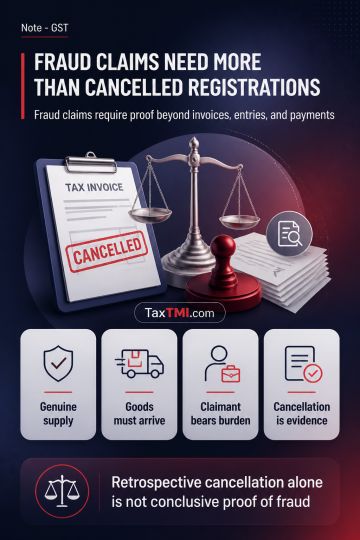
    Fraudulent Input Tax Credit from Non-Existent Suppliers: Application of Sections 16, 74 and 155 of t...
    Case Laws Money Laundering
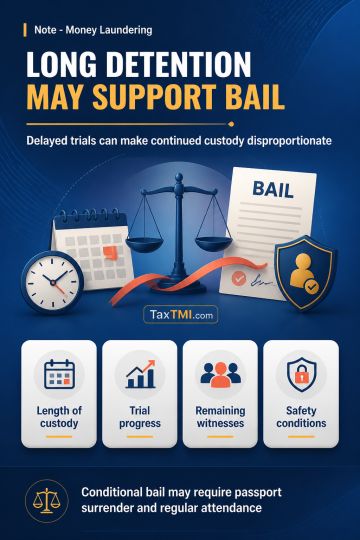
    Prolonged Pre-Trial Incarceration and Bail under Section 45 of the Prevention of Money-Laundering Ac...
    Case Laws Income Tax
    Prospective Operation of Section 56(2)(x)(b) in Stamp-Value Difference Cases Involving Immovable Pro...
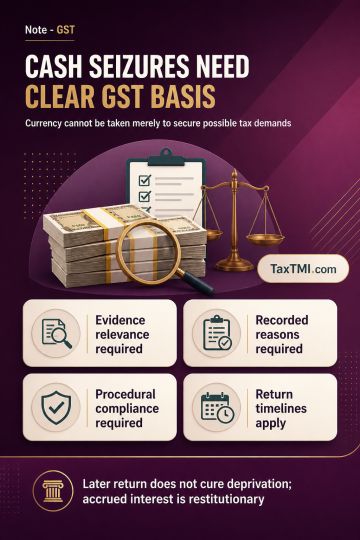
    Seizure of Cash under Section 67 of the CGST Act and Interest on Illegal Retention
    Case Laws Income Tax
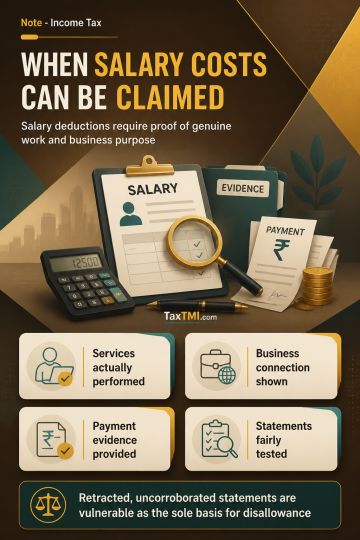
    Disallowance of Salary Expenditure for Allegedly Non-Genuine Services under Section 37
    Case Laws Income Tax
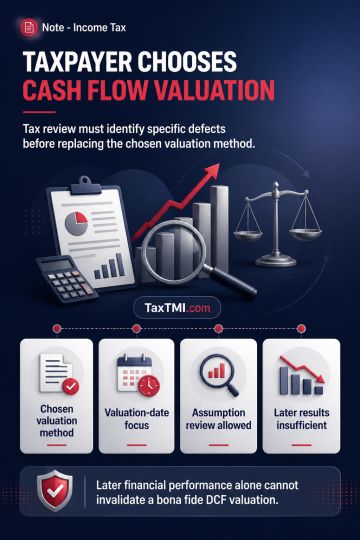
    Fair Market Value of Unquoted Equity Shares Under Section 56(2)(viib) and Rule 11UA
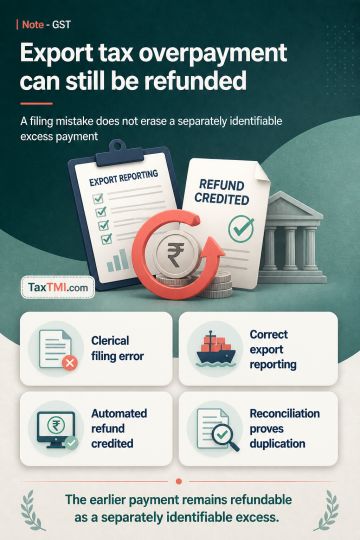
    Refund of Excess IGST Paid on Exports Following Clerical Error in FORM GSTR-3B
    Revocation of Cancellation of GST Registration for Non-Filing of Returns under Section 30 and Rule 2...
    Case Laws Income Tax
    TOLA, Section 149 and the Surviving-Time Test for Reassessment Proceedings
    Case Laws Customs
    Provisional Release of Unseized Imported Food Consignments under the Customs Act, 1962
    Case Laws Customs
    Recovery of Unpaid Anti-Dumping Duty After Self-Assessment Under Section 28 of the Customs Act, 1962
❮
❯
❯❯
Maximize Maximize Maximize
0 / 200
Expand Note
Add to Folder

No Folders have been created

+

Are you sure you want to delete "My most important" ?

NOTE:

Notes
Showing Results for :
Reset Filters
Results Found:
Show All Summaries Hide All Summaries
Case Laws GST
Show AI Summary
Departmental GST appeal monetary limits regulate officers, while composite orders and proven recurring issues may permit appeals.
Sections 120 and 168 of the Central Goods and Services Tax Act, 2017 make monetary-limit directions binding within the Central tax hierarchy, while they regulate the executive decision to file rather than create an inflexible jurisdictional bar before the Tribunal. In a composite order disposing of multiple appeals or demand notices, the relevant amount is the total disputed tax, interest, penalty or late fee, as applicable. The recurring or interpretative-issue exclusion requires a reasoned, case-specific basis, and Commissioner authorisation does not itself establish compliance with the litigation policy.
Case Laws GST
Show AI Summary
E-way bill re-use allegations require corroborated proof identifying the same goods; vehicle movement alone cannot establish contravention.
Alleged re-use of invoices and e-way bills requires the seizing authority to establish through positive, corroborated evidence that the intercepted goods are the same consignment previously transported under those documents. Toll data, vehicle movements and photographs may justify inquiry but do not alone prove prior delivery, identity of goods or re-use. Where invoices and e-way bills accompany the goods and physical verification shows no discrepancy, the authority must investigate and address any explanation of a different earlier consignment. Cases involving absent or expired transport documents remain factually distinct.
Case Laws GST
Show AI Summary
Zero-rated supply turnover includes export invoices from the refund period when actual export is subsequently established under bond or LUT.
Under Rule 89(4), invoice values for goods invoiced before or at removal for export under bond or Letter of Undertaking may be included in zero-rated turnover for the relevant refund period, although physical export occurs later. The invoice and removal determine period-wise attribution for the refund formula, while actual export remains essential to sustain the claim. Shipping bills, bills of export and related export records must correlate with the export invoices to establish that the goods were ultimately exported. Compliance with valuation, input tax credit eligibility and bond or Letter of Undertaking conditions remains necessary.
Case Laws Income Tax
Show AI Summary
Reassessment objections require speaking disposal and a four-week pause before scrutiny or information requests can begin.
Under the pre-amendment Section 148 framework, reassessment jurisdiction must be resolved before merits-stage scrutiny begins. The Assessing Officer must furnish recorded reasons when requested, permit objections, and decide them through a separate speaking order. A Section 143(2) notice commences scrutiny, while a Section 142(1) notice is a substantive inquiry step; neither may issue before objections are decided. Following rejection, a four-week period from service of the speaking order must be allowed before further reassessment action, preserving an effective opportunity to challenge reopening.
Case Laws GST
Show AI Summary
Suppression of facts requires proof of deliberate tax evasion; ineligible input tax credit alone cannot support enhanced proceedings.
Section 74 permits enhanced tax determination for wrongly availed or utilised input tax credit only where fraud, wilful misstatement, or suppression of facts to evade tax is established. Wrong or ineligible credit is distinct from substantive credit eligibility and cannot, without evidence of deliberate conduct and intent, amount to suppression. Under historical Explanation 2, suppression required either omitted information legally required in prescribed filings or failure to provide information sought in writing; both operate subject to the statutory evasion requirement. Disclosed reconciliations and portal records materially weaken a bare allegation of non-declaration.
Case Laws Customs
Show AI Summary
Organic surface-active agent classification requires water solubility and stability; phase-separating low-ethoxylated products fall outside Heading 3402.
Classification of low-ethoxylated non-ionic fatty alcohol ethoxylates under Heading 3402 requires satisfaction of the cumulative water test in Chapter Note 3. At the prescribed concentration, temperature, and standing period, the product must both remain a transparent or translucent liquid, or stable emulsion, without phase separation and reduce water surface tension to the stated threshold. Non-ionic character or surface activity alone is insufficient. Where a low-ethoxylated product separates into layers and fails the solubility and stability requirement, Heading 3824 may be considered after exclusion from Heading 3402.
Case Laws Customs
Show AI Summary
Lawful customs seizure requires recorded confiscation grounds, formal restraint where needed, and timely notice; detention cannot bypass safeguards.
Customs seizure of an imported car requires recorded reason to believe that it is liable to confiscation. A panchnama restraint cannot replace a lawful seizure order, an undertaking where seized goods remain in custody, or a served non-dealing order where seizure is impracticable. Section 110(2) requires prompt notice under Section 124, subject only to the prescribed extension mechanism. Prolonged effective detention cannot postpone those safeguards. Provisional release under Section 110A applies only to goods lawfully seized and cannot validate an earlier detention without statutory authority.
Case Laws Companies Law
Show AI Summary
Corporate veil-piercing permits forensic scrutiny in execution where promoter-controlled entities may dissipate shareholding despite judicial assurances.
Corporate veil-piercing in execution is an exceptional response where promoters allegedly use layered entities and securities transactions to deplete shareholding represented as security through judicial assurances. Separate personality remains the rule, and control or ownership alone does not suffice; there must be a nexus between control, misuse of the corporate form, and frustration of enforcement. A forensic audit reconstructs share movements, pledges, sales, financing, approvals, disclosures, and fund flows, distinguishing legitimate enforcement of pre-existing security from coordinated asset dissipation.
Case Laws GST
Show AI Summary
School affiliation services fall outside educational exemption without a direct nexus to admissions or examination conduct.
Consolidated show cause notices may combine financial years governed by Sections 73 and 74 where liabilities are segregated period-wise, each component independently meets limitation and notice requirements, the additional ingredients for fraud-based proceedings are satisfied, and no actual prejudice arises. School affiliation and affiliation-form processing charges are independent taxable supplies where they concern institutional eligibility and compliance, rather than directly and immediately relating to student admission or the conduct of examinations. A broad connection with education does not satisfy the educational-services exemption.
Case Laws GST
Show AI Summary
Fraudulent input tax credit requires proof of fictitious supplies, absent goods receipt, and fraud-linked self-assessment, not cancellation alone.
Input tax credit from allegedly non-existent suppliers depends on proof of genuine supply and actual receipt of goods or services, not merely invoices, accounting entries, or banking-channel payments. Section 155 places the burden of establishing ITC eligibility on the claimant. Section 74 requires more than ineligible credit: the wrongful availment must be linked to fraud, wilful misstatement, or suppression to evade tax. Retrospective supplier-registration cancellation is relevant evidence but is not conclusive. A fraud-based notice must disclose facts showing fictitious suppliers, absence of supply, and a basis for inferring the recipient's knowledge or participation.
Case Laws Money Laundering
Show AI Summary
Prolonged pre-trial incarceration may justify conditional PMLA bail when delayed trials make continued detention constitutionally disproportionate.
Section 45 of the Prevention of Money-Laundering Act remains the stringent ordinary bail threshold, requiring prosecutorial opportunity and, on opposition, reasonable grounds to believe that the accused is not guilty and unlikely to offend while on bail. Article 21 nevertheless requires a separate, fact-sensitive inquiry where prolonged pre-trial detention and an unrealistic trial timetable make custody disproportionate. Relevant factors include custody length, trial progress, remaining witnesses, secured documentary evidence, source of delay, predicate-case status, and risks of absconding or witness interference. Conditions such as passport surrender, attendance, non-contact directions, and residence disclosure may safeguard the trial.
Case Laws Income Tax
Show AI Summary
Prospective operation of stamp-value taxation prevents retrospective application where property agreements and substantial payments predate the charging provision.
Section 56(2)(x)(b) applies to immovable property received for inadequate consideration only where its temporal and valuation conditions are satisfied. A stamp-value difference alone does not establish taxability. Where consideration was fixed and substantial payments or contractual performance occurred before the charging provision commenced, later conveyance or registration does not by itself attract the later charge. Agreement-date valuation is available only for covered transactions where consideration was fixed and paid, wholly or partly, through prescribed banking or electronic modes on or before the agreement date. The tax authority must identify the correct statutory basis and provide a meaningful opportunity to respond.
Case Laws GST
Show AI Summary
GST cash seizure limits require statutory relevance and restitutionary interest for unlawfully retained currency following searches.
GST seizure powers cannot be used to take cash as a general investigative measure or security for a possible tax demand. Currency is excluded from goods, and "things" is confined contextually to articles useful or relevant as evidence in GST proceedings. Valid seizure and retention require recorded statutory reasons, procedural compliance and observance of return timelines. Unauthorised retention engages property protections; later return does not cure the deprivation, and accrued interest is restitutionary rather than delayed-refund interest.
Case Laws Income Tax
Show AI Summary
Salary expense genuineness requires proof of actual services, business purpose, and fair testing of adverse third-party statements.
Under Section 37(1), salary expenditure is deductible only where it is actually incurred wholly and exclusively for business purposes and is supported by proof of genuine employment, services rendered, business nexus, and payment. Bank transfers and accounting entries alone are not conclusive. Where a third-party statement is central to an allegation of non-genuine salary, the taxpayer should receive disclosure and a meaningful opportunity to rebut it, including cross-examination where appropriate. A retracted and uncorroborated statement is vulnerable as the sole basis for disallowance.
Case Laws Income Tax
Show AI Summary
Discounted cash flow valuation remains taxpayer-selected under prescribed rules, while tax scrutiny must identify specific valuation-date defects.
The taxpayer may elect a prescribed DCF valuation for unquoted equity shares, and scrutiny of that method does not permit substitution with Net Asset Value merely because it produces a lower fair market value. The Assessing Officer may examine projections, discount rates, terminal assumptions, computations and source data, but rejection requires demonstrably wrong facts, material errors, a wholly erroneous basis or objectively unsupported assumptions. Subsequent financial performance cannot alone invalidate a bona fide DCF valuation; the relevant inquiry remains the reasonableness of valuation-date information.
Case Laws GST
Show AI Summary
Excess IGST on exports remains refundable when later correction triggers automated refund and reconciliation proves duplicate payment.
Refund of excess IGST paid on zero-rated exports may arise where turnover and tax are mistakenly entered under non-zero-rated supplies in FORM GSTR-3B while export invoices and shipping bills are correctly reported in FORM GSTR-1. If the exporter then pays the same IGST in the correct zero-rated field and the automated refund is credited against that later payment, the earlier payment remains a separately identifiable potential excess; its claim is not a repeat request for the same export-tax refund.
Case Laws GST
Show AI Summary
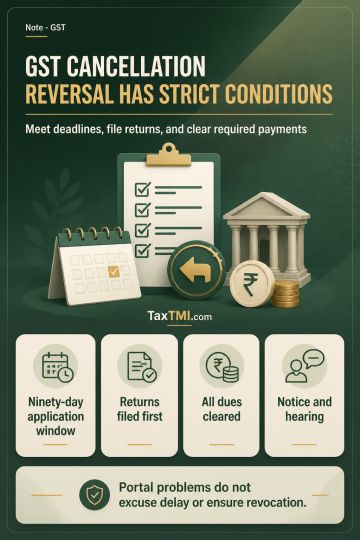
GST registration revocation requires timely application, return compliance, payment of dues, and a reasoned statutory decision.
GST registration revocation after cancellation for return default is a conditional, time-bound process. An application under Section 30 and Rule 23 must ordinarily be filed within ninety days, subject to prescribed extension, and cannot be made until pending returns are filed and tax, interest, penalty and late fee are paid. Portal non-acceptance may permit online or physical submission where technically unavailable, but does not condone delay or ensure revocation. The competent authority must assess statutory eligibility, sufficient grounds and compliance while following notice and hearing requirements before rejection.
Case Laws Income Tax
Show AI Summary
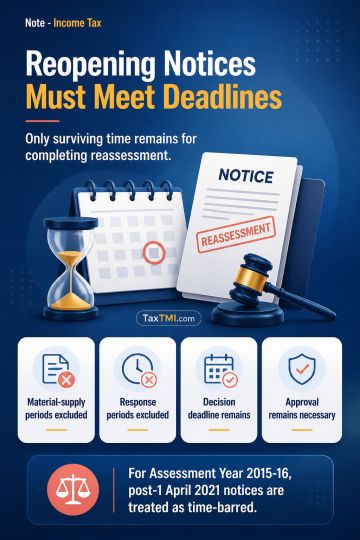
Reassessment limitation under TOLA requires final notices to issue within surviving time and satisfy statutory safeguards.
Reassessment limitation under TOLA is a jurisdictional restraint. Transitional notices issued between 1 April 2021 and 30 June 2021 are treated as Section 148A(b) show-cause notices, but only the surviving time remaining until 30 June 2021 is available for completing the reassessment process. Periods for supply of material and the assessee's response are excluded, but the Section 148A(d) decision, statutory approval and final Section 148 notice must issue within the remaining period. For Assessment Year 2015-16, post-1 April 2021 notices are treated as time-barred.
Case Laws Customs
Show AI Summary
Unseized food consignments cannot face indefinite detention without lawful seizure, valid sampling, and prompt assessment.
Provisional release of an unseized imported food consignment is not mechanically governed by Section 110A, which applies to goods seized under Section 110. Customs may examine, test, verify and reassess imports, but indefinite retention without a seizure memorandum or disclosed reasons connecting the goods with confiscation is not justified. Food sampling should follow the specialised food-safety process through an authorised officer. A valid food-safety report may support conditional clearance, while classification, duty liability, confiscation and adjudication remain open. Revenue may be protected through proportionate security.
Case Laws Customs
Show AI Summary
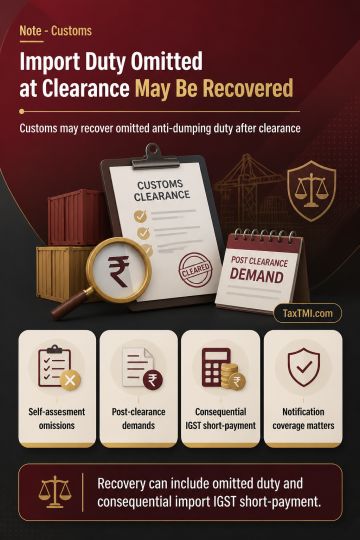
Anti-dumping duty recovery permits post-clearance demands and consequential import IGST where self-assessment omitted an applicable levy.
Unpaid anti-dumping duty omitted during self-assessment may be pursued through the customs recovery procedure without prior appellate modification of the self-assessment. The recovery framework applies to anti-dumping duty through statutory incorporation of provisions concerning assessment, non-levy, short-levy, interest and recovery. Where anti-dumping duty is chargeable, it forms part of the aggregate value used to compute IGST on imports, potentially creating a consequential IGST short-payment. Recovery requires accurate assessment of notification coverage, product, origin, rate, valuation, limitation and procedural safeguards.

TMI Notes

Back

All TMI Notes

Showing Results for :
Reset Filters
No Records Found

TMI Notes

Back

All TMI Notes

Procedure and Limitation for Tax Appeals : Clause 358 of the Income Tax Bill, 2025 Vs. Section 249 of the Income-tax Act, 1961

5 July, 2025

Contents
Acts
Rules & Regulations
Summary
Note

Note

-

Bookmark

(New) -

Download

Print

Print

Clause 358 Form of appeal and limitation.

Income Tax Bill, 2025

Introduction

The appellate mechanism under income tax law is a crucial safeguard for taxpayers against arbitrary or erroneous assessments and penalties. The right to appeal is not only statutory but also an essential element of natural justice. Both Clause 358 of the Income Tax Bill, 2025 and the existing Section 249 of the Income-tax Act, 1961 govern the form, process, and limitation for appeals to the Joint Commissioner (Appeals) and Commissioner (Appeals). This commentary undertakes a detailed analysis of Clause 358, elucidates its objectives, practical implications, and interprets its provisions. A comparative analysis with Section 249 is undertaken to highlight continuities, departures, and the legislative intent underpinning the proposed changes.

Objective and Purpose

The primary objective of both Clause 358 and Section 249 is to prescribe the procedural framework for filing appeals before the first appellate authorities under the Income Tax regime. This includes specifying:

  • The form and verification requirements for appeals.
  • The quantum and structure of appeal fees.
  • The limitation period for presenting appeals and conditions for condonation of delay.
  • Pre-conditions regarding payment of admitted tax or advance tax before entertaining an appeal.
  • Exemptions and relaxations in cases of hardship or sufficient cause.

The legislative intent is to ensure a structured, fair, and efficient appellate process that balances taxpayer rights against the need for revenue certainty and procedural discipline.

Detailed Analysis of Clause 358 of the Income Tax Bill, 2025

1. Form and Verification of Appeal (Sub-section 1)

Clause 358(1) mandates that every appeal under the relevant Chapter must be in the prescribed form and verified in such manner as may be prescribed. This is a reiteration of the existing requirement u/s 249(1). The prescription of form and verification ensures uniformity, completeness, and authenticity of appeals, thereby facilitating efficient scrutiny and disposal.

2. Appeal Fee (Sub-section 2)

Clause 358(2) prescribes a graded fee structure for appeals, linked to the total income as computed by the Assessing Officer in the case under appeal:

  • Rs. 250 if total income is up to Rs. 1 lakh
  • Rs. 500 if total income is more than Rs. 1 lakh but up to Rs. 2 lakhs
  • Rs. 1,000 if total income exceeds Rs. 2 lakhs
  • Rs. 250 if the subject matter is not covered under the above slabs

This fee structure is identical to that in Section 249(1) of the 1961 Act. The rationale for a nominal and graded fee is to avoid burdening taxpayers, especially those with lower incomes, while ensuring that frivolous appeals are discouraged. The fee is not a revenue source but a procedural filter.

3. Limitation Period for Filing Appeal (Sub-section 3)

Clause 358(3) stipulates that an appeal must be presented within thirty days:

  • From the date of service of the notice of demand (for assessment or penalty-related appeals); or
  • From the date of service of intimation of the order sought to be appealed against (in any other case).

This standardizes the limitation period and aligns with the existing position u/s 249(2). The thirty-day period is considered reasonable for taxpayers to assess the order, consult advisors, and prepare the appeal.

4. Exclusion of Time in Certain Cases (Sub-section 4)

Clause 358(4) introduces an exclusion from the limitation period for the time spent on applications made u/s 440(1) (presumably analogous to applications for immunity or relief, such as Section 270AA under the 1961 Act). The period from the date of such application to the date of service of the order rejecting the application is to be excluded from the computation of the limitation period for appeal.

This provision ensures that taxpayers are not prejudiced by procedural delays in the disposal of their applications for relief, thereby upholding principles of fairness and justice.

5. Condonation of Delay (Sub-section 5)

Clause 358(5) empowers the appellate authority to admit an appeal after the expiry of the limitation period, if satisfied that the appellant had sufficient cause for not presenting it within the prescribed period. This is a discretionary power, to be exercised judiciously, and is essential to prevent miscarriage of justice due to technical lapses or genuine hardship.

6. Pre-condition of Payment of Tax (Sub-section 6)

Clause 358(6) imposes the following pre-conditions for admission of an appeal:

  • Where a return has been filed, the tax due on the income returned must be paid at the time of filing the appeal.
  • Where no return has been filed, an amount equal to the advance tax payable must be paid.

This provision is designed to prevent abuse of the appellate process by ensuring that undisputed tax dues are not withheld merely by filing an appeal. It also ensures revenue collection on admitted income is not delayed.

7. Exemption from Pre-condition (Sub-section 7)

Clause 358(7) allows the appellate authority to exempt the appellant from the requirement of paying advance tax (under sub-section 6(b)), upon application and for reasons to be recorded in writing. This is a relief provision, enabling the authority to consider genuine hardship or inability to pay, thereby balancing revenue interests with taxpayer equity.

Comparative Analysis with Section 249 of the Income-tax Act, 1961

1. Form and Verification

Both Clause 358(1) and Section 249(1) require appeals to be in the prescribed form and verified in the prescribed manner. There is no material difference, and the continuity ensures administrative ease and familiarity for practitioners.

2. Appeal Fee Structure

The fee slabs in Clause 358(2) are identical to those in Section 249(1). Both provisions adopt a progressive structure, and the quantum has remained unchanged for decades, reflecting a policy of keeping the appellate process affordable.

3. Limitation Period

Both provisions prescribe a 30-day limitation period. However, Section 249(2) contains an additional clause (a) for appeals u/s 248 (relating to tax deducted u/s 195), which is not expressly mentioned in Clause 358. This may be due to a restructuring or consolidation of provisions in the new Bill.

Section 249(2) also contains a specific provision (sub-section 2A) for appeals against orders u/s 201 (relating to TDS defaults) for a specified historical period, allowing such appeals to be filed before July 1, 2000. This transitional provision is omitted in Clause 358, which is appropriate as it is no longer relevant.

4. Exclusion of Time

Section 249(2) provides for exclusion of time spent on applications for reopening assessments u/s 146 and for immunity u/s 270AA. Clause 358(4) refers to exclusion of time for applications u/s 440(1), which is presumably the corresponding provision in the new Bill. The principle remains the same: taxpayers should not be penalized for time spent awaiting decisions on applications for relief.

5. Condonation of Delay

Both Clause 358(5) and Section 249(3) empower the appellate authority to condone delay upon sufficient cause. The language is consistent, reflecting judicially settled principles that such discretion must be exercised liberally to advance substantial justice.

6. Pre-condition of Payment of Tax

Clause 358(6) and Section 249(4) are virtually identical in requiring payment of tax due on returned income, or advance tax if no return is filed, as a pre-condition for admission of appeal. This is a well-established principle in tax law, designed to prevent abuse of appellate remedies.

Both provisions allow for exemption from this requirement (Clause 358(7) and the proviso to Section 249(4)), upon application and for recorded reasons. The language in the 1961 Act refers to "good and sufficient reason," whereas the Bill requires "reasons to be recorded in writing." The practical effect is similar, though the Bill's language may be seen as slightly more formalistic.

7. Other Provisions and Omissions

Section 249 contains certain historical and transitional provisions (such as those relating to appeals against orders u/s 201 for a specific period) that are omitted in Clause 358, reflecting legislative updating and consolidation. The Bill appears to streamline and modernize the appellate process without altering its fundamental structure.

Comparative Table: Key Provisions

Issue Section 249 of the Income-tax Act, 1961 Clause 358 of the Income Tax Bill, 2025 Remarks
Form and verification Prescribed form and manner Prescribed form and manner Identical
Appeal fee Rs. 250/500/1000/250 (graded) Rs. 250/500/1000/250 (graded) Identical
Limitation period 30 days from specified date 30 days from specified date Identical, except for omitted transitional clauses
Exclusion of time for certain applications Section 146, 270AA Section 440(1) (analogous) Principle same, section references updated
Condonation of delay Discretion with appellate authority Discretion with appellate authority Identical
Pre-condition of tax payment Tax on returned income / advance tax Tax on returned income / advance tax Identical
Exemption from pre-condition For good and sufficient reason For reasons to be recorded in writing Similar effect

Interpretative Ambiguities and Potential Issues

  • Reference to Section 440(1): Clause 358(4) refers to exclusion of time for applications u/s 440(1), but does not specify the nature of such applications. For clarity, cross-referencing the type of application (e.g., immunity, rectification) would aid interpretation and avoid disputes.
  • Omission of Appeals u/s 248: Section 249(2)(a) specifically covers appeals u/s 248 (relating to tax deduction u/s 195), which is not expressly mentioned in Clause 358. If the new Bill has restructured or relocated these provisions, appropriate cross-references should be provided to avoid confusion.
  • Fee Structure: The appeal fees have remained static for decades. While this ensures affordability, there may be a case for periodic review to reflect inflation and administrative costs, without compromising access.
  • Discretionary Exemptions: The requirement for reasons to be "recorded in writing" in Clause 358(7) is a salutary safeguard against arbitrary exercise of discretion, but may also result in procedural delays if not implemented efficiently.

Practical Implications for Stakeholders

  • Taxpayers: The provisions ensure that appeals can be filed with minimal procedural hurdles, but taxpayers must be vigilant about limitation periods and pre-deposit requirements. The possibility of exemption from pre-deposit is a valuable safeguard for those facing financial hardship.
  • Tax Professionals: Familiarity with prescribed forms, limitation computation (including exclusions), and documentation for condonation or exemption applications is essential for effective representation.
  • Tax Administration: The provisions provide clear guidelines for admission of appeals, reducing discretion and potential for litigation over procedural issues. The requirement for written reasons for exemptions enhances transparency and accountability.

Conclusion

Clause 358 of the Income Tax Bill, 2025, represents a considered continuation and modernization of the appellate procedure laid down in Section 249 of the Income-tax Act, 1961. The provisions are designed to ensure accessibility, procedural discipline, and fairness in the appellate process, while safeguarding revenue interests. The continuity in fee structure, limitation period, and pre-deposit requirements reflects a mature and stable policy approach. The minor changes-such as updated references and streamlined language-aim to improve clarity and administrative efficiency. Going forward, periodic review of fee structures and further simplification of procedural requirements may be considered to enhance the effectiveness of the appellate mechanism.


Full Text:

Clause 358 Form of appeal and limitation.

Topics

Acts Income Tax