 TaxTMI
 Login
 TaxTMI
Login
Loading...
Press 'Enter' to add multiple search terms. Rules for Better Search

Press 'Enter' after typing page number.
Press 'Enter' after typing page number.


No Folders have been created
Are you sure you want to delete "My most important" ?
NOTE:
Press 'Enter' after typing page number.
Press 'Enter' after typing page number.

All News
Press 'Enter' after typing page number.
All News

Note

Bookmark

Share


The Government of India showcased the country’s pioneering achievements in rural development, women’s empowerment and climate-resilient agriculture at the IFAD–India Day event held in Rome. The occasion marked the celebration of India’s long-standing and successful partnership with the International Fund for Agricultural Development (IFAD).
IFAD President Mr. Alvaro Lario commended India’s leadership in driving scalable, community-led rural transformation and noted that several India–IFAD initiatives have become global reference models.
Addressing the gathering, Ms. Anu Mathai, Additional Secretary, Department of Economic Affairs (DEA), Ministry of Finance, and India’s Alternate Governor to IFAD, underlined that India’s development cooperation with IFAD is grounded in shared values of inclusivity, sustainability and community-led growth.
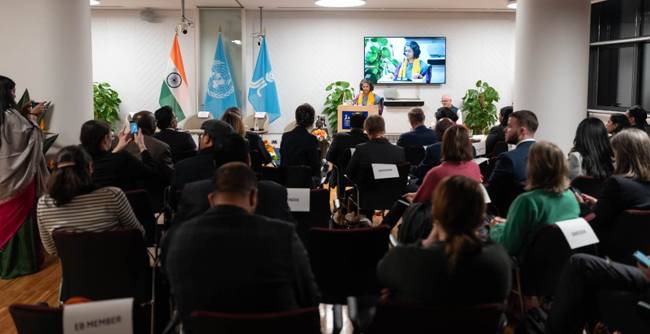
“India’s partnership with IFAD extends beyond financing. It is anchored in a common vision that places rural communities at the heart of development. IFAD has been a consistent and trusted partner in enabling India to scale innovative, equitable and sustainable rural livelihood models,” she stated.
Over the past 48 years, India and IFAD have together supported 36 rural development projects with a total value of US$4.4 billion, including US$1.5 billion contributed directly by IFAD. With six ongoing projects amounting to US$459 million, India currently maintains a co-financing ratio of 2.65, significantly higher than global averages, reflecting India’s strong ownership and confidence in the partnership.
Flagship initiatives supported under the India–IFAD portfolio include:
• Enhancing market access for over 45,000 rural enterprises in Meghalaya.
• Expanding women’s employability and income-generation opportunities in Maharashtra.
• Improving climate resilience for 300,000 small and marginal farmers in Jammu & Kashmir.
• Supporting income enhancement and migration reduction efforts in Uttarakhand.
India’s globally recognised model of women’s collectives, which has evolved from small savings groups into robust economic institutions, was highlighted as a key example of community-driven transformation with global relevance.
Speaking at the event, Dr. Jujjavarapu Balaji, Alternate Permanent Representative of India to IFAD, noted that India remains committed to advancing its partnership with IFAD. “We look forward to continued collaboration to scale up successful approaches and equip rural communities to respond effectively to emerging challenges,” he said.
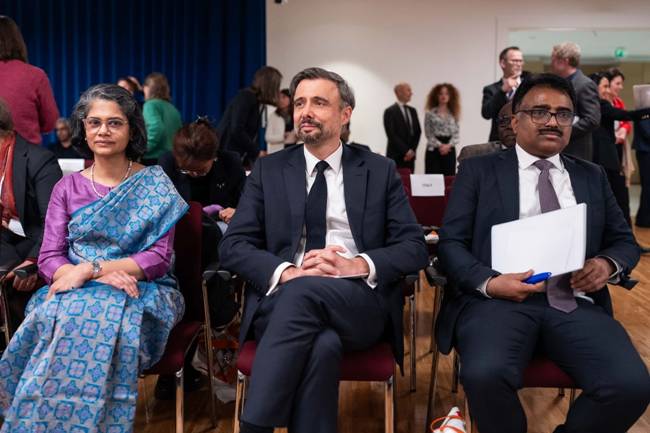
As a founding member of IFAD and one of its largest contributors and development partners, India continues to play a leading role in South–South and Triangular Cooperation, sharing its expertise in rural institution-building, value-chain development and climate-smart agriculture with countries across the Global South.
India and IFAD reaffirmed their shared commitment to strengthening rural institutions, building skills, expanding access to markets and services, and enabling rural communities to lead their own development in a sustainable and resilient manner.

