Anti-profiteering obligations survive business demerger, complaint withdrawal, and customized supply arrangements where rate-reduction benefits are no...
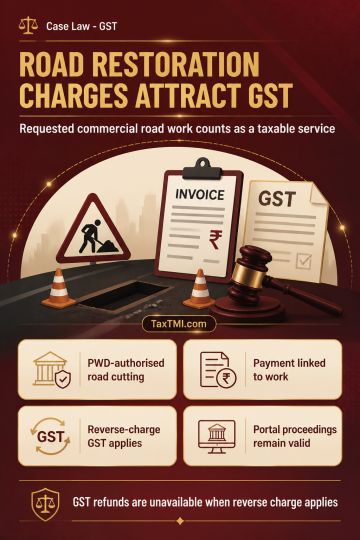
Road restoration charges constitute taxable services when requested for commercial pipeline activity, requiring reverse-charge GST from the business r...
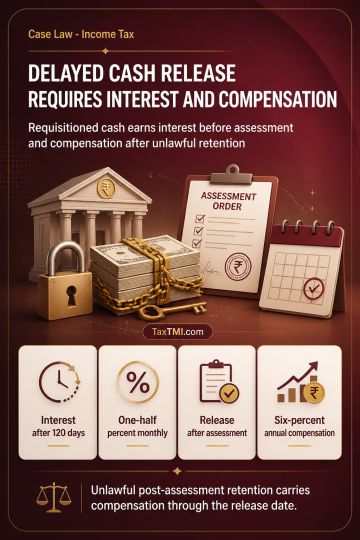
Interest on delayed release of requisitioned cash includes statutory pre-assessment interest and restitutionary compensation for unlawful post-assessm...
Incomplete inventory records justify rejecting accounts, while profit estimation requires relevant comparable material and interest falls under other ...
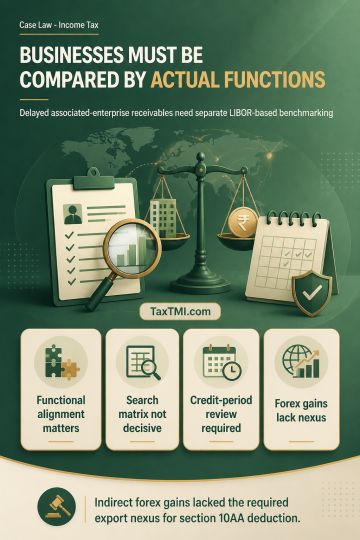
Transfer-pricing comparability requires functional alignment; delayed associated-enterprise receivables need separate LIBOR-based benchmarking, while ...
Page of 4915
Press 'Enter' after typing page number.
121 to 140 of 98300 Results
❮
❯
❯❯
0 / 200
Expand Note
Add to Folder
No Folders have been created
+
Are you sure you want to delete "My most important" ?
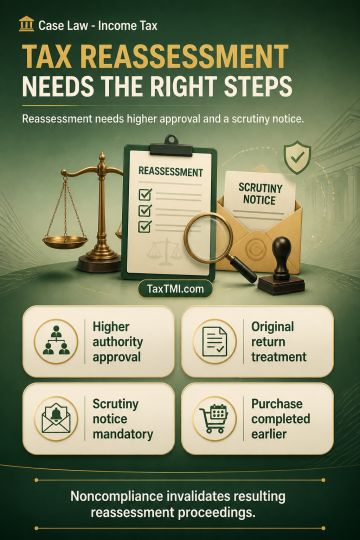
Reassessment notices issued beyond three years require prior approval from the higher specified authority prescribed by section 151(ii); approval by a Principal Commissioner is insufficient, invalidating the notice and consequential assessment. Where an assessee asks that an original return be treated as the return filed in response to reassessment proceedings, a notice under section 143(2) becomes mandatory, and its omission invalidates the assessment. The inadequate-consideration provision for immovable property does not apply prospectively where the agreement, full payment and possession established completion of the purchase before the amendment took effect, despite later registration.
Reassessment notices issued beyond three years require prior approval from the higher specified authority prescribed by section 151(ii); approval by a Principal Commissioner is insufficient, invalidating the notice and consequential assessment. Where an assessee asks that an original return be treated as the return filed in response to reassessment proceedings, a notice under section 143(2) becomes mandatory, and its omission invalidates the assessment. The inadequate-consideration provision for immovable property does not apply prospectively where the agreement, full payment and possession established completion of the purchase before the amendment took effect, despite later registration.
Note: It is a system-generated summary and is for quick reference only.
 TaxTMI
 TaxTMI

 of 4915