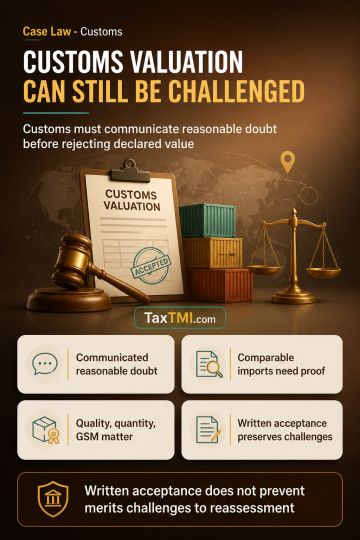
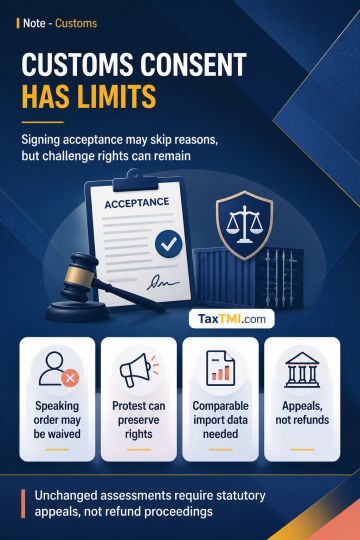
Customs transaction value rejection requires communicated reasonable doubt, while written reassessment acceptance preserves challenges to enhanced val...
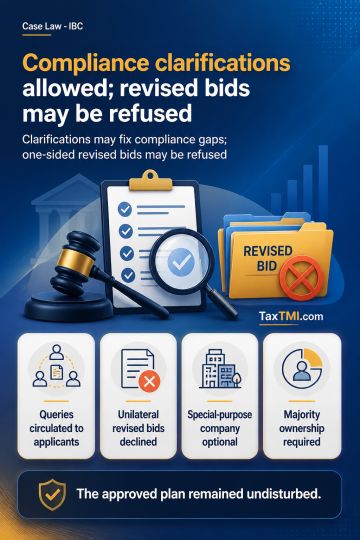
Challenge-mechanism compliance clarifications permitted, while unilateral revised resolution plans may be refused under creditors' commercial discreti...
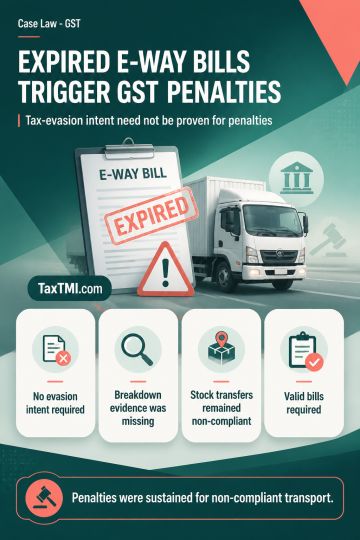
Section 129(1) of the GST Act applies where goods in transit are transported or stored contrary to the Act or Rules; proof of intent to evade tax is not a condition for detention or penalty because the provision addresses breach of a civil obligation and does not require mens rea. Transportation under e-way bills that had expired remained non-compliant where the asserted vehicle breakdown lacked supporting evidence and no extension or amendment was sought. Stock-transfer documentation and e-invoices did not cure the e-way bill lapse, while circular-based exceptions applied only to consignments accompanied by valid e-way bills. Penalties were sustained.
Section 129(1) of the GST Act applies where goods in transit are transported or stored contrary to the Act or Rules; proof of intent to evade tax is not a condition for detention or penalty because the provision addresses breach of a civil obligation and does not require mens rea. Transportation under e-way bills that had expired remained non-compliant where the asserted vehicle breakdown lacked supporting evidence and no extension or amendment was sought. Stock-transfer documentation and e-invoices did not cure the e-way bill lapse, while circular-based exceptions applied only to consignments accompanied by valid e-way bills. Penalties were sustained.
Note: It is a system-generated summary and is for quick reference only.
 TaxTMI
  TaxTMI
 of 4913