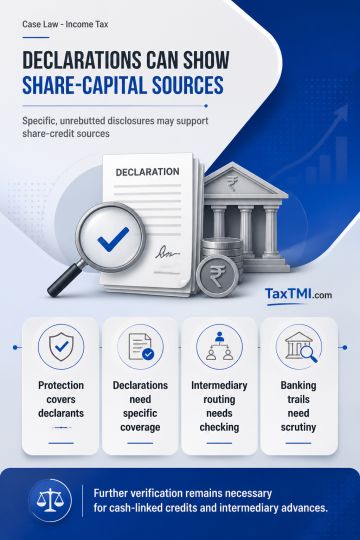
Income Declaration Scheme declarations can evidence share-capital sources, while round-tripped funds and cash-linked credits require further verificat...
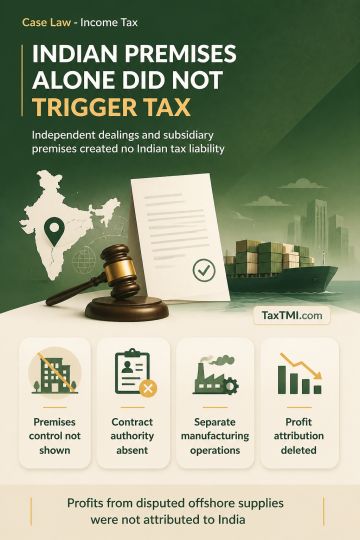
Permanent establishment tests: independent subsidiary premises and principal-to-principal dealings did not create Indian taxability for offshore suppl...
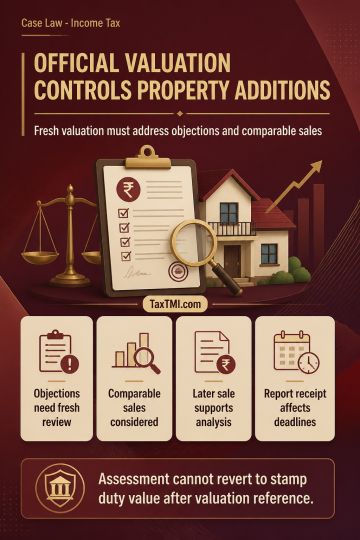
Valuation Officer estimates govern property-value additions once statutory valuation is invoked, requiring fresh consideration of objections and compa...
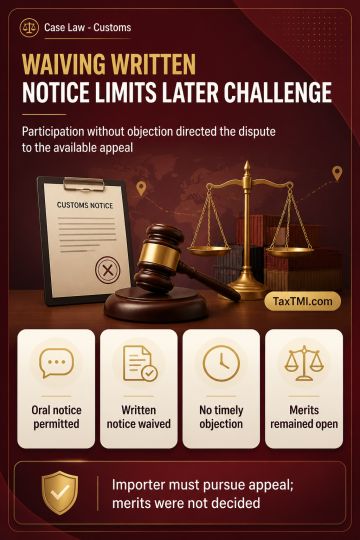
Waiver of written show-cause notice may prevent a later procedural challenge after participation in customs adjudication, preserving statutory appella...
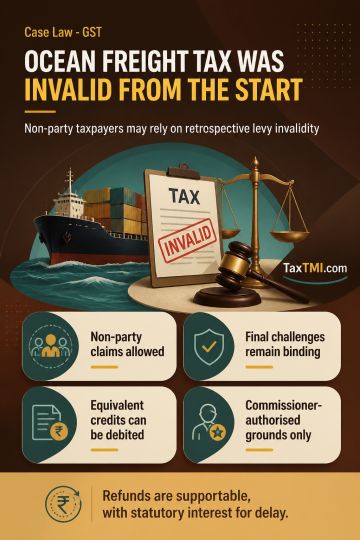
Retrospective invalidity of ocean-freight IGST supports refunds despite non-party status and prior credit utilisation, subject to authorised appeal gr...
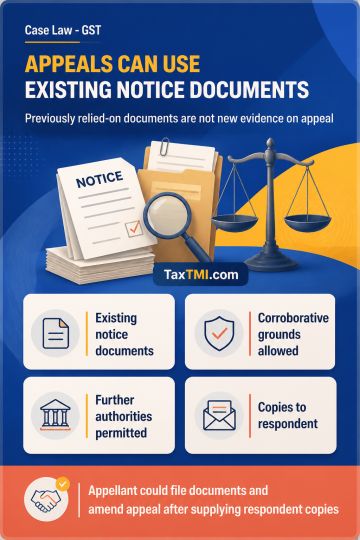
Additional evidence in departmental appeals may include show-cause-notice material without introducing a new case where it merely corroborates existin...
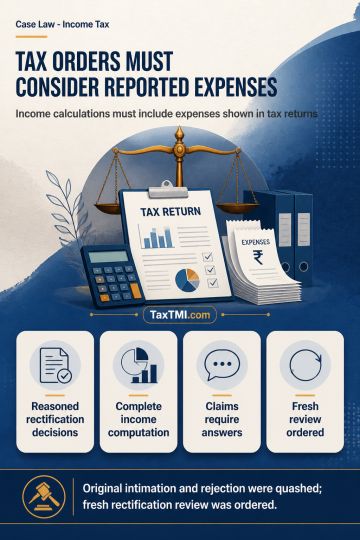
Reasoned rectification orders require consideration of expenditure disclosed in income-tax returns, preventing revision based on incomplete income com...
Page of 4916
Press 'Enter' after typing page number.
501 to 520 of 98302 Results
❮
❯
❯❯
0 / 200
Expand Note
Add to Folder
No Folders have been created
+
Are you sure you want to delete "My most important" ?
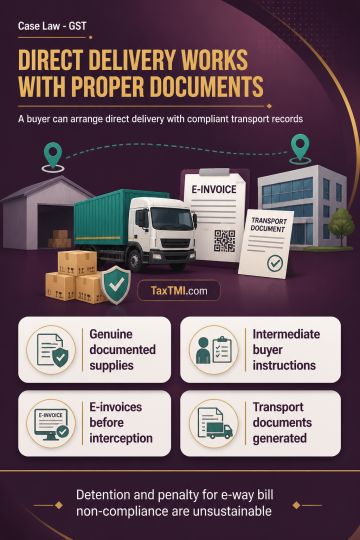
Bill-to/Ship-to transactions permit an intermediate purchaser to instruct the original supplier to dispatch goods directly to the ultimate recipient, provided the supplies are genuine, documented and properly accounted for. Rule 138(2) allows the consignor or consignee causing movement to generate the e-way bill. Where e-invoices and e-way bills are generated before interception by the party arranging transport, the supplier's separate non-generation does not justify detention of goods. Compliance with these requirements makes detention and penalty for e-way bill non-compliance unsustainable.
Bill-to/Ship-to transactions permit an intermediate purchaser to instruct the original supplier to dispatch goods directly to the ultimate recipient, provided the supplies are genuine, documented and properly accounted for. Rule 138(2) allows the consignor or consignee causing movement to generate the e-way bill. Where e-invoices and e-way bills are generated before interception by the party arranging transport, the supplier's separate non-generation does not justify detention of goods. Compliance with these requirements makes detention and penalty for e-way bill non-compliance unsustainable.
Note: It is a system-generated summary and is for quick reference only.
 TaxTMI
 TaxTMI

 of 4916