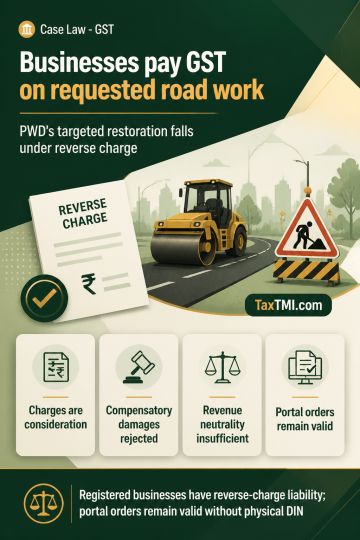
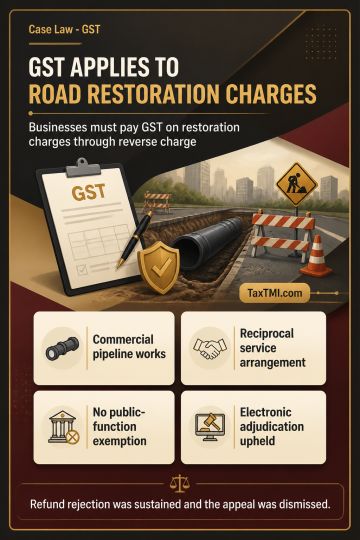
Request-driven road restoration attracts reverse-charge GST, not governmental-function treatment or compensatory-damages status for business recipient...
Road restoration charges for commercial pipeline works are taxable Government services, with reverse charge liability and no public-function exemption...
Model-wise import cap monitoring cannot justify withholding used multifunction machines where all-India tracking is absent and full security is furnis...
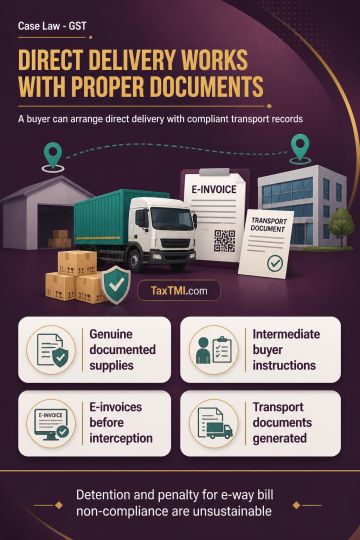
Bill-to/Ship-to transactions permit an intermediate purchaser to instruct the original supplier to dispatch goods directly to the ultimate recipient, provided the supplies are genuine, documented and properly accounted for. Rule 138(2) allows the consignor or consignee causing movement to generate the e-way bill. Where e-invoices and e-way bills are generated before interception by the party arranging transport, the supplier's separate non-generation does not justify detention of goods. Compliance with these requirements makes detention and penalty for e-way bill non-compliance unsustainable.
Bill-to/Ship-to transactions permit an intermediate purchaser to instruct the original supplier to dispatch goods directly to the ultimate recipient, provided the supplies are genuine, documented and properly accounted for. Rule 138(2) allows the consignor or consignee causing movement to generate the e-way bill. Where e-invoices and e-way bills are generated before interception by the party arranging transport, the supplier's separate non-generation does not justify detention of goods. Compliance with these requirements makes detention and penalty for e-way bill non-compliance unsustainable.
Note: It is a system-generated summary and is for quick reference only.
 TaxTMI
  TaxTMI
 of 4912