Suspension of insolvency professional registration prevents continued Resolution Professional appointments and restricts interim stays that effectivel...
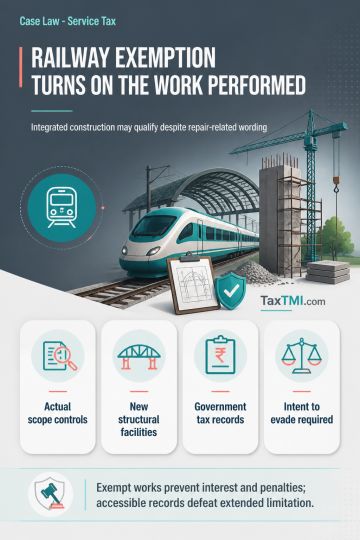
Original works exemption for railway contracts depends on actual integrated construction scope, while accessible tax data defeats suppression allegati...
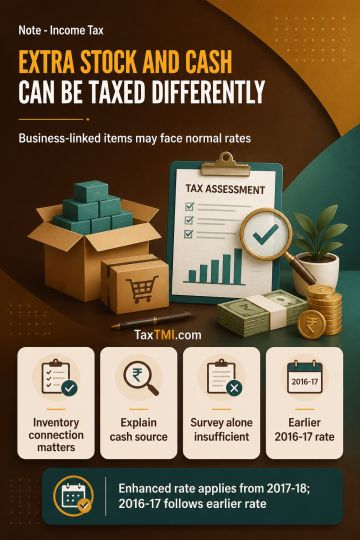
Survey surrender characterisation determines whether mixed excess stock and business-linked cash face normal taxation or special deemed-income taxatio...
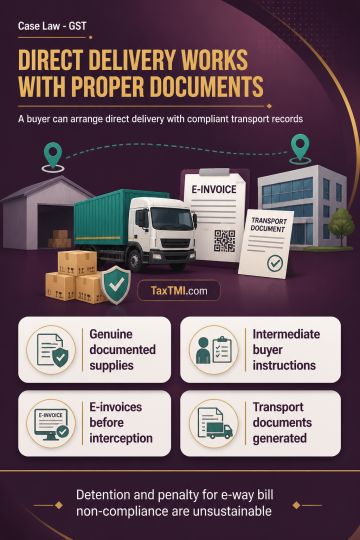
Bill-to/Ship-to transactions permit an intermediate purchaser to instruct the original supplier to dispatch goods directly to the ultimate recipient, provided the supplies are genuine, documented and properly accounted for. Rule 138(2) allows the consignor or consignee causing movement to generate the e-way bill. Where e-invoices and e-way bills are generated before interception by the party arranging transport, the supplier's separate non-generation does not justify detention of goods. Compliance with these requirements makes detention and penalty for e-way bill non-compliance unsustainable.
Bill-to/Ship-to transactions permit an intermediate purchaser to instruct the original supplier to dispatch goods directly to the ultimate recipient, provided the supplies are genuine, documented and properly accounted for. Rule 138(2) allows the consignor or consignee causing movement to generate the e-way bill. Where e-invoices and e-way bills are generated before interception by the party arranging transport, the supplier's separate non-generation does not justify detention of goods. Compliance with these requirements makes detention and penalty for e-way bill non-compliance unsustainable.
Note: It is a system-generated summary and is for quick reference only.
 TaxTMI
 TaxTMI

 of 4915