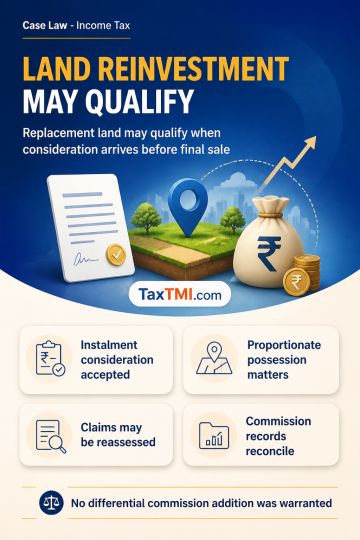
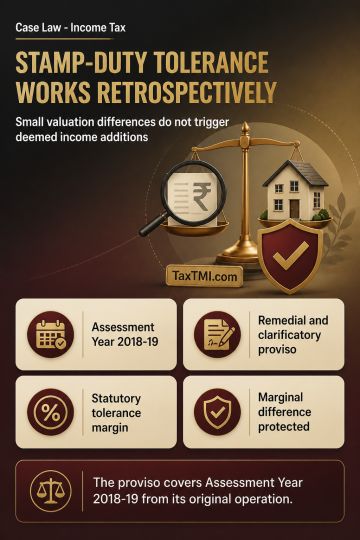
Agricultural-land reinvestment qualifies when transfer consideration precedes replacement purchase, while unexamined claims may be reassessed on escap...
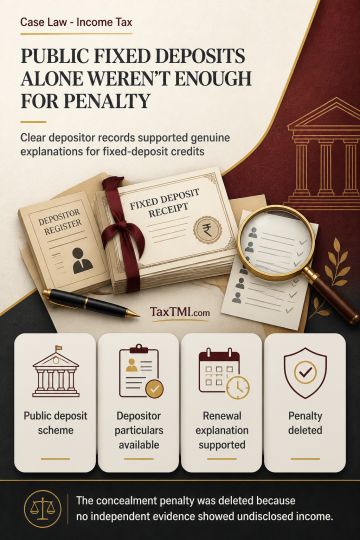
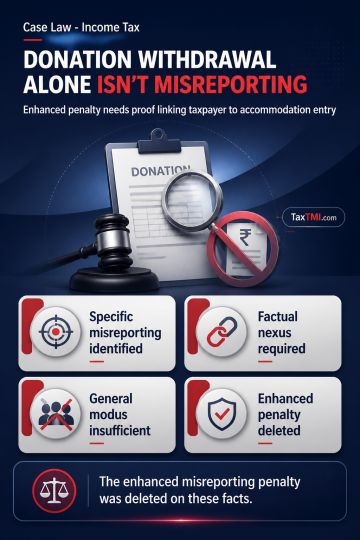
Bona fide public fixed-deposit explanations prevent concealment penalties where unexplained-credit additions lack independent evidence of undisclosed ...
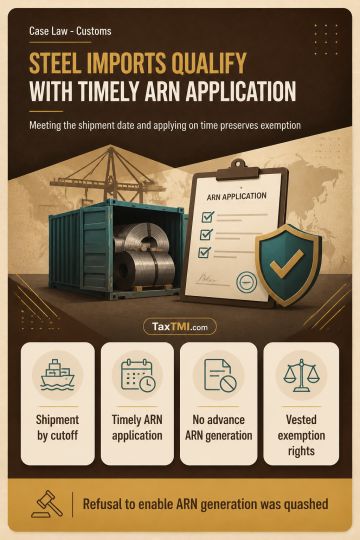
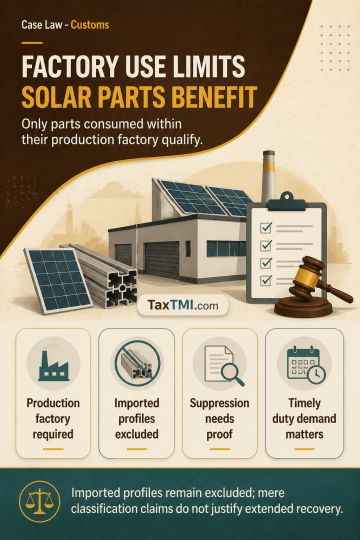
Factory-consumption condition restricts solar module parts exemption and excludes imported aluminium profiles fabricated outside the production factor...
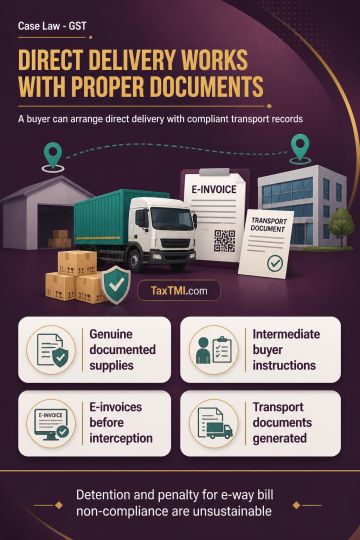
Bill-to/Ship-to transactions permit an intermediate purchaser to instruct the original supplier to dispatch goods directly to the ultimate recipient, provided the supplies are genuine, documented and properly accounted for. Rule 138(2) allows the consignor or consignee causing movement to generate the e-way bill. Where e-invoices and e-way bills are generated before interception by the party arranging transport, the supplier's separate non-generation does not justify detention of goods. Compliance with these requirements makes detention and penalty for e-way bill non-compliance unsustainable.
Bill-to/Ship-to transactions permit an intermediate purchaser to instruct the original supplier to dispatch goods directly to the ultimate recipient, provided the supplies are genuine, documented and properly accounted for. Rule 138(2) allows the consignor or consignee causing movement to generate the e-way bill. Where e-invoices and e-way bills are generated before interception by the party arranging transport, the supplier's separate non-generation does not justify detention of goods. Compliance with these requirements makes detention and penalty for e-way bill non-compliance unsustainable.
Note: It is a system-generated summary and is for quick reference only.
 TaxTMI
  TaxTMI
 of 4913