Tax-audit exemption for substantially State-funded educational universities prevents audit-failure penalties where income qualifies for statutory exem...
Functional, asset and risk analysis excludes diversified technology companies from captive software development comparables under cost-plus arrangemen...
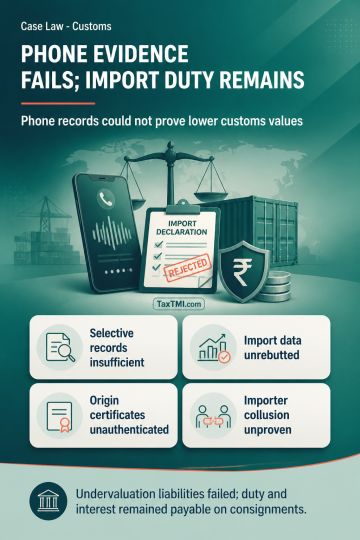
Mobile-phone electronic evidence failed to establish customs undervaluation, while duty survived on non-authentic origin certificates without importer...
Automotive radio classification treats integrated infotainment features as supplementary, placing complete and qualifying unassembled units under the ...
Separate corporate personality prevents directors from being personally liable for company deposits without a guarantee or independent legal undertaki...
Section 127 transfers for centralised assessment require...
Centralised assessment transfers: participation after requesting centralisation can bar technical jurisdictional challenges, while assessment disputes require statutory appeal.
Contents
Summary
Note
Bookmark
Share
✓ Copied successfully !
Print
Print Options
For full text, please login
Login to TaxTMI
Verification Pending
The Email Id has not been verified. Click on the link we have sent on
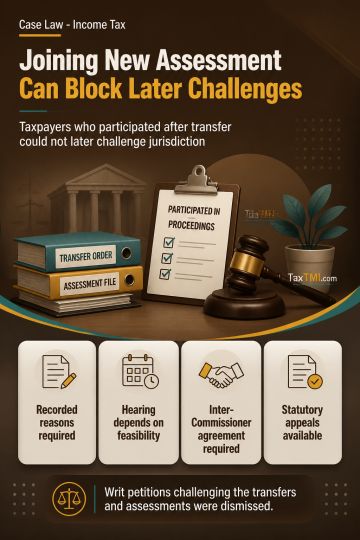
Section 127 transfers for centralised assessment require recorded and communicated reasons, and transfers between officers subordinate to different Commissioners require the prescribed inter-Commissioner agreement; an opportunity of hearing depends on feasibility. Taxpayers who requested centralisation, filed returns, responded to notices and participated before the transferee officer were treated as having acquiesced in the transferred jurisdiction, preventing a later technical challenge to the transfer. Challenges to consequential assessment orders were not entertained in writ jurisdiction where an effective statutory appellate remedy was available. The writ petitions challenging the transfers and assessments were dismissed.
Section 127 transfers for centralised assessment require recorded and communicated reasons, and transfers between officers subordinate to different Commissioners require the prescribed inter-Commissioner agreement; an opportunity of hearing depends on feasibility. Taxpayers who requested centralisation, filed returns, responded to notices and participated before the transferee officer were treated as having acquiesced in the transferred jurisdiction, preventing a later technical challenge to the transfer. Challenges to consequential assessment orders were not entertained in writ jurisdiction where an effective statutory appellate remedy was available. The writ petitions challenging the transfers and assessments were dismissed.
Note: It is a system-generated summary and is for quick reference only.
 TaxTMI
  TaxTMI
 of 4912