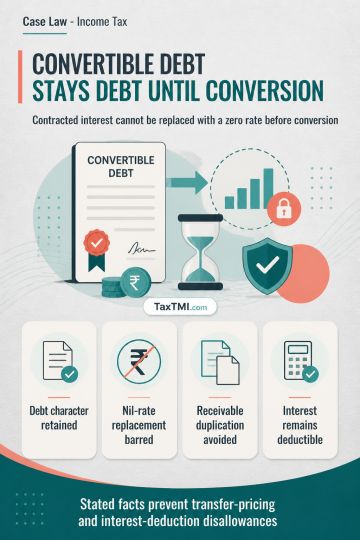
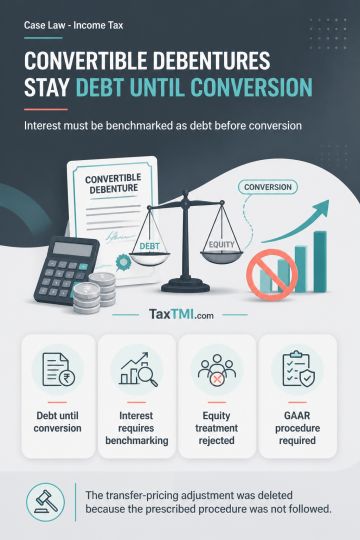
Compulsorily convertible debentures remain debt before conversion, preventing transfer-pricing and interest-deduction disallowances on the stated fact...
Stock-in-trade transfer taxability follows possession and consideration, not later conveyance registration, limiting deemed-value provisions to the ac...
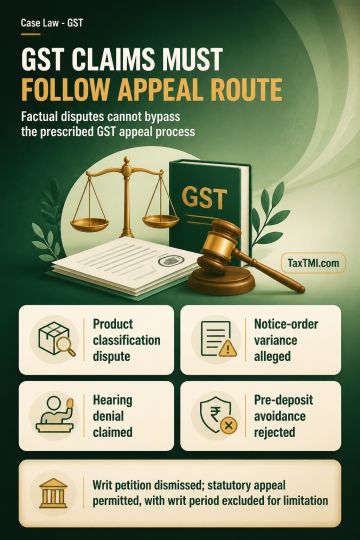
Alternative statutory remedy under GST bars writ challenge where classification, notice variance, and hearing disputes require factual appellate revie...
Page of 4918
Press 'Enter' after typing page number.
661 to 680 of 98359 Results
❮
❯
❯❯
0 / 200
Expand Note
Add to Folder
No Folders have been created
+
Are you sure you want to delete "My most important" ?
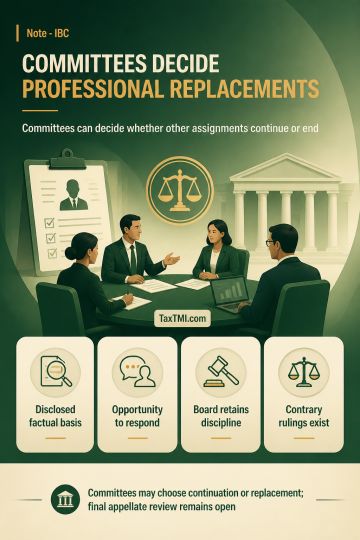
Regulation 13(7) requires communication of an insolvency professional's disciplinary order to committees of creditors and adjudicating authorities in other ongoing CIRPs. The interim approach described treats that intimation as enabling each committee to decide whether to continue or replace the professional, rather than automatically disqualifying the professional from unrelated assignments. Proportionality and audi alteram partem require that cross-assignment consequences have a disclosed factual basis and an opportunity to respond. The Board retains disciplinary powers, while committees retain their statutory replacement role. Other appellate rulings take the contrary view that suspension of registration makes the professional ineligible across all assignments. Final appellate review and the underlying disciplinary findings remain open.
Regulation 13(7) requires communication of an insolvency professional's disciplinary order to committees of creditors and adjudicating authorities in other ongoing CIRPs. The interim approach described treats that intimation as enabling each committee to decide whether to continue or replace the professional, rather than automatically disqualifying the professional from unrelated assignments. Proportionality and audi alteram partem require that cross-assignment consequences have a disclosed factual basis and an opportunity to respond. The Board retains disciplinary powers, while committees retain their statutory replacement role. Other appellate rulings take the contrary view that suspension of registration makes the professional ineligible across all assignments. Final appellate review and the underlying disciplinary findings remain open.
Note: It is a system-generated summary and is for quick reference only.
 TaxTMI
 TaxTMI

 of 4918