Third-party loose sheets require reliable nexus before supporting unexplained expenditure additions; presumptions do not establish payer identity or o...
TNMM comparability using audited accounts and working-capital adjustments can eliminate unwarranted transfer-pricing additions where verified margins ...
Gross-profit additions on disputed purchases require reasoned appellate determination; disclosed claims alone do not support inaccurate-particulars pe...
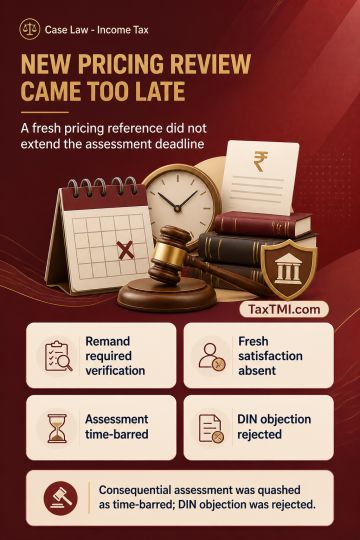
Limitation after transfer-pricing remand: fresh TPO reference did not extend the assessment deadline, rendering the consequential assessment time-barr...
Interim judicial restraint on tax deduction prevents default, while supporting reasonable cause and penalty deletion for foreign-leg LFC reimbursement...
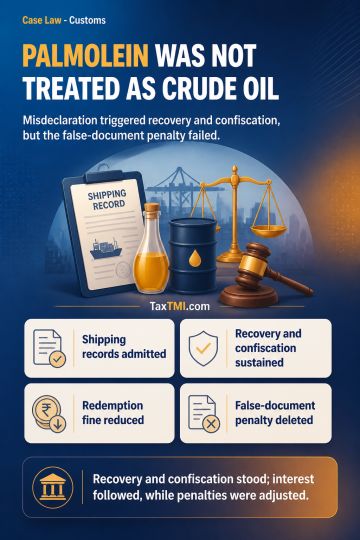
Palmolein classification defeated the crude-oil concession; material misdeclaration sustained recovery and confiscation, while separate false-document...
Regulation 13(7) requires communication of an insolvency professional's disciplinary order to committees of creditors and adjudicating authorities in other ongoing CIRPs. The interim approach described treats that intimation as enabling each committee to decide whether to continue or replace the professional, rather than automatically disqualifying the professional from unrelated assignments. Proportionality and audi alteram partem require that cross-assignment consequences have a disclosed factual basis and an opportunity to respond. The Board retains disciplinary powers, while committees retain their statutory replacement role. Other appellate rulings take the contrary view that suspension of registration makes the professional ineligible across all assignments. Final appellate review and the underlying disciplinary findings remain open.
Regulation 13(7) requires communication of an insolvency professional's disciplinary order to committees of creditors and adjudicating authorities in other ongoing CIRPs. The interim approach described treats that intimation as enabling each committee to decide whether to continue or replace the professional, rather than automatically disqualifying the professional from unrelated assignments. Proportionality and audi alteram partem require that cross-assignment consequences have a disclosed factual basis and an opportunity to respond. The Board retains disciplinary powers, while committees retain their statutory replacement role. Other appellate rulings take the contrary view that suspension of registration makes the professional ineligible across all assignments. Final appellate review and the underlying disciplinary findings remain open.
Note: It is a system-generated summary and is for quick reference only.
 TaxTMI
 TaxTMI

 of 4915