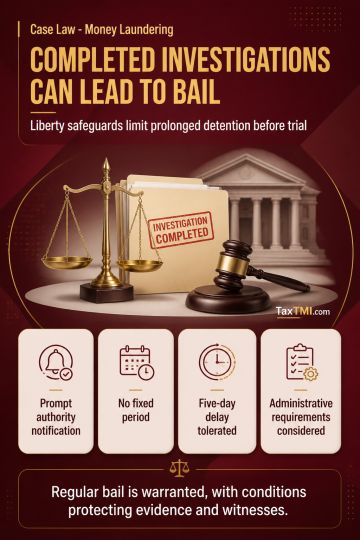
Constitutional personal-liberty safeguards limit PMLA twin bail conditions where completed investigations lead to prolonged incarceration before trial...
Automated airline software subscriptions without human intervention fail technical-services characterisation and do not make available underlying tech...
Business support recruitment and training receipts qualify for presumptive business taxation, not professional taxation under technical consultancy ru...
Treaty exemption for foreign permanent-establishment management fees prevailed, while dividend expense disallowance remained limited to an accepted al...
Centralised assessment transfers: participation after requesting centralisation can bar technical jurisdictional challenges, while assessment disputes...
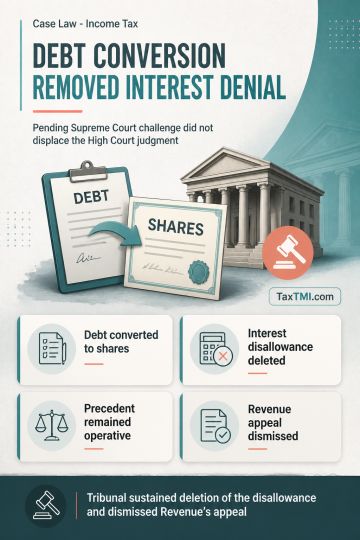
Binding precedent remains operative despite pending challenge, supporting deletion of interest disallowance when debt is converted into preference sha...
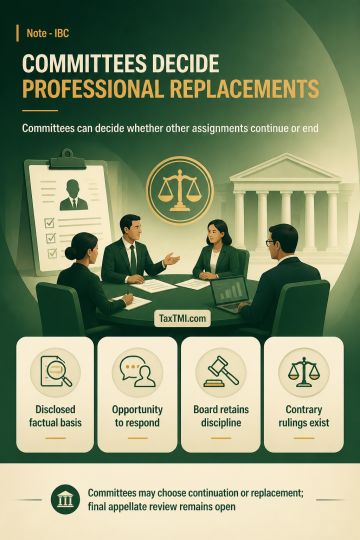
Regulation 13(7) requires communication of an insolvency professional's disciplinary order to committees of creditors and adjudicating authorities in other ongoing CIRPs. The interim approach described treats that intimation as enabling each committee to decide whether to continue or replace the professional, rather than automatically disqualifying the professional from unrelated assignments. Proportionality and audi alteram partem require that cross-assignment consequences have a disclosed factual basis and an opportunity to respond. The Board retains disciplinary powers, while committees retain their statutory replacement role. Other appellate rulings take the contrary view that suspension of registration makes the professional ineligible across all assignments. Final appellate review and the underlying disciplinary findings remain open.
Regulation 13(7) requires communication of an insolvency professional's disciplinary order to committees of creditors and adjudicating authorities in other ongoing CIRPs. The interim approach described treats that intimation as enabling each committee to decide whether to continue or replace the professional, rather than automatically disqualifying the professional from unrelated assignments. Proportionality and audi alteram partem require that cross-assignment consequences have a disclosed factual basis and an opportunity to respond. The Board retains disciplinary powers, while committees retain their statutory replacement role. Other appellate rulings take the contrary view that suspension of registration makes the professional ineligible across all assignments. Final appellate review and the underlying disciplinary findings remain open.
Note: It is a system-generated summary and is for quick reference only.
 TaxTMI
  TaxTMI
 of 4907