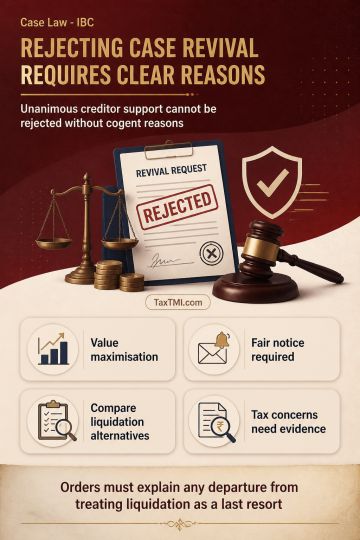
Suspension of insolvency professional registration prevents continued Resolution Professional appointments and restricts interim stays that effectivel...
Page of 4902
Press 'Enter' after typing page number.
81 to 100 of 98028 Results
❮
❯
❯❯
0 / 200
Expand Note
Add to Folder
No Folders have been created
+
Are you sure you want to delete "My most important" ?
Cost-to-cost recovery of salary and travel expenses for...
Cost-to-cost reimbursement of seconded employees is not service consideration; transfer-pricing markup was deleted and amalgamation amortisation allowed.
Contents
Summary
Note
Bookmark
Share
✓ Copied successfully !
Print
Print Options
For full text, please login
Login to TaxTMI
Verification Pending
The Email Id has not been verified. Click on the link we have sent on
Cost-to-cost recovery of salary and travel expenses for employees temporarily seconded to associated enterprises constitutes expense reimbursement rather than consideration for margin-bearing services where recovered exactly at cost. Accordingly, the transfer-pricing mark-up adjustment was deleted, supported by consistent treatment in other years and a bilateral Advance Pricing Agreement allowing recovery at cost. Amalgamation expenditure incurred after approval is amortised over five years beginning in the assessment year relevant to the year of expenditure, not the appointed amalgamation date. The fifth annual deduction was allowed because the claim had been accepted for the prior four years without changed facts.
Cost-to-cost recovery of salary and travel expenses for employees temporarily seconded to associated enterprises constitutes expense reimbursement rather than consideration for margin-bearing services where recovered exactly at cost. Accordingly, the transfer-pricing mark-up adjustment was deleted, supported by consistent treatment in other years and a bilateral Advance Pricing Agreement allowing recovery at cost. Amalgamation expenditure incurred after approval is amortised over five years beginning in the assessment year relevant to the year of expenditure, not the appointed amalgamation date. The fifth annual deduction was allowed because the claim had been accepted for the prior four years without changed facts.
Note: It is a system-generated summary and is for quick reference only.
 TaxTMI
  TaxTMI
 of 4902