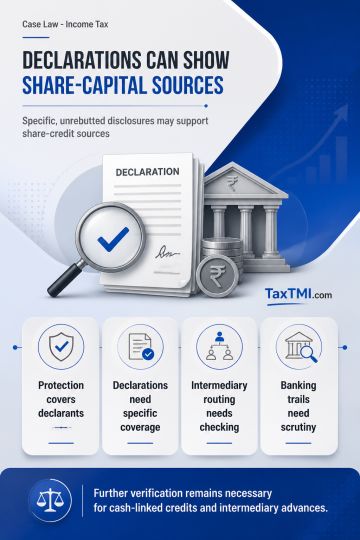
Income Declaration Scheme declarations can evidence share-capital sources, while round-tripped funds and cash-linked credits require further verificat...
Permanent establishment tests: independent subsidiary premises and principal-to-principal dealings did not create Indian taxability for offshore suppl...
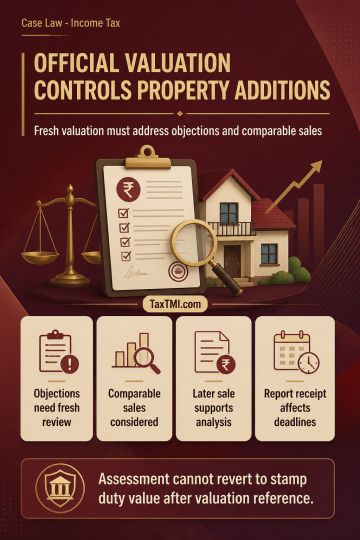
Valuation Officer estimates govern property-value additions once statutory valuation is invoked, requiring fresh consideration of objections and compa...
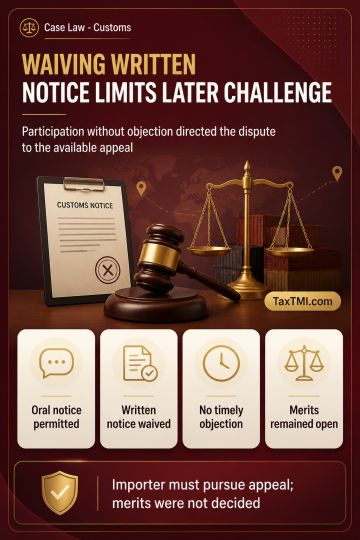
Waiver of written show-cause notice may prevent a later procedural challenge after participation in customs adjudication, preserving statutory appella...
Cost-to-cost recovery of salary and travel expenses for...
Cost-to-cost reimbursement of seconded employees is not service consideration; transfer-pricing markup was deleted and amalgamation amortisation allowed.
Contents
Summary
Note
Bookmark
Share
✓ Copied successfully !
Print
Print Options
For full text, please login
Login to TaxTMI
Verification Pending
The Email Id has not been verified. Click on the link we have sent on
Cost-to-cost recovery of salary and travel expenses for employees temporarily seconded to associated enterprises constitutes expense reimbursement rather than consideration for margin-bearing services where recovered exactly at cost. Accordingly, the transfer-pricing mark-up adjustment was deleted, supported by consistent treatment in other years and a bilateral Advance Pricing Agreement allowing recovery at cost. Amalgamation expenditure incurred after approval is amortised over five years beginning in the assessment year relevant to the year of expenditure, not the appointed amalgamation date. The fifth annual deduction was allowed because the claim had been accepted for the prior four years without changed facts.
Cost-to-cost recovery of salary and travel expenses for employees temporarily seconded to associated enterprises constitutes expense reimbursement rather than consideration for margin-bearing services where recovered exactly at cost. Accordingly, the transfer-pricing mark-up adjustment was deleted, supported by consistent treatment in other years and a bilateral Advance Pricing Agreement allowing recovery at cost. Amalgamation expenditure incurred after approval is amortised over five years beginning in the assessment year relevant to the year of expenditure, not the appointed amalgamation date. The fifth annual deduction was allowed because the claim had been accepted for the prior four years without changed facts.
Note: It is a system-generated summary and is for quick reference only.
 TaxTMI
  TaxTMI
 of 4913