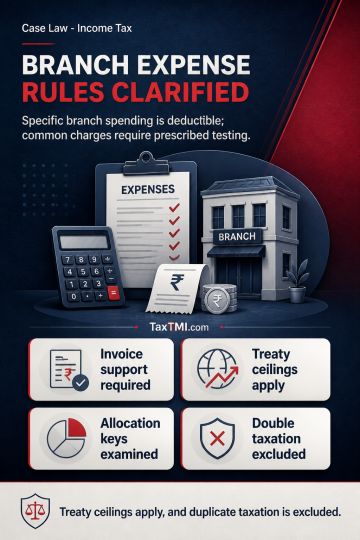
Head Office cost allocation requires prescribed transfer-pricing methods; treaty ceilings bar surcharge and cess, while duplicate taxation is excluded...
Cost-to-cost reimbursement of seconded employees is not service consideration; transfer-pricing markup was deleted and amalgamation amortisation allow...
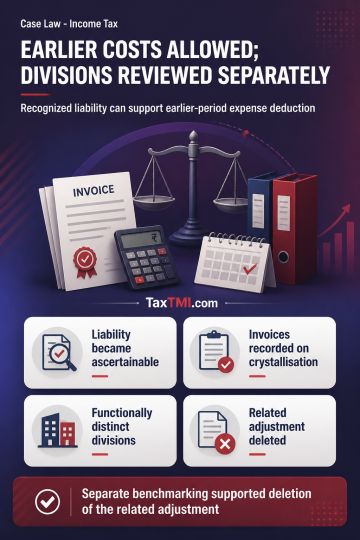
Crystallisation of liability supports prior-period expense deduction, while functionally distinct divisions require separate transfer-pricing benchmar...
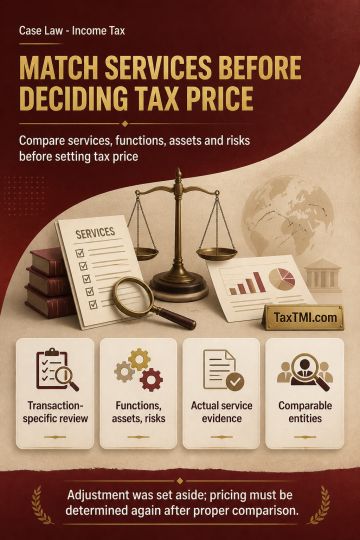
Functional comparability under TNMM requires transaction-specific FAR analysis before benchmarking business-support services provided to associated en...
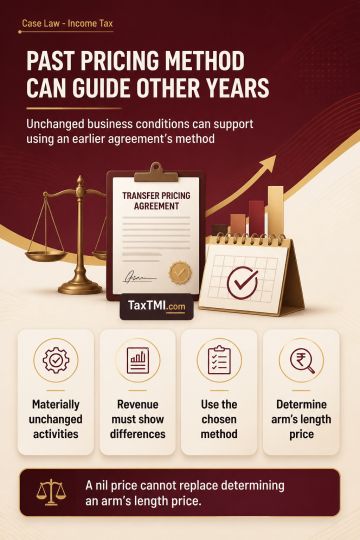
Advance pricing agreement methodology can guide benchmarking for non-covered years when functions, assets, risks and activities remain materially unch...
Page of 4918
Press 'Enter' after typing page number.
341 to 360 of 98359 Results
❮
❯
❯❯
0 / 200
Expand Note
Add to Folder
No Folders have been created
+
Are you sure you want to delete "My most important" ?
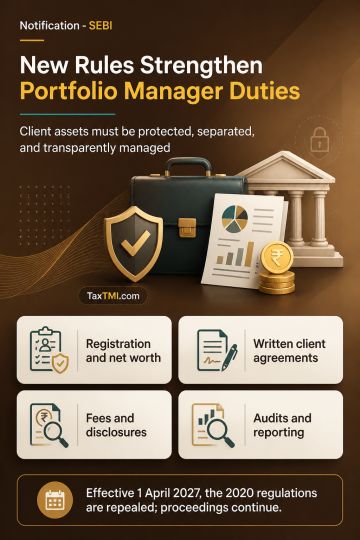
Portfolio managers must register as body corporates, maintain prescribed net worth, infrastructure, qualified personnel and continuing fit-and-proper status, while meeting client-grievance, disclosure and change-in-control obligations. Client arrangements require written investment agreements, pre-contract disclosure documents, transparent fees without assured returns or upfront charges, fiduciary conduct and segregation of client assets. Investment activity is subject to client mandates, prudential limits, restrictions on related-party and prohibited transactions, custody, records, audit, periodic reporting and compliance oversight. Special regimes govern eligible fund managers, co-investment managers and mutual-fund-only services. Inspection, disciplinary action, limited procedural relaxation and sandbox exemptions apply. Effective 1 April 2027, the framework repeals the 2020 regulations while preserving accrued rights and ongoing proceedings.
Portfolio managers must register as body corporates, maintain prescribed net worth, infrastructure, qualified personnel and continuing fit-and-proper status, while meeting client-grievance, disclosure and change-in-control obligations. Client arrangements require written investment agreements, pre-contract disclosure documents, transparent fees without assured returns or upfront charges, fiduciary conduct and segregation of client assets. Investment activity is subject to client mandates, prudential limits, restrictions on related-party and prohibited transactions, custody, records, audit, periodic reporting and compliance oversight. Special regimes govern eligible fund managers, co-investment managers and mutual-fund-only services. Inspection, disciplinary action, limited procedural relaxation and sandbox exemptions apply. Effective 1 April 2027, the framework repeals the 2020 regulations while preserving accrued rights and ongoing proceedings.
Note: It is a system-generated summary and is for quick reference only.
 TaxTMI
 TaxTMI

 of 4918