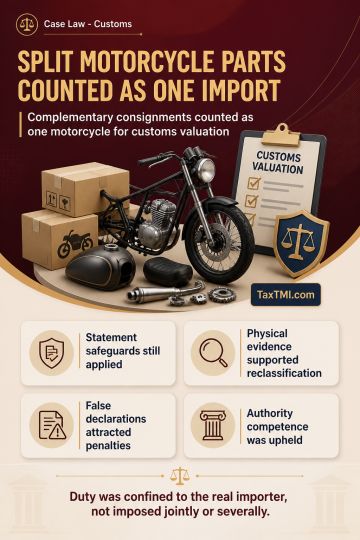
Split consignment classification treated complementary motorcycle parts as one imported motorcycle, sustaining valuation, confiscation and importer li...
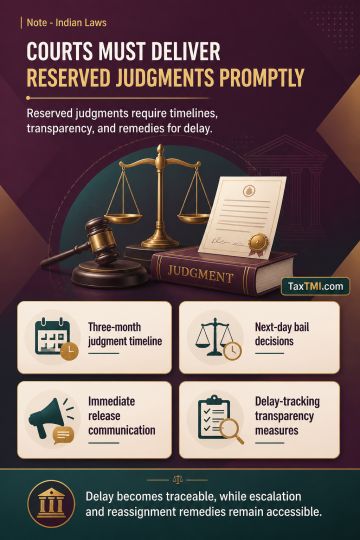
Timely pronouncement of reserved judgments requires defined timelines, transparency measures, and remedial pathways to protect liberty and effective j...
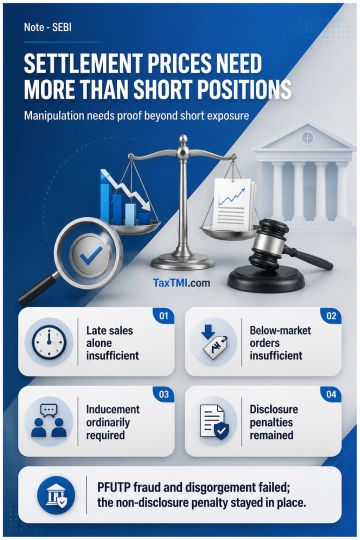
Settlement-price depression requires proof of manipulation, not merely short exposure, late selling, or below-market orders, preserving disclosure pen...
Page of 4910
Press 'Enter' after typing page number.
361 to 380 of 98196 Results
❮
❯
❯❯
0 / 200
Expand Note
Add to Folder
No Folders have been created
+
Are you sure you want to delete "My most important" ?
Employee stock-option discount is revenue expenditure where the...
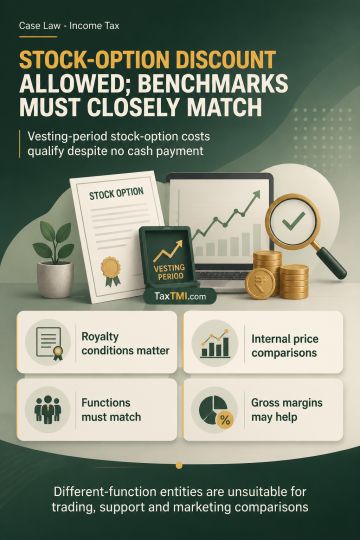
Employee stock-option discount qualifies as revenue expenditure, while royalty and service comparables require reliable functional and transactional benchmarking.
Contents
Summary
Note
Bookmark
Share
✓ Copied successfully !
Print
Print Options
For full text, please login
Login to TaxTMI
Verification Pending
The Email Id has not been verified. Click on the link we have sent on
Employee stock-option discount is revenue expenditure where the liability accrues during the vesting period, notwithstanding the absence of cash outflow. Royalty benchmarking requires satisfaction of both associated-enterprise conditions and prefers reliable internal comparable uncontrolled price transactions, supported by examination of contractual, functional and consistency factors. Trading, IT support and digital marketing comparables must match the tested party's functions; entities with materially different activities, significant intangibles, unavailable segmental data or exceptional circumstances are unsuitable. The other method may use gross margin as a profit level indicator where purchase-to-sale price comparison is justified, capacity-utilisation differences affect direct-cost recovery, and TNMM adjustment data is unavailable.
Employee stock-option discount is revenue expenditure where the liability accrues during the vesting period, notwithstanding the absence of cash outflow. Royalty benchmarking requires satisfaction of both associated-enterprise conditions and prefers reliable internal comparable uncontrolled price transactions, supported by examination of contractual, functional and consistency factors. Trading, IT support and digital marketing comparables must match the tested party's functions; entities with materially different activities, significant intangibles, unavailable segmental data or exceptional circumstances are unsuitable. The other method may use gross margin as a profit level indicator where purchase-to-sale price comparison is justified, capacity-utilisation differences affect direct-cost recovery, and TNMM adjustment data is unavailable.
Note: It is a system-generated summary and is for quick reference only.
 TaxTMI
  TaxTMI
 of 4910