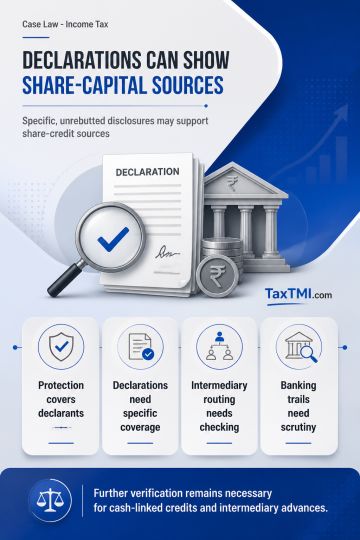
Income Declaration Scheme declarations can evidence share-capital sources, while round-tripped funds and cash-linked credits require further verificat...
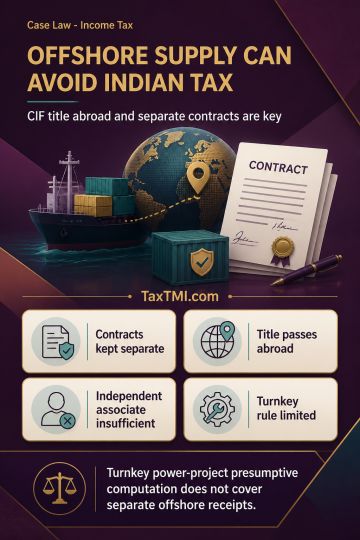
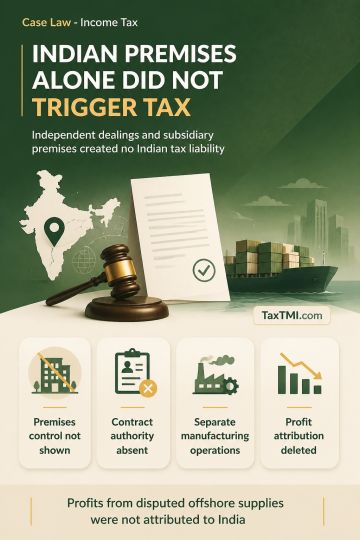
Permanent establishment tests: independent subsidiary premises and principal-to-principal dealings did not create Indian taxability for offshore suppl...
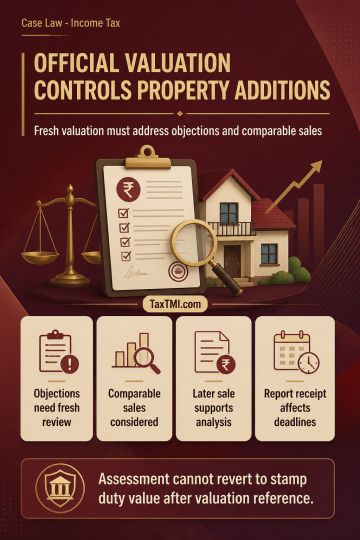
Valuation Officer estimates govern property-value additions once statutory valuation is invoked, requiring fresh consideration of objections and compa...
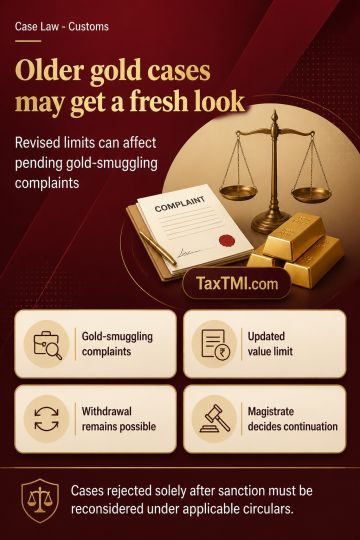
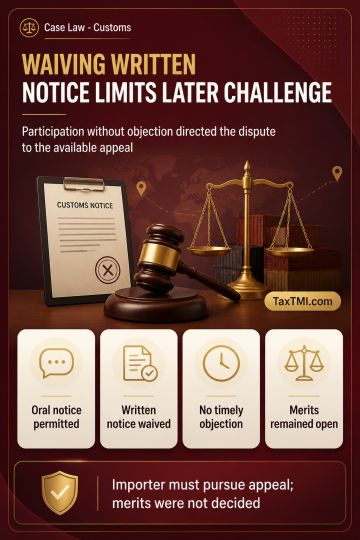
Waiver of written show-cause notice may prevent a later procedural challenge after participation in customs adjudication, preserving statutory appella...
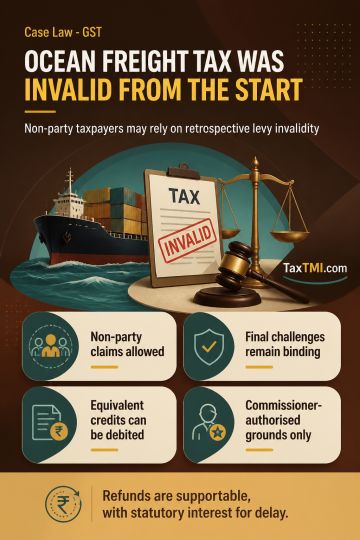
Retrospective invalidity of ocean-freight IGST supports refunds despite non-party status and prior credit utilisation, subject to authorised appeal gr...
Page of 4902
Press 'Enter' after typing page number.
221 to 240 of 98028 Results
❮
❯
❯❯
0 / 200
Expand Note
Add to Folder
No Folders have been created
+
Are you sure you want to delete "My most important" ?
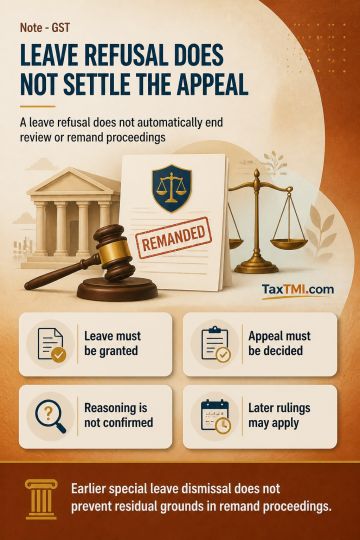
Doctrine of merger under Article 136 depends on whether the Supreme Court granted leave and exercised appellate jurisdiction, not merely on disposal of a special leave petition. A non-speaking refusal of leave neither merges the challenged order nor confirms its reasoning, creates automatic res judicata, or independently bars review or writ proceedings. A speaking refusal likewise does not cause merger, although legal propositions expressly declared may bind under Article 141. Merger follows when leave is granted and the appeal is decided. In remanded GST proceedings, an earlier dismissal of special leave therefore does not prevent consideration of residual grounds or reliance on a later binding ruling, subject to applicable review, limitation, and procedural requirements.
Doctrine of merger under Article 136 depends on whether the Supreme Court granted leave and exercised appellate jurisdiction, not merely on disposal of a special leave petition. A non-speaking refusal of leave neither merges the challenged order nor confirms its reasoning, creates automatic res judicata, or independently bars review or writ proceedings. A speaking refusal likewise does not cause merger, although legal propositions expressly declared may bind under Article 141. Merger follows when leave is granted and the appeal is decided. In remanded GST proceedings, an earlier dismissal of special leave therefore does not prevent consideration of residual grounds or reliance on a later binding ruling, subject to applicable review, limitation, and procedural requirements.
Note: It is a system-generated summary and is for quick reference only.
 TaxTMI
  TaxTMI
 of 4902