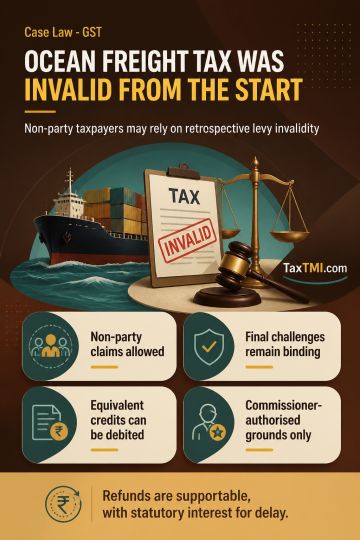
Retrospective invalidity of ocean-freight IGST supports refunds despite non-party status and prior credit utilisation, subject to authorised appeal gr...
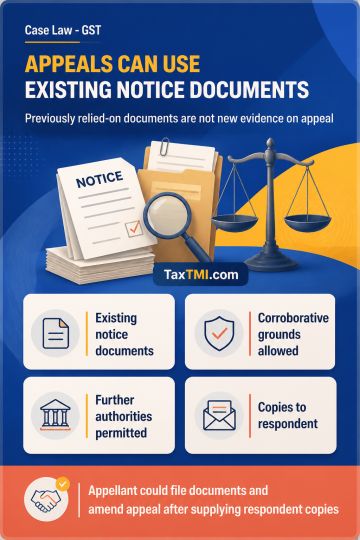
Additional evidence in departmental appeals may include show-cause-notice material without introducing a new case where it merely corroborates existin...
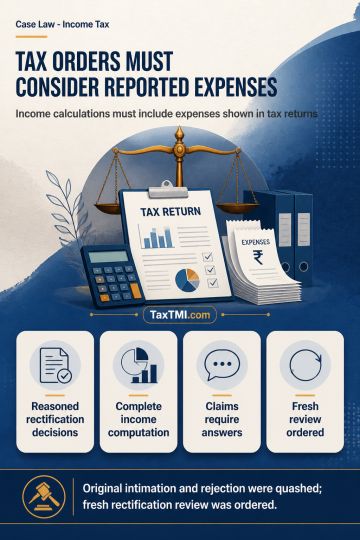
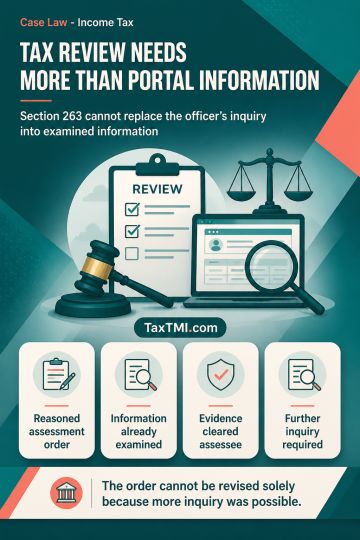
Reasoned rectification orders require consideration of expenditure disclosed in income-tax returns, preventing revision based on incomplete income com...
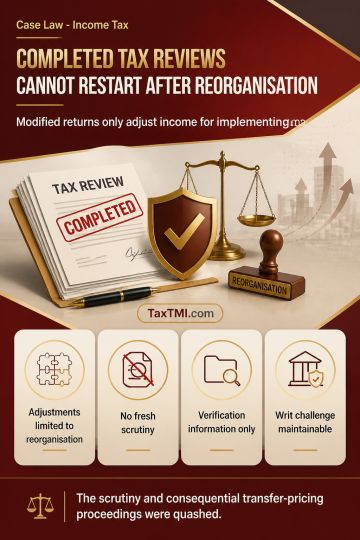
Modified returns after business reorganisations cannot trigger fresh scrutiny once the original assessment was complete, invalidating related transfer...
Third-party loose sheets require reliable nexus before supporting unexplained expenditure additions; presumptions do not establish payer identity or o...
TNMM comparability using audited accounts and working-capital adjustments can eliminate unwarranted transfer-pricing additions where verified margins ...
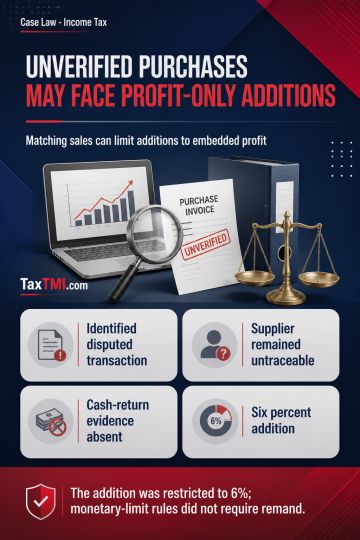
Gross-profit additions on disputed purchases require reasoned appellate determination; disclosed claims alone do not support inaccurate-particulars pe...
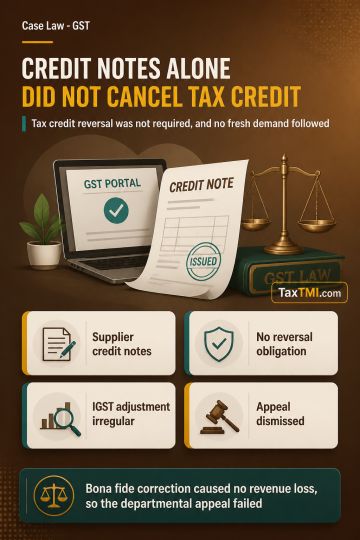
Recipient input tax credit did not require reversal solely because a supplier issued credit notes during the relevant period: neither the Act nor the Rules imposed that obligation, the statutory matching mechanism was inoperative, and Rule 37 concerned non-payment to suppliers. Accordingly, the premise for reversal failed. Excess IGST adjusted against CGST and SGST liabilities was procedurally irregular because the prescribed refund, re-credit or subsequent IGST-adjustment route was not used. However, as a bona fide first-year GST correction causing no revenue loss, it did not justify a fresh tax demand, interest or penalty; the departmental appeal was dismissed.
Recipient input tax credit did not require reversal solely because a supplier issued credit notes during the relevant period: neither the Act nor the Rules imposed that obligation, the statutory matching mechanism was inoperative, and Rule 37 concerned non-payment to suppliers. Accordingly, the premise for reversal failed. Excess IGST adjusted against CGST and SGST liabilities was procedurally irregular because the prescribed refund, re-credit or subsequent IGST-adjustment route was not used. However, as a bona fide first-year GST correction causing no revenue loss, it did not justify a fresh tax demand, interest or penalty; the departmental appeal was dismissed.
Note: It is a system-generated summary and is for quick reference only.
 TaxTMI
 TaxTMI

 of 4921