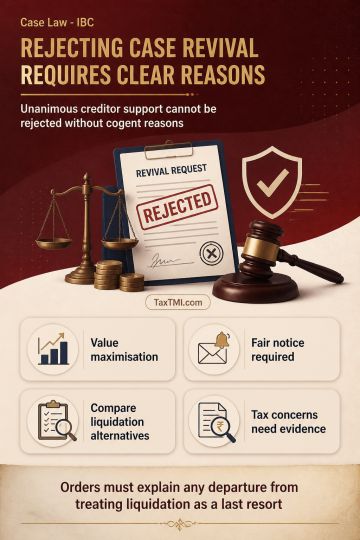
Suspension of insolvency professional registration prevents continued Resolution Professional appointments and restricts interim stays that effectivel...
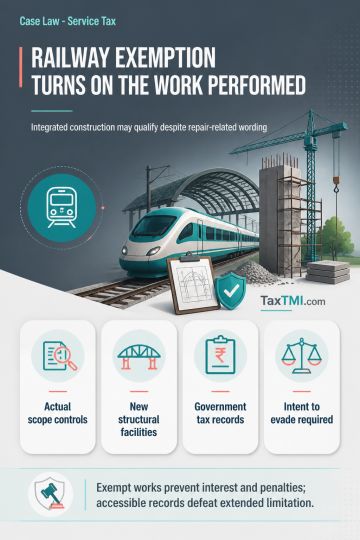
Original works exemption for railway contracts depends on actual integrated construction scope, while accessible tax data defeats suppression allegati...
Survey surrender characterisation determines whether mixed excess stock and business-linked cash face normal taxation or special deemed-income taxatio...
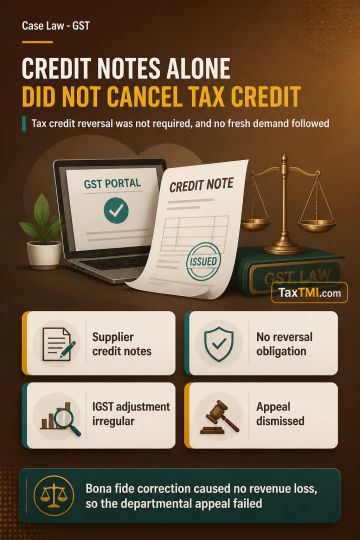
Recipient input tax credit did not require reversal solely because a supplier issued credit notes during the relevant period: neither the Act nor the Rules imposed that obligation, the statutory matching mechanism was inoperative, and Rule 37 concerned non-payment to suppliers. Accordingly, the premise for reversal failed. Excess IGST adjusted against CGST and SGST liabilities was procedurally irregular because the prescribed refund, re-credit or subsequent IGST-adjustment route was not used. However, as a bona fide first-year GST correction causing no revenue loss, it did not justify a fresh tax demand, interest or penalty; the departmental appeal was dismissed.
Recipient input tax credit did not require reversal solely because a supplier issued credit notes during the relevant period: neither the Act nor the Rules imposed that obligation, the statutory matching mechanism was inoperative, and Rule 37 concerned non-payment to suppliers. Accordingly, the premise for reversal failed. Excess IGST adjusted against CGST and SGST liabilities was procedurally irregular because the prescribed refund, re-credit or subsequent IGST-adjustment route was not used. However, as a bona fide first-year GST correction causing no revenue loss, it did not justify a fresh tax demand, interest or penalty; the departmental appeal was dismissed.
Note: It is a system-generated summary and is for quick reference only.
 TaxTMI
  TaxTMI
 of 4899