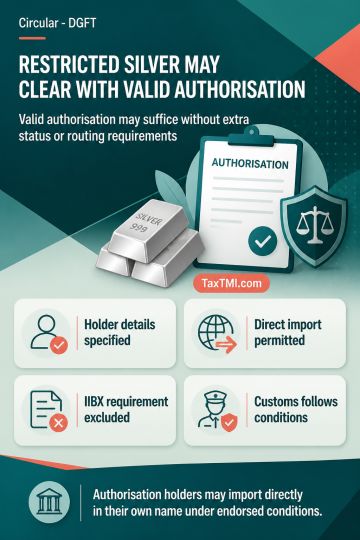
Restricted silver imports may clear under a valid import authorisation without additional status or exchange-routing requirements unless expressly imp...
Head Office cost allocation requires prescribed transfer-pricing methods; treaty ceilings bar surcharge and cess, while duplicate taxation is excluded...
Cost-to-cost reimbursement of seconded employees is not service consideration; transfer-pricing markup was deleted and amalgamation amortisation allow...
Crystallisation of liability supports prior-period expense deduction, while functionally distinct divisions require separate transfer-pricing benchmar...
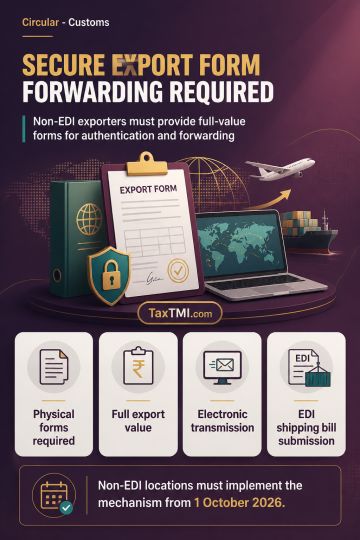
Exporters at Non-EDI Customs locations must furnish physical Export Declaration Forms (EDFs) specifying the full export value at the time of export. Customs Commissioners must ensure that EDFs are authenticated by the specified authority and forwarded to the Authorised Dealer named in the form. Wherever practicable, transmission must occur electronically from a single official Government email address to reduce misuse and forged-document risks, with internal records maintained for all authenticated and forwarded EDFs. EDI-port EDFs remain deemed submitted with the Shipping Bill. Non-EDI locations must implement this mechanism from 1 October 2026.
Exporters at Non-EDI Customs locations must furnish physical Export Declaration Forms (EDFs) specifying the full export value at the time of export. Customs Commissioners must ensure that EDFs are authenticated by the specified authority and forwarded to the Authorised Dealer named in the form. Wherever practicable, transmission must occur electronically from a single official Government email address to reduce misuse and forged-document risks, with internal records maintained for all authenticated and forwarded EDFs. EDI-port EDFs remain deemed submitted with the Shipping Bill. Non-EDI locations must implement this mechanism from 1 October 2026.
Note: It is a system-generated summary and is for quick reference only.
 TaxTMI
  TaxTMI
 of 4905