Mandatory textile export qualifiers distinguish flame-retardant fabrics from other listed fabrics for automated identification under the textiles ince...
Personal liberty safeguards restrict arrest after court-directed GST appearance, requiring interim release where authorities overreach pending proceed...
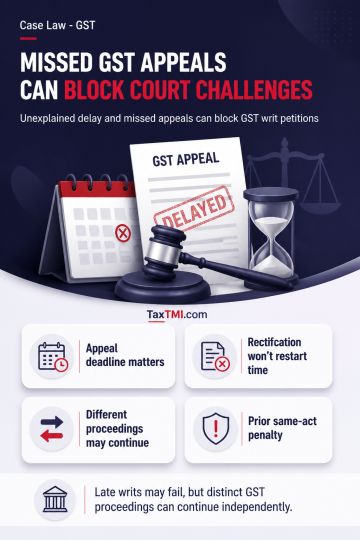
Alternative statutory remedy and delay bar GST writ challenges despite pending rectification, while distinct subject matter permits parallel proceedin...
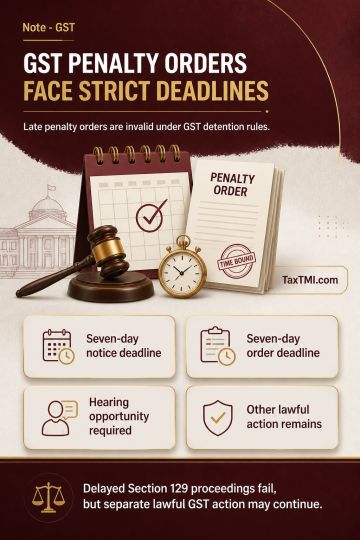
Section 129(3) of the CGST Act imposes separate mandatory deadlines: the penalty notice must be issued within seven days of detention or seizure, and the penalty order must follow within seven days after service of that notice. The latter period runs from service, not from a reply, valuation exercise or other intervening event. Because detention and seizure are coercive restraints on goods and conveyances, administrative difficulty, minimal delay and inspection-stage timelines cannot extend either deadline; a delayed Section 129 order is invalid. The affected person must receive an opportunity of hearing. Invalidity of Section 129 proceedings does not preclude separately lawful action under other GST provisions.
Section 129(3) of the CGST Act imposes separate mandatory deadlines: the penalty notice must be issued within seven days of detention or seizure, and the penalty order must follow within seven days after service of that notice. The latter period runs from service, not from a reply, valuation exercise or other intervening event. Because detention and seizure are coercive restraints on goods and conveyances, administrative difficulty, minimal delay and inspection-stage timelines cannot extend either deadline; a delayed Section 129 order is invalid. The affected person must receive an opportunity of hearing. Invalidity of Section 129 proceedings does not preclude separately lawful action under other GST provisions.
Note: It is a system-generated summary and is for quick reference only.
 TaxTMI
 TaxTMI

 of 4918