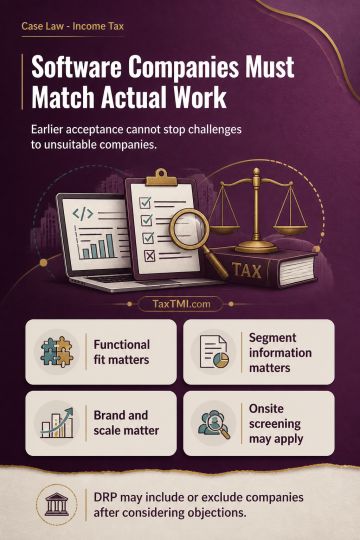
Transfer-pricing comparability permits fresh objections and filters where software service comparables are functionally unsuitable for arm's-length pr...
Territorial rendering requirement excludes China-based management and consultancy services from fees for technical services under the India-China DTAA...
FEMA borrowing restrictions bind charitable trusts, and civil penalties apply without proving intent for delayed repayment of non-resident rupee loans...
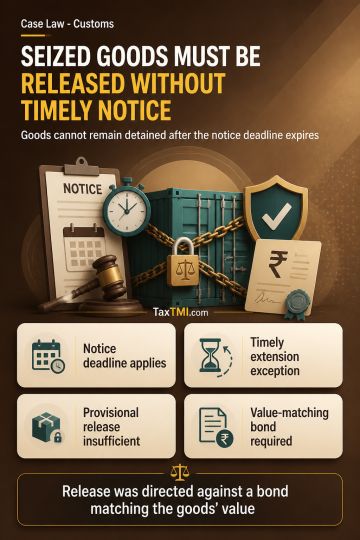
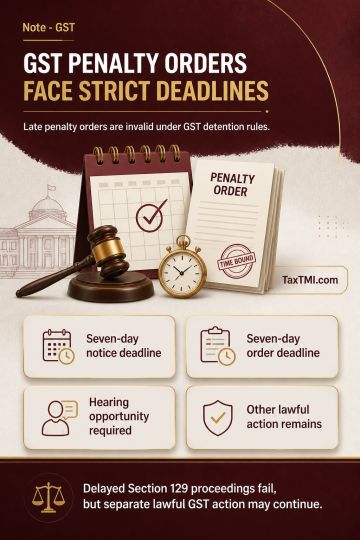
Section 129(3) of the CGST Act imposes separate mandatory deadlines: the penalty notice must be issued within seven days of detention or seizure, and the penalty order must follow within seven days after service of that notice. The latter period runs from service, not from a reply, valuation exercise or other intervening event. Because detention and seizure are coercive restraints on goods and conveyances, administrative difficulty, minimal delay and inspection-stage timelines cannot extend either deadline; a delayed Section 129 order is invalid. The affected person must receive an opportunity of hearing. Invalidity of Section 129 proceedings does not preclude separately lawful action under other GST provisions.
Section 129(3) of the CGST Act imposes separate mandatory deadlines: the penalty notice must be issued within seven days of detention or seizure, and the penalty order must follow within seven days after service of that notice. The latter period runs from service, not from a reply, valuation exercise or other intervening event. Because detention and seizure are coercive restraints on goods and conveyances, administrative difficulty, minimal delay and inspection-stage timelines cannot extend either deadline; a delayed Section 129 order is invalid. The affected person must receive an opportunity of hearing. Invalidity of Section 129 proceedings does not preclude separately lawful action under other GST provisions.
Note: It is a system-generated summary and is for quick reference only.
 TaxTMI
 TaxTMI

 of 4916