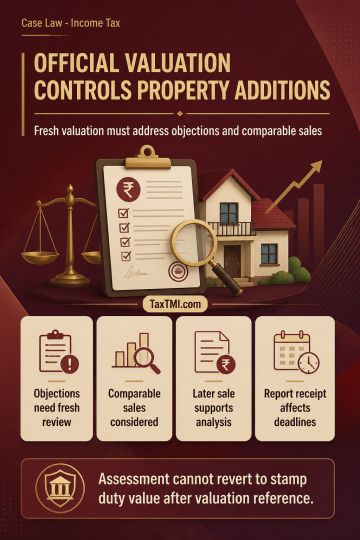
Valuation Officer estimates govern property-value additions once statutory valuation is invoked, requiring fresh consideration of objections and compa...
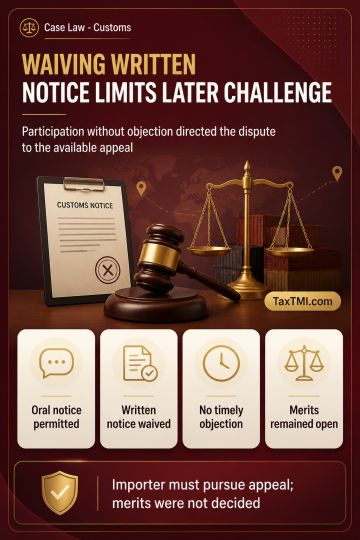
Waiver of written show-cause notice may prevent a later procedural challenge after participation in customs adjudication, preserving statutory appella...
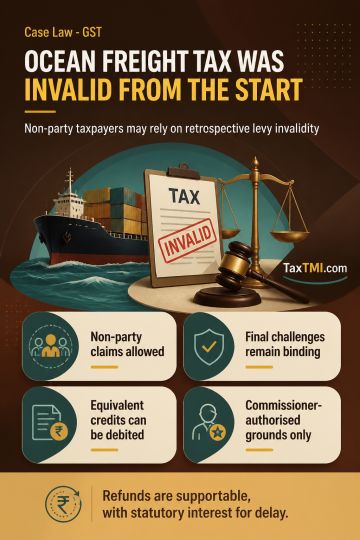
Retrospective invalidity of ocean-freight IGST supports refunds despite non-party status and prior credit utilisation, subject to authorised appeal gr...
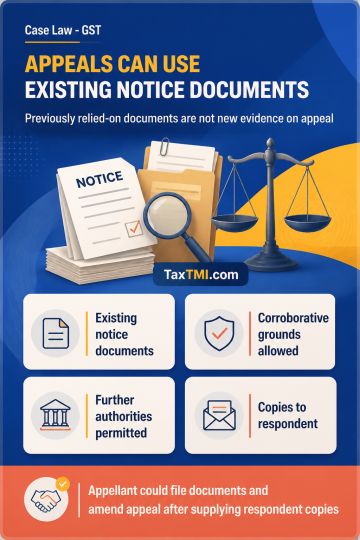
Additional evidence in departmental appeals may include show-cause-notice material without introducing a new case where it merely corroborates existin...
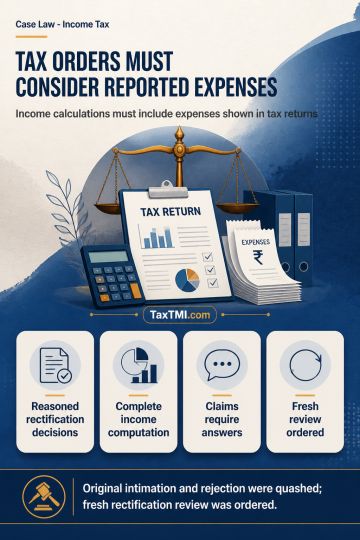
Reasoned rectification orders require consideration of expenditure disclosed in income-tax returns, preventing revision based on incomplete income com...
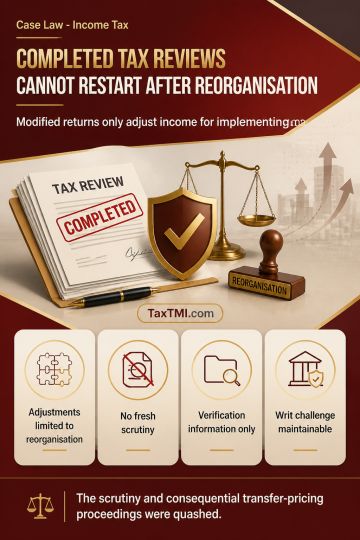
Modified returns after business reorganisations cannot trigger fresh scrutiny once the original assessment was complete, invalidating related transfer...
Third-party loose sheets require reliable nexus before supporting unexplained expenditure additions; presumptions do not establish payer identity or o...
TNMM comparability using audited accounts and working-capital adjustments can eliminate unwarranted transfer-pricing additions where verified margins ...
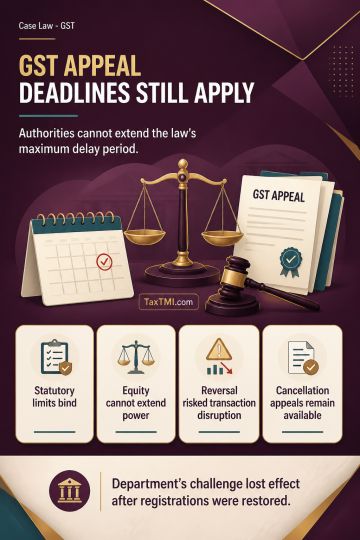
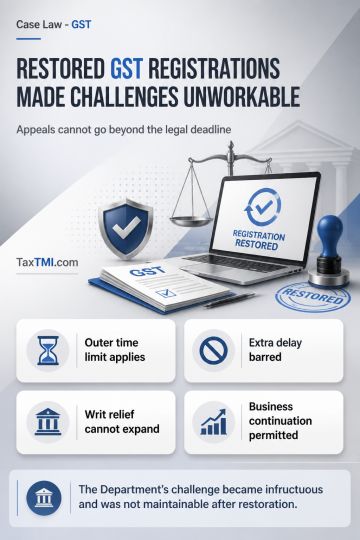
Statutory appellate jurisdiction does not permit the First Appellate Authority to condone delay beyond the enactment's prescribed outer limit; equitable relief available in writ jurisdiction cannot enlarge that power. Condonation beyond that limit renders consequential appellate orders legally unsustainable. Where the Department has implemented those orders by restoring cancelled registrations, altering the registrants' legal and commercial position and permitting business continuation, it cannot seek annulment without addressing the consequences of restoration. The absence of effective, workable relief makes the Department's challenge infructuous and not maintainable.
Statutory appellate jurisdiction does not permit the First Appellate Authority to condone delay beyond the enactment's prescribed outer limit; equitable relief available in writ jurisdiction cannot enlarge that power. Condonation beyond that limit renders consequential appellate orders legally unsustainable. Where the Department has implemented those orders by restoring cancelled registrations, altering the registrants' legal and commercial position and permitting business continuation, it cannot seek annulment without addressing the consequences of restoration. The absence of effective, workable relief makes the Department's challenge infructuous and not maintainable.
Note: It is a system-generated summary and is for quick reference only.
 TaxTMI
  TaxTMI
 of 4910