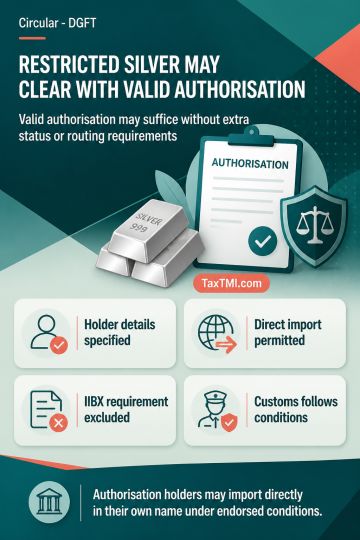
Restricted silver imports may clear under a valid import authorisation without additional status or exchange-routing requirements unless expressly imp...
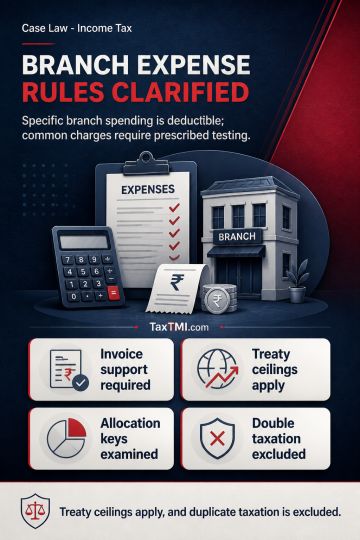
Head Office cost allocation requires prescribed transfer-pricing methods; treaty ceilings bar surcharge and cess, while duplicate taxation is excluded...
Cost-to-cost reimbursement of seconded employees is not service consideration; transfer-pricing markup was deleted and amalgamation amortisation allow...
Crystallisation of liability supports prior-period expense deduction, while functionally distinct divisions require separate transfer-pricing benchmar...
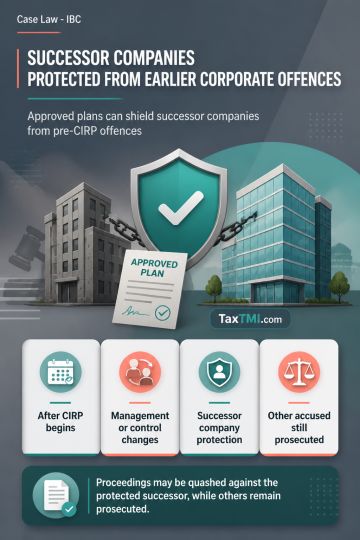
Section 32A(1) of the Insolvency and Bankruptcy Code ends a corporate debtor's liability for offences committed before commencement of CIRP once an approved resolution plan results in a qualifying change in management or control. The immunity can protect a successor company that takes over and amalgamates with the former corporate debtor, preventing civil or criminal liability for the predecessor's pre-CIRP acts, including alleged Air Act offences. Its application is company-specific: proceedings may be quashed against the protected successor without affecting prosecution of the remaining accused.
Section 32A(1) of the Insolvency and Bankruptcy Code ends a corporate debtor's liability for offences committed before commencement of CIRP once an approved resolution plan results in a qualifying change in management or control. The immunity can protect a successor company that takes over and amalgamates with the former corporate debtor, preventing civil or criminal liability for the predecessor's pre-CIRP acts, including alleged Air Act offences. Its application is company-specific: proceedings may be quashed against the protected successor without affecting prosecution of the remaining accused.
Note: It is a system-generated summary and is for quick reference only.
 TaxTMI
  TaxTMI
 of 4905