Cost-to-cost reimbursement of seconded employees is not service consideration; transfer-pricing markup was deleted and amalgamation amortisation allow...
Crystallisation of liability supports prior-period expense deduction, while functionally distinct divisions require separate transfer-pricing benchmar...
Functional comparability under TNMM requires transaction-specific FAR analysis before benchmarking business-support services provided to associated en...
Advance pricing agreement methodology can guide benchmarking for non-covered years when functions, assets, risks and activities remain materially unch...
Tax-audit exemption for substantially State-funded educational universities prevents audit-failure penalties where income qualifies for statutory exem...
Functional, asset and risk analysis excludes diversified technology companies from captive software development comparables under cost-plus arrangemen...
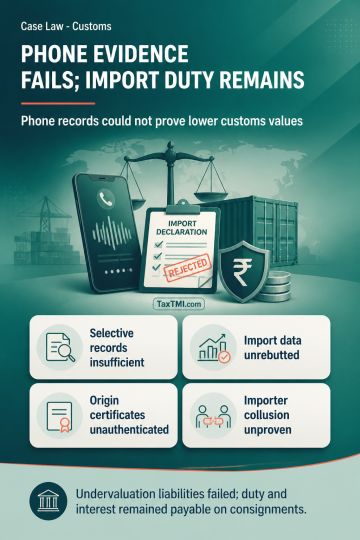
Mobile-phone electronic evidence failed to establish customs undervaluation, while duty survived on non-authentic origin certificates without importer...
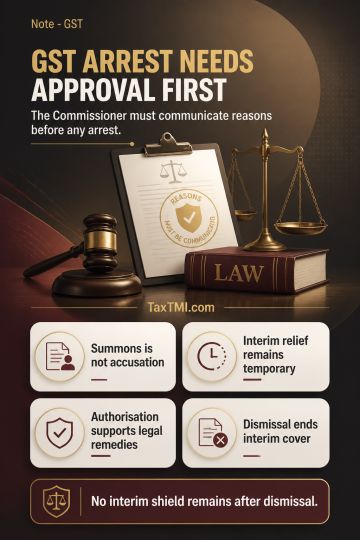
Interim protection from arrest cannot survive dismissal of an anticipatory-bail application as not maintainable, because interim relief must remain ancillary to a pending substantive proceeding. Under the GST arrest framework, a summons does not itself make a person an accused or create a legally sustainable apprehension of arrest. Arrest requires the Commissioner's reasoned authorisation based on reasons to believe that a specified offence has been committed. That authorisation must be communicated before arrest, enabling the affected person to pursue anticipatory bail, judicial review, or other available remedies. Communication is a statutory procedural safeguard, not residual bail protection after dismissal.
Interim protection from arrest cannot survive dismissal of an anticipatory-bail application as not maintainable, because interim relief must remain ancillary to a pending substantive proceeding. Under the GST arrest framework, a summons does not itself make a person an accused or create a legally sustainable apprehension of arrest. Arrest requires the Commissioner's reasoned authorisation based on reasons to believe that a specified offence has been committed. That authorisation must be communicated before arrest, enabling the affected person to pursue anticipatory bail, judicial review, or other available remedies. Communication is a statutory procedural safeguard, not residual bail protection after dismissal.
Note: It is a system-generated summary and is for quick reference only.
 TaxTMI
  TaxTMI
 of 4902